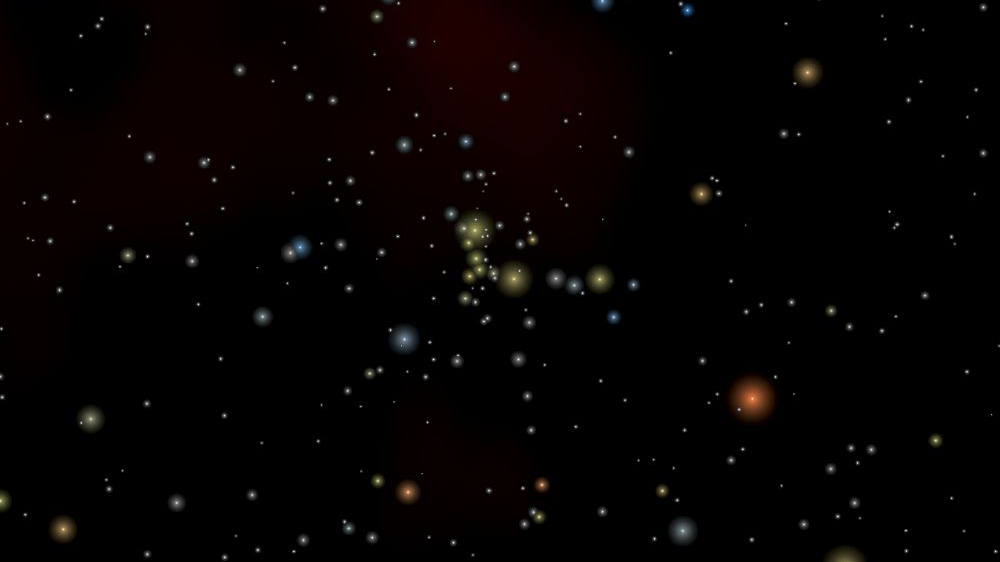
Discovered on October 17, 1786, by William Herschel, NGC 6910 is a young open cluster in the constellation of Cygnus. It’s best viewed in summer through early autumn.
Finding NGC 6910 is fairly easy, as it shines at a +7.5 magnitude and lies near the bright star Gamma Cygni (Sadr). The core cluster is believed to consist of approximately 125 stars, while the entire group may contain around 280 stars. NGC 6910 is notable for several reasons. For one, it belongs to a larger grouping of stars (stellar association) called Cygnus OB9, which lies around 5,000 light-years away. Additionally, the light from the cluster is dimmed because it lies behind a dense cloud of dusty nebulosity.1
For those who want to take a very deep dive into the physical characteristics of NGC 6910, the Astrophysical Journal contains a good study.
My Observations
| Date | October 28, 2022 |
| Time | 9:42 p.m. |
| Location | Seattle, WA |
| Magnification | 169x |
| Scope | Meade 8″ SCT |
| Eyepiece | 12mm |
| Seeing | Average |
| Transparency | Below Average |
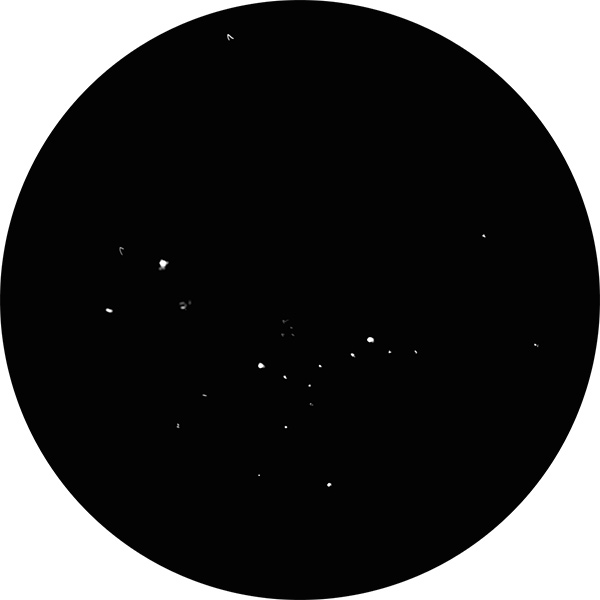
This cluster, while smaller than the nearby cluster I viewed tonight (NCG 6871), produces a noteworthy object in Cygnus. There are a number of brighter stars and then several “streams” of small stars radiating out. The streams almost make an arrow shape.
Also viewed on November 8, 2022, at 7:18 p.m., one day after the full moon.
Key Stats
| Constellation | Cygnus |
| Best Viewing | Autumn |
| Visual Magnitude | +7.4 |
| Distance from Earth | 3715 ly |
| Milky Way Location | Orion Spur |
| My Viewing Grade | B |
Sources
The photo of NGC 6910 by Roberto Mura is made available under the Creative Commons CC0 1.0 Universal Public Domain Dedication.
1“NGC 6910.” Wikipedia, 24 Feb. 2023, en.wikipedia.org/wiki/NGC_6910.
Sketch by Wayne McGraw
 The Garden Astronomer
