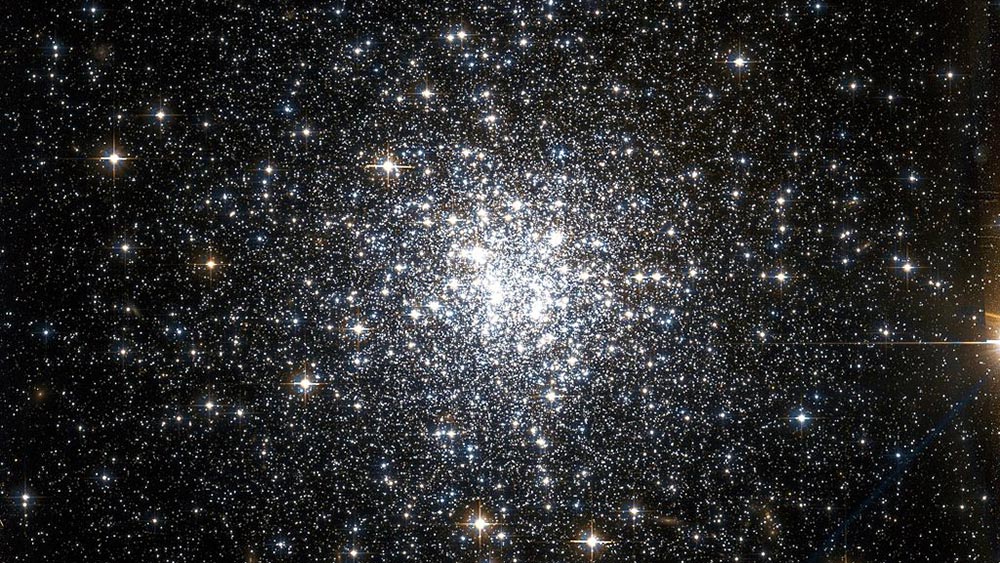
NGC 6934 is a globular cluster in the constellation Delphinus. It’s best viewed in autumn.
NGC 6934 is one of the farthest clusters visible through amateur scopes. At 51,200 light-years from earth, this globular approaches the “outer banks” of our galaxy. Under suburban skies, 6 to 8-inch scopes only show a fuzzy patch. Embedded in the constellation of Delphinus, this globular cluster is an ancient ball of 250,000 stars with a diameter of 120 light-years! On the evening of September 24, 1785, astronomer William Herschel discovered NGC 6394. Unable to discern individual stars, Herschel described the object as a bright nebula.
My Observations
| Date | September 6, 2020 |
| Time | 9:36 p.m. |
| Location | Seattle, WA |
| Magnification | 127x |
| Scope | Meade 8″ SCT |
| Eyepiece | 16mm |
| Seeing | Average |
| Transparency | Average |
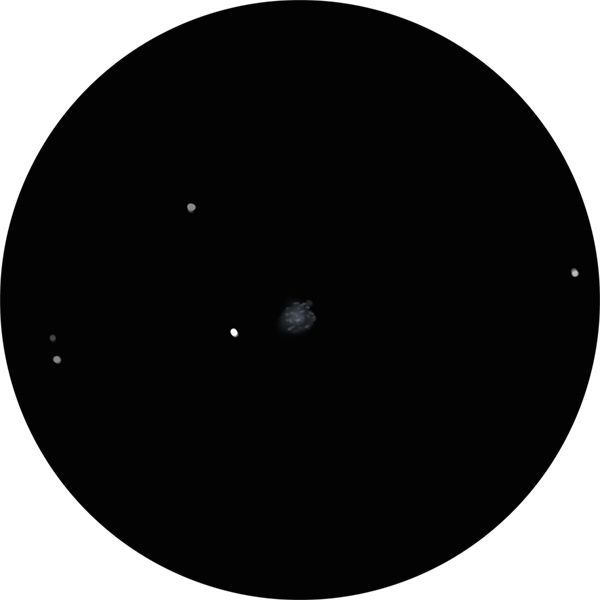
The cluster appears as a faint fuzzy cloud. I’m sure from darker skies, it would appear more striking. At this moment, I’m unable to pull out individual stars within the cluster, but there are two noticeable blue stragglers beside it. When I first passed the object by slewing my scope, I thought it was a faint planetary nebula. It has the appearance of one, and under light-polluted skies it’s easy to pass on by if you’re moving the scope too fast.
Also observed on October 11, 2021, at 9:20 p.m.
Key Stats
| Constellation | Delphinus |
| Best Viewing | Late Summer |
| Visual Magnitude | +8.8 |
| Absolute Magnitude | -7.1 |
| Distance from Earth | 52,000 ly |
| Diameter | 120 ly |
| Apparent Size | 7.1 arcmin |
| Milky Way Location | Outer Arm |
| My Viewing Grade | B- |
Sources
- The photo of NGC 6934 is credited to NASA, ESA, Hubble Space Telescope This file is in the public domain because it was created by NASA and ESA.
- Sketch by Wayne McGraw
- AKA: Caldwell 47
 The Garden Astronomer