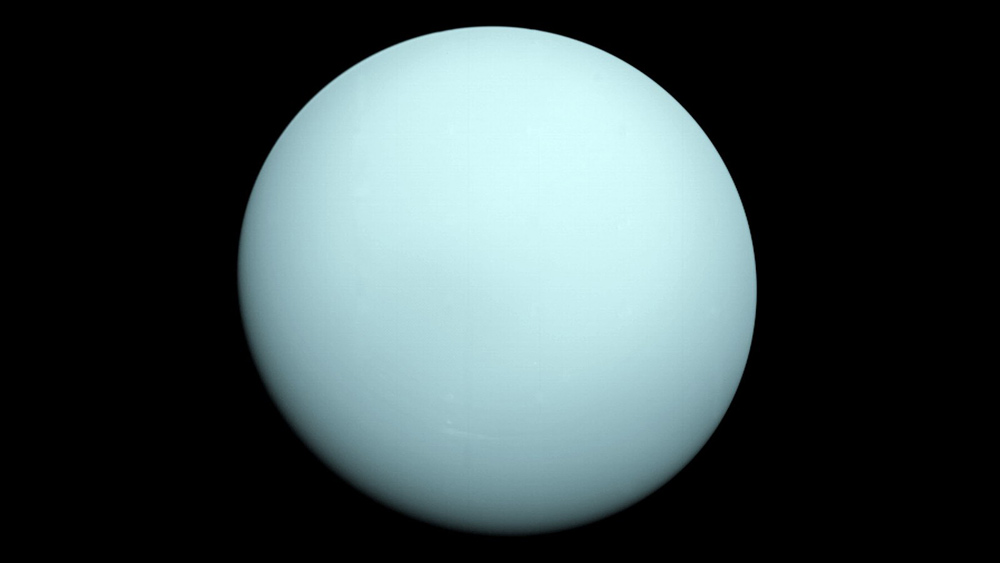
Uranus is the seventh planet in our solar system. It is more than one billion miles away from Earth. It takes light from the ice giant nearly three hours to reach us. William Herschel discovered Uranus on March 13, 1781, from his garden in England, believing it was a comet at first.
My Observations
| Date | November 6, 2020 |
| Time | 11:25 p.m. |
| Location | Seattle, WA |
| Magnification | 169x |
| Scope | Meade 8″ SCT |
| Eyepiece | 12mm |
| Seeing | Average |
| Transparency | Average |

I’ve found it! I’ve found it! Here on this cold late autumn night at 30 minutes to midnight, I’ve put my eyes on the turquoise ice giant for the first time in my life. Since I was young, I’ve kept a bucket list of astronomical objects, including every planet in our solar system.
This moment delivers the haunting planet to the doorstep of my eye. I’ve searched before for this planet — several times over the years — and had no luck navigating to it.
I’ve been using a 40mm eyepiece to study the Pleiades over the last hour. A few minutes ago, I slewed the telescope east from the Pleiades toward the region with Uranus. I’ve searched this region before, but my lack of patience got the best of me when trying to find Uranus. It’s just tough to identify stars in my field of view because of light pollution in my region.
But tonight, I imagined that if I looked for a brighter “star” with a lower-power eyepiece, I might land upon Uranus.
My intuition was correct. There, breaking through the haze of a bright sky, a pinpoint of light caught my attention among a field of dimmer stars. Hurriedly, I replaced my 40mm eyepiece with my variable 24-8mm eyepiece.
I started at 24mm on the variable eyepiece and slowly turned it up (24mm… 20mm… 14mm). I landed on the 12mm after my discovery! There it was—Uranus—no longer a point of light but a small disc colored pale green. It seemed to float among the dim stars. I ran indoors to tell my wife, and she soon followed out to the front garden to take a look.
As I finish this paragraph, my mind wanders. I’m imagining William Herschel. What was it like for him to discover Uranus? I’m seeing the same blue-green disc he saw hundreds of years ago. What a night!
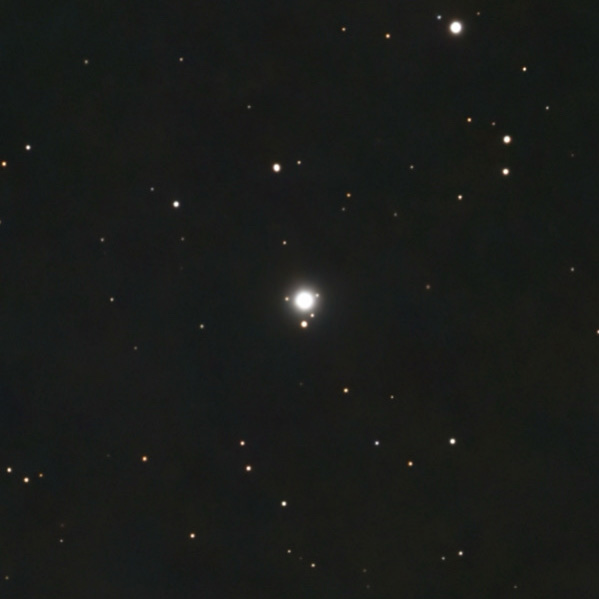
Observed on December 20, 2025, at 12:18 a.m. from Tampa, Florida: Tonight, I decided to turn the Seestar toward Uranus for a few minutes to capture it. It’s great to greet an old friend.
Key Stats
| When to view | N/A | R.A. (2021) | 02h 26m 16.31s |
| Constellation | N/A | Dec (2021) | +14° 02′ 48″[ |
| Visual Magnitude | +5.90 | Distance | 20.6 AU |
| Rotation | 17 Hours | Age | 4.05 Billion Yrs. |
| Mass | 14.5 Earths | Milky Way Locations | Orion Spur |
| Diameter | 4 Earths | My Viewing Grade | B+ |
Historical Observations
On March 13, 1774
William Herschel finds a “curious either nebulous star or perhaps a comet,” distinguished from the stars by its clearly visible disk.1
Sources and Notes
Photo of Uranus by NASA/JPL-Caltech. The photo is in the public domain because it was created by NASA.
1 Britannica.com: Uranus Observations from Earth
 The Garden Astronomer
8 thoughts on “Uranus: On Seeing the Planet for the First Time”