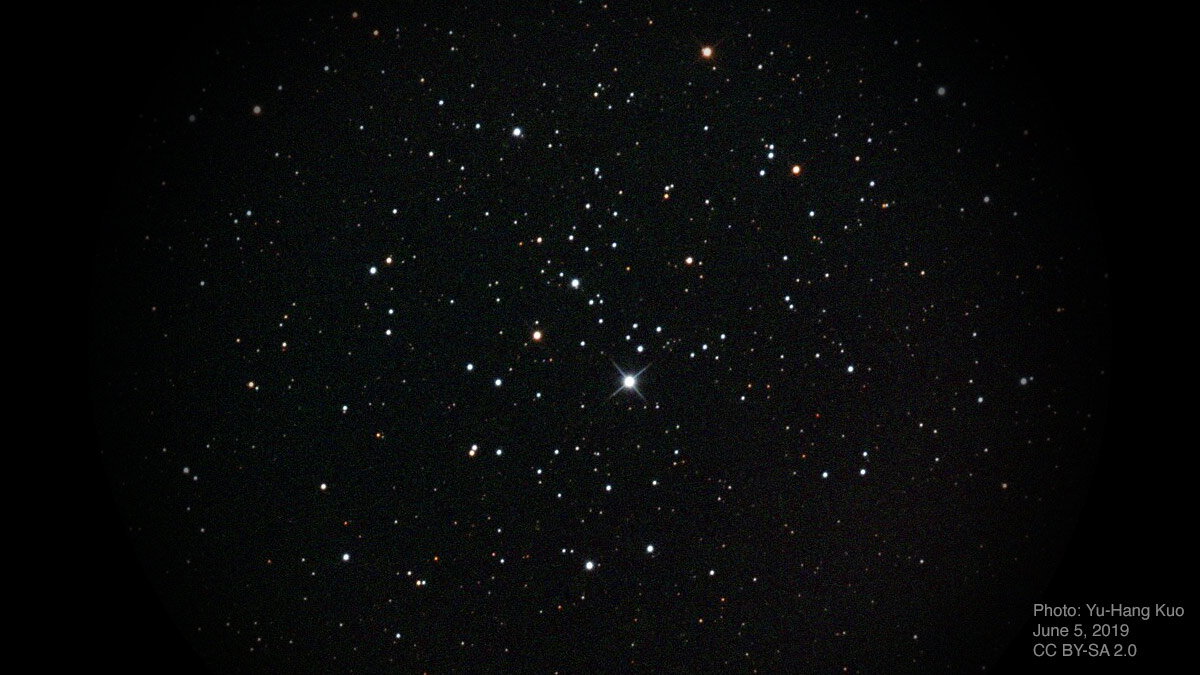
As the W-shaped beacon that cuts across the Milky Way, Cassiopeia offers a rich collection of deep-sky objects for the backyard observer. Nestled within her grasp lies the lesser-known open star cluster NGC 1027. While the cluster doesn’t demand attention like the more prominent nebulae and clusters in the region, it still rewards the curious backyard astronomer. The best times to observe the cluster are during autumn and winter evenings (roughly September through February), when Cassiopeia is higher in the sky in the Northern Hemisphere.
Located roughly 3,400 light-years away, NGC 1027 is a loose cluster of stars with a visual magnitude of +6.8, making it a relatively easy target for binoculars and smaller scopes. A 7th-magnitude star lies almost at the center, but most of the cluster’s stars are dimmer, ranging from magnitude +9 to +14. William Herschel first recorded the cluster on November 3, 1787.
My Observations
| Date | December 1, 2020 |
| Time | 7:15 p.m. |
| Location | Seattle, WA |
| Magnification | 169x |
| Scope | Meade 8″ SCT |
| Eyepiece | 12mm |
| Seeing | Average |
| Transparency | Average |
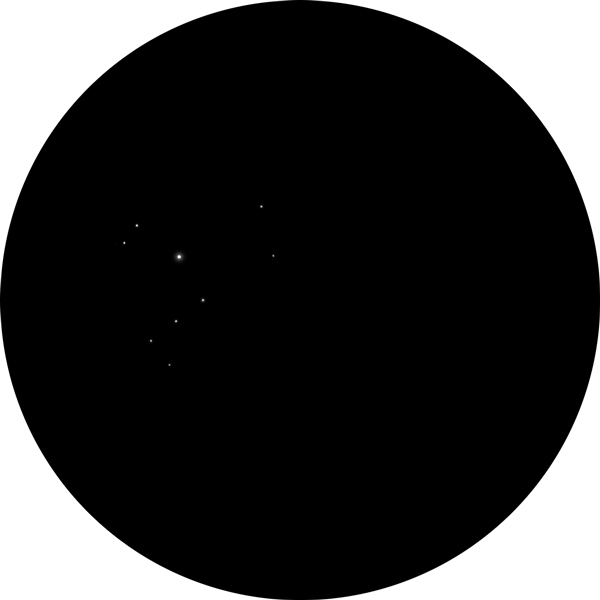
It’s a day after the full moon, so the moonlight is already illuminating the darker sky I’ve enjoyed this evening up until now. Still, this cluster shines through with its scattered stars, though I’m unable to see more of the dimmer stars.
Key Stats
| Constellation | Cassiopeia |
| Best Viewing | Autumn |
| Visual Magnitude | +6.69 |
| Absolute Visual Magnitude | -3.37 |
| Distance from Earth | 3,400 ly |
| Diameter | 5.9 ly |
| Milky Way Location | Orion Spur |
| My Viewing Grade | B- |
| Designations | NGC1027, Cr 30, IC 1824 |
Sources
The banner photo is by Yu-Hang Kuo. This file is licensed under the Creative Commons Attribution-Share Alike 2.0 Generic license. Additional details.
Sketch by Wayne McGraw
 The Garden Astronomer
