
Wasat is the primary star in a triple star system in the constellation Gemini. It’s best viewed in the winter.
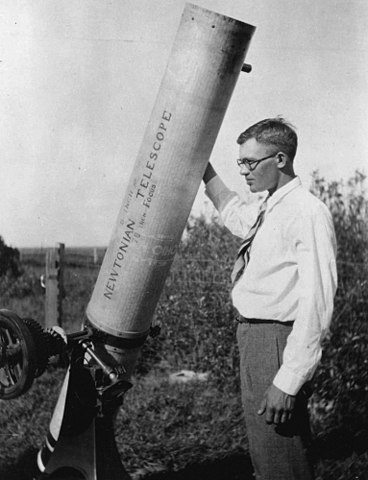
At magnitude +3.5, Wasat is not difficult to find under suburban skies. As you look at Wasat, you’re looking at a historical area of the night sky. In February 1930, Kansas farmboy-turned-astronomer Clyde Tombaugh discovered Pluto studying photographic plates of a region near Wasat.
My Observations of Wasat
| Date | January 22, 2021 |
| Time | 9:23 p.m. |
| Location | Seattle, WA |
| Magnification | 254x |
| Scope | Meade 8″ SCT |
| Eyepiece | 8mm |
| Seeing | Average |
| Transparency | Average |

This is a tight pair. At first, I thought I had the wrong star. As I used more magnification (down to the 12mm eyepiece), I could see the faint second star to the star’s left. The primary star is white, while the smaller 8th magnitude star appears purplish. I’ve taken a moment to enjoy the thought Pluto was discovered near this location 90 years ago.
Also viewed on February 25, 2022, at 8:30 p.m.: My observation tonight matches the one recorded in 2021.
Key Stats
| Constellation | Gemini |
| Best Viewing | Winter / Early Spring |
| Visual Magnitude | +3.5, +8.1 |
| Absolute Visual Magnitude | +6.84 |
| Distance from Earth | 60 ly |
| Separation | 5.4″ | 144 AU |
| Milky Way Location | Orion Spur |
| My Viewing Grade | B |
Sources
The double star banner on this page is an artist’s impression showing the double star OGLE-LMC-CEP0227 in our neighboring galaxy the Large Magellanic Cloud. This media was created by the European Southern Observatory (ESO). This file is licensed under the Creative Commons Attribution 4.0 International license.
 The Garden Astronomer
One thought on “Delta Geminorum (Wasat): A Star With a Unique History”