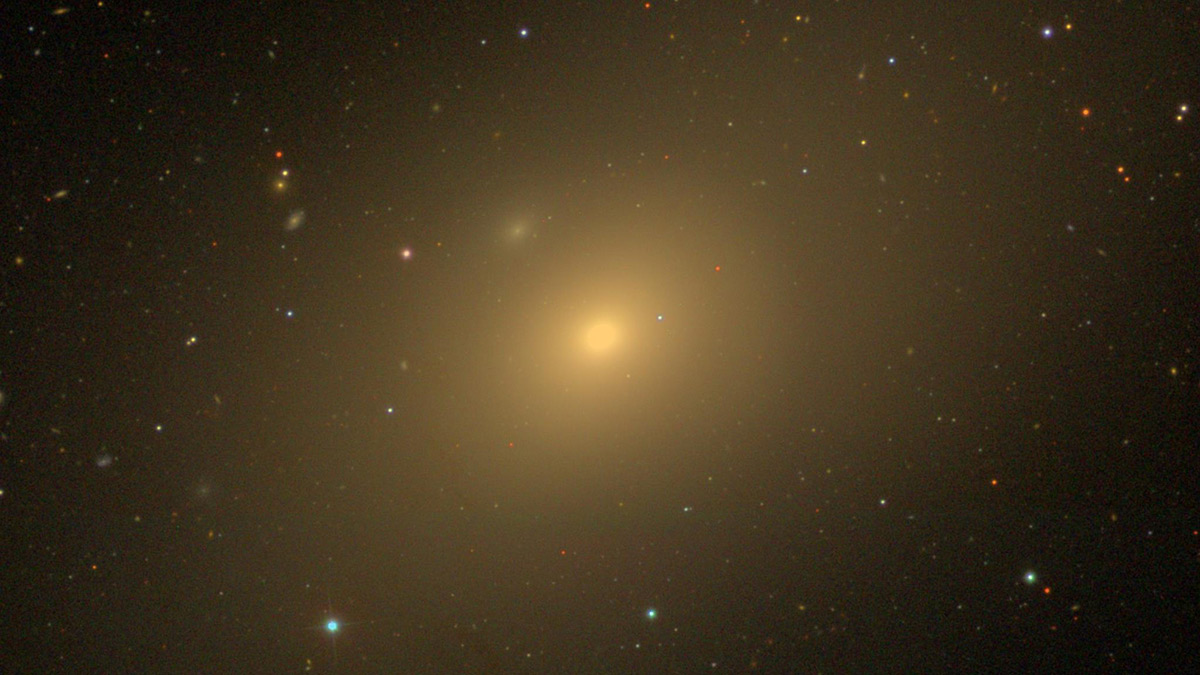
Astronomers are unsure which is the best description for Messier 86 as it falls between an elliptical or a lenticular galaxy. It resides in the Virgo constellation and is best viewed in spring.
As I mentioned in my post on Messier 60, the galaxies in Virgo played an essential role in Edwin Hubble’s research in the early 20th Century regarding the recession and speed of distant galaxies. So while many galaxies are moving away from us, M86 is moving toward us. And it’s hauling at a rate of 280 kilometers per second! But why is this?
According to NASA, M86 is located on the far side of the Virgo cluster and is “moving toward the cluster’s center.” The gravity of the central cluster is pulling it in — so to speak — which draws it in our direction. Moreover, of all the galaxies in Messier’s catalog, M86 is moving the fastest in our direction.1
Charles Messier discovered M86 in 1781.
My Observations
| Date | May 6, 2021 |
| Time | 10:25 p.m. |
| Location | Seattle, WA |
| Magnification | 203x |
| Scope | Meade 8″ SCT |
| Eyepiece | 10mm |
| Seeing | Below Average |
| Transparency | Below Average |
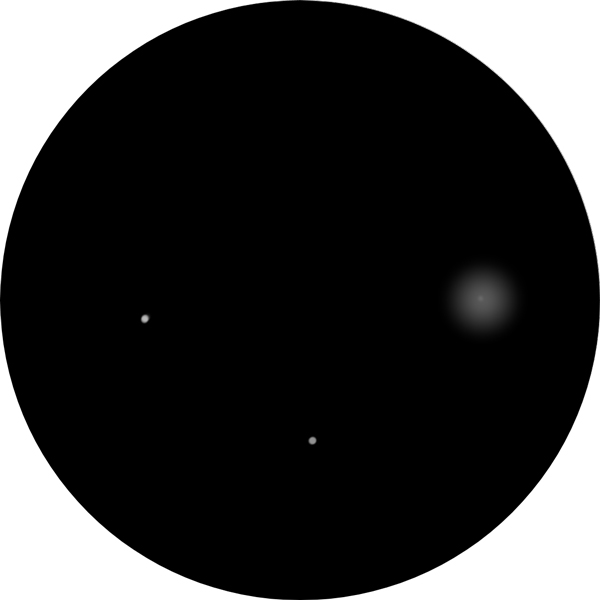
What a weird and wild night of observing. It’s been mostly cloudy and rainy all day, but a break in the weather has given me a nice hour window to view the stars tonight. Every few minutes, the wind picks up, making my light-blocking tarp flap in the breeze like a flag. But then, things get perfectly calm. Right now, as I begin to look at M86, a coyote is hauling in the distance, and a shooting star flies right across my eyepiece. These last 30 minutes have been just bonkers, but I’ll take it as it’s almost magical.
This is my first time observing galaxies in the Virgo Cluster. M86 is a faint fuzzy with a slightly brighter core, and it appears more promising as I use averted vision. Two other stars are near the galaxy in my current field of view. I wish I was at a dark site as the light pollution mutes these Virgo galaxies, I can imagine.
Key Stats
| Constellation | Virgo |
| Best Viewing | Spring |
| Visual Magnitude | +8.79 |
| Absolute Visual Magnitude | -22.41 |
| Distance from Earth | 57 million ly |
| My Viewing Grade | C+ |
Historical Observations
Discovered by Charles Messier on March 18, 1781.
“Nebula without star, in Virgo, on the parallel & very near to the nebula above, No. 84: their appearances are the same, & both appear together in the same field of the telescope.”
Sources and Notes
Photo of M86 is authored by Sloan Digital Sky Survey. This file is licensed under the Creative Commons Attribution 4.0 International license.
1https://www.nasa.gov/feature/goddard/2018/messier-86
2Historical observation from messier.seds.org.
Sketch by Wayne McGraw
 The Garden Astronomer