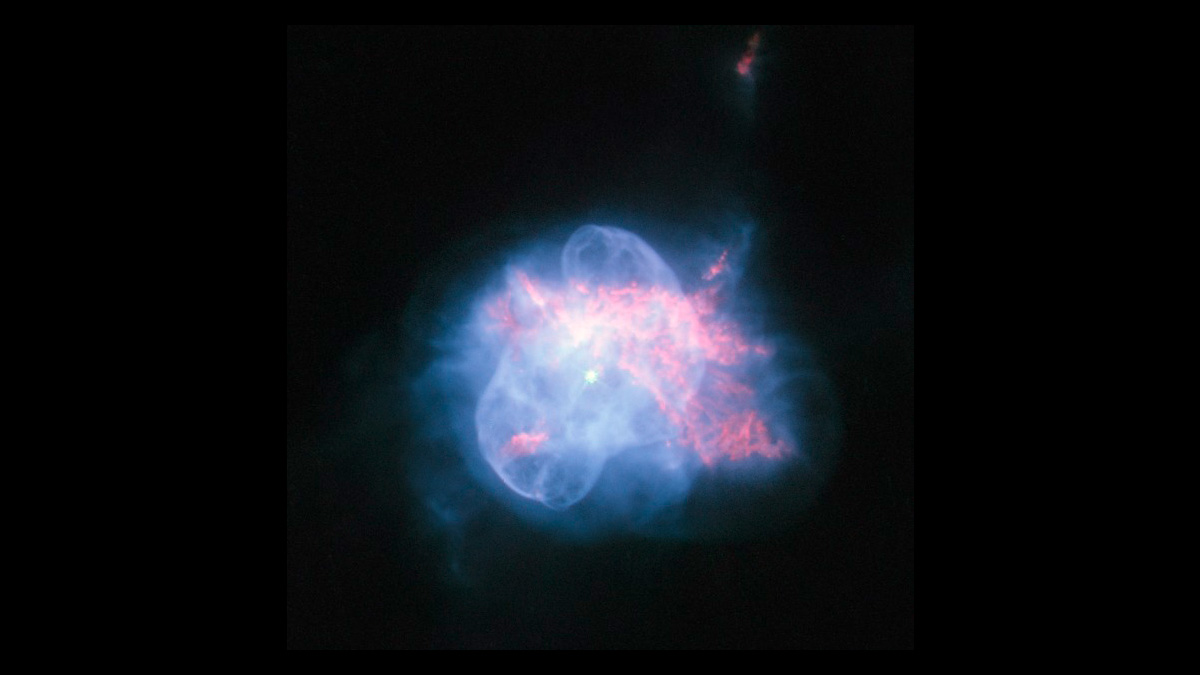
The constellation Hercules contains memorable deep sky objects, with the magnificent Messier 13 and nearby Messier 92 stealing the show. Not far from these beautiful clusters is NGC 6210, a dying star in the last stages of its life.
At a distance of 6,600 light-years away from us, this planetary nebula is fairly dim and tougher to see in urban skies, but it is doable. As with other planetary nebulae, one will see a field of stars that are sharp, while one stands out a little fuzzier.
My Observations
| Date | June 3, 2021 |
| Time | 11:20 p.m. |
| Location | Seattle, WA |
| Magnification | 127x |
| Scope | Meade 8″ SCT |
| Eyepiece | 16mm |
| Seeing | Average |
| Transparency | Average |
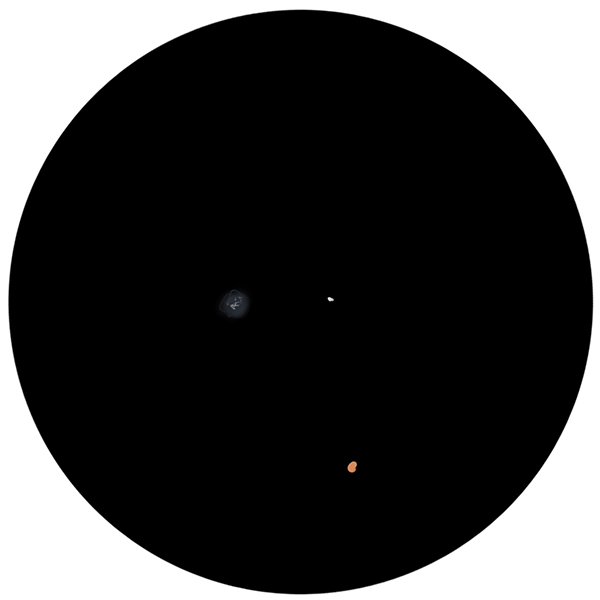
This is my first time viewing this planetary nebula. Over the last year, planetary nebulae have become one of my favorite astronomical objects. These objects have a way of playing funny tricks with one’s eyes. For example, over the last few minutes, I have been blinking and moving my eyes left and right, looking through the eyepiece. I’m doing this because my initial reaction is that the nebula is a blurry star. I just double-checked my positioning with the goto scope and the Star app, and I confirm that the fuzzy, bluish spot is indeed NGC 6210. Of note, the brighter star near the nebula is a darker orange in color.
Key Stats
| Constellation | Hercules |
| Best Viewing | Late Spring |
| Visual Magnitude | +8.8 |
| Absolute Magnitude | +10.1 |
| Distance from Earth | 6500 ly |
| Diameter | ? |
| Apparent Size | .3 x .2 arcmin |
| Milky Way Location | Orion Spur |
| My Viewing Grade | B- |
Sources and Notes
Banner photo from ESO: Robert Rubin and Christopher Ortiz (NASA Ames Research Center), Patrick Harrington and Nancy Jo Lame (University of Maryland), Reginald Dufour (Rice University), and NASA
Sketch by Wayne McGraw
 The Garden Astronomer
One thought on “NGC 6210: The Turtle-Looking Planetary Nebula”