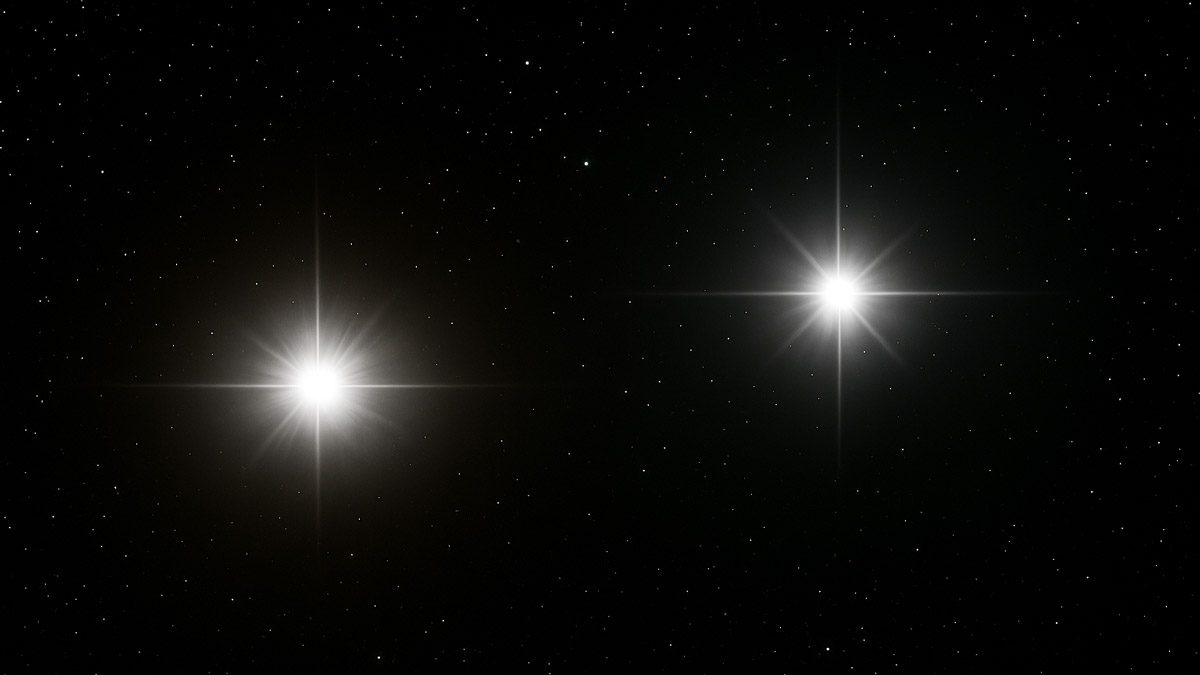
Delta Serpentis is a double star in the lesser-known constellation of Serpens, the serpent. It appears as a single, fairly bright star to the naked eye. A telescope uncovers a pair of pretty stars.
The stars are white in color, though observers have reported the fainter star as having a bluish-white tint. Also, both stars are growing into giants.1 For instance, the primary (brighter) star is already five times the diameter of our sun and twice the sun’s mass.
My Observations
| Date | June 25, 2021 |
| Time | 11:21 p.m. |
| Location | Seattle, WA |
| Magnification | 254x |
| Scope | Meade 8″ SCT |
| Eyepiece | 8mm |
| Seeing | Average |
| Transparency | Above Average |
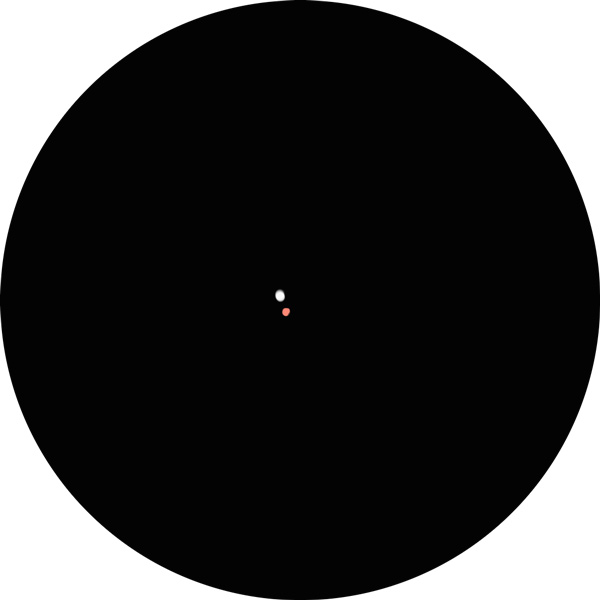
Delta Serpentis is a pretty double star. For me, the secondary star has a light reddish hue for some reason. Other observers have reported a bluish-white color, so I’m unsure why I’m seeing red. Also, these stars seem too close for their reported separation length. I will revisit this system in the future to double-check the accuracy of my coordinates.
Key Stats
| Constellation | Serpens |
| Best Viewing | Summer |
| Visual Magnitude | +4.1 | +5.1 |
| Absolute Visual Magnitude | +.91 |
| Distance from Earth | 228 ly |
| Separation | 22.5″ | 1070 AU |
| Orbital Period | 3200 years |
| Milky Way Location | Orion Spur |
| My Viewing Grade | B |
Sources and Notes
Banner adapted from an illustration created by Pablo Budassi. The illustration is licensed under the Creative Commons Attribution-Share Alike 4.0 International license. Full details here.
1 Delta Ser. (n.d.). Retrieved May 14, 2022, from http://stars.astro.illinois.edu/sow/deltaser.html
Sketch by Wayne McGraw
AKA: 13 Ser, SAO 101623, HD 138917
 The Garden Astronomer
2 thoughts on “Delta Serpentis: Two Stars on the Verge of Becoming Giants”