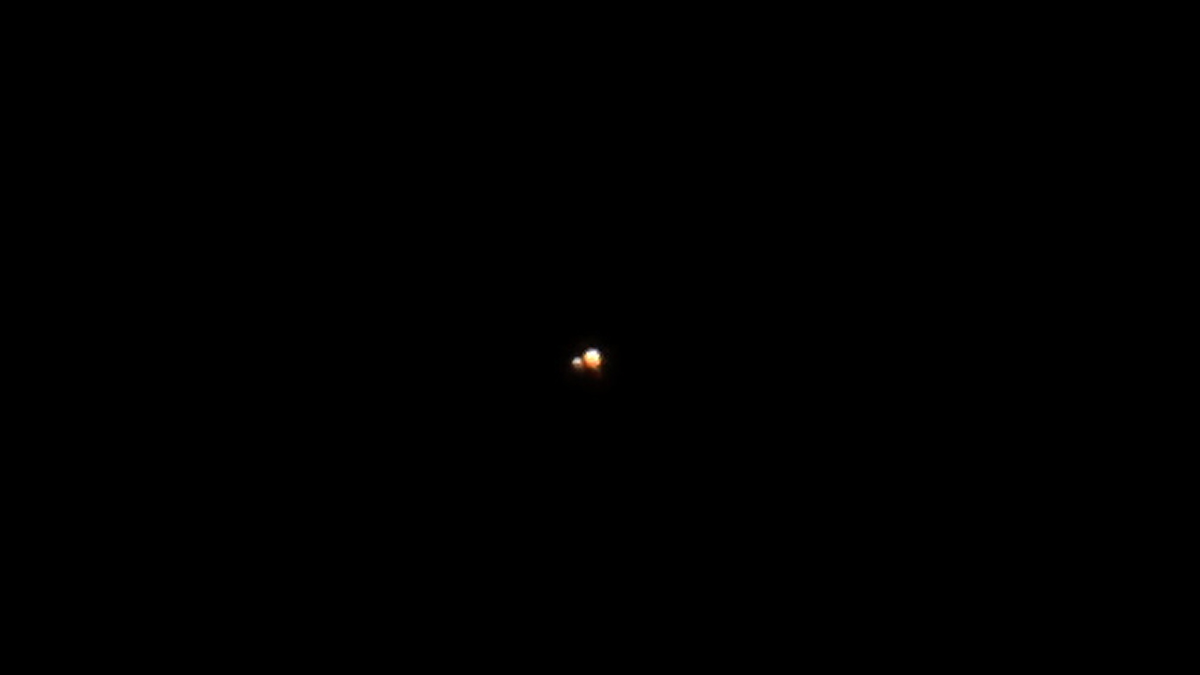
You can view the multiple star system Rasalgethi from the city without the aid of binoculars or a telescope. As a star in the constellation Hercules, it is viewable in late spring through summer. This red supergiant lies 380 light years away from us with a radius 400 times larger than our own sun! According to astronomer Jim Kaler, if we could replace our sun with Rasalgethi, this humungous star would extend past Mars.
When viewing Rasalgethi through a telescope, you will see a double star. The brighter star, which is the supergiant Alpha Herculis A, is around 500 astronomical units from its dimmer companion star, Alpha Herculis B. The two make a beautiful pairing that everyone should enjoy.
Historically speaking, the Egyptian astronomer Muḥammad al-Akhṣāṣī al-Muwaqqit gave the star the name “Ras al Djathi” (meaning “head of kneeler”) in his writings titled Calendarium more than 400 years ago.
My Observations
| Date | June 26, 2021 |
| Time | 11:00 p.m. |
| Location | Seattle, WA |
| Magnification | 145x |
| Scope | Meade 8″ SCT |
| Eyepiece | 14mm |
| Seeing | Average |
| Transparency | Above Average |

Rasalgethi is one of the prettier multiple star systems viewable to amateur astronomers. Through my scope tonight, the brighter star (Alpha Herculis A) appears gold with a tinge of orange. Meanwhile, the secondary star (Alpha Herculis B) is a white with perhaps a hint of blue. I did have trouble splitting the double until I increased the magnification to around 140x.
Key Stats
| Constellation | Hercules |
| Best Viewing | Summer |
| Visual Magnitude | +3.3 | +5.4 |
| Absolute Visual Magnitude | +5.3 |
| Distance from Earth | 360 ly |
| Separation | 4.6″ | 516 AU |
| Orbital Period | 3600 yrs |
| Milky Way Location | Orion Spur |
| My Viewing Grade | A- |
Sources and Notes
Banner shared under the Creative Commons Attribution-Share Alike 4.0 International license. Details here.
Sketch by Wayne McGraw
AKA: Ras Algethi, SAO 102680
 The Garden Astronomer
One thought on “Rasalgethi (Alpha Herculis): Magnificent Red Supergiant with a Bluish Friend”