
Aquila is best known as the home of Altair, one of the three bright stars that make up the Summer Triangle. But hidden away in the Eagle’s wing lies 57 Aquilae, a double star that often goes unnoticed. With a modest telescope, this pair reveals itself as a striking duo.
The Double Star Itself
57 Aquilae is not just one star but two: 57 Aquilae A and 57 Aquilae B. They shine at magnitudes 5.7 and 6.4—bright enough to see with binoculars under dark skies, but far more rewarding through a telescope.
The two are separated by about 36 arcseconds, wide enough that even small scopes can split them with ease. Both stars belong to the B-type class, which gives them a clean, blue-tinted sparkle. Observers often describe them as appearing like “twin pearls” set against the background of the Milky Way.
My Observations
| Date | September 8, 2021 |
| Time | 9:32 p.m. |
| Location | Seattle, WA |
| Magnification | 127x |
| Scope | Meade 8″ SCT |
| Eyepiece | 16mm |
| Seeing | Above Average |
| Transparency | Above Average |

This is a splendid blue-green looking pair of stars equally matched in size and brightness, sitting as blue topaz gems in a lonely patch of sky.
Key Stats
| Constellation | Aquila |
| Best Viewing | Autumn |
| Visual Magnitude | +5.7 | +6.4 |
| Separation | 35.7″ | 5280 AU |
| Position Angle | 171° |
| Absolute Visual Magnitude | -.16 |
| Distance from Earth | 480 ly |
| Orbital Period | Unknown |
| Milky Way Location | Orion Spur |
| My Viewing Grade | B |
| Designations | SAO 143898, STF 2594, HIP 97966 |
Sources and Notes
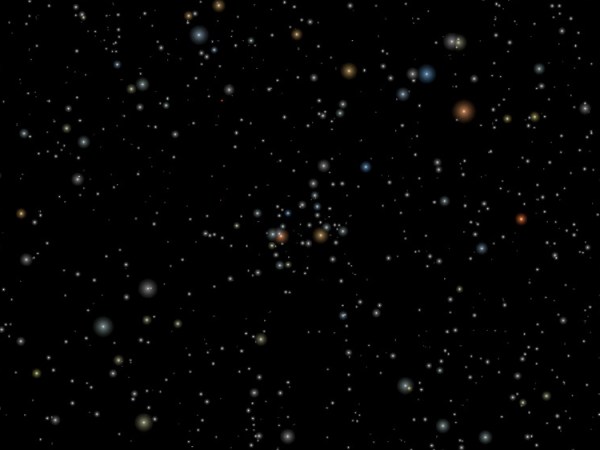
Banner shared from DSS2 image of 57 Aquilae. Details here.
Sketch by Wayne McGraw




 The Garden Astronomer
One thought on “57 Aquilae: A Light Topaz Blue Double”