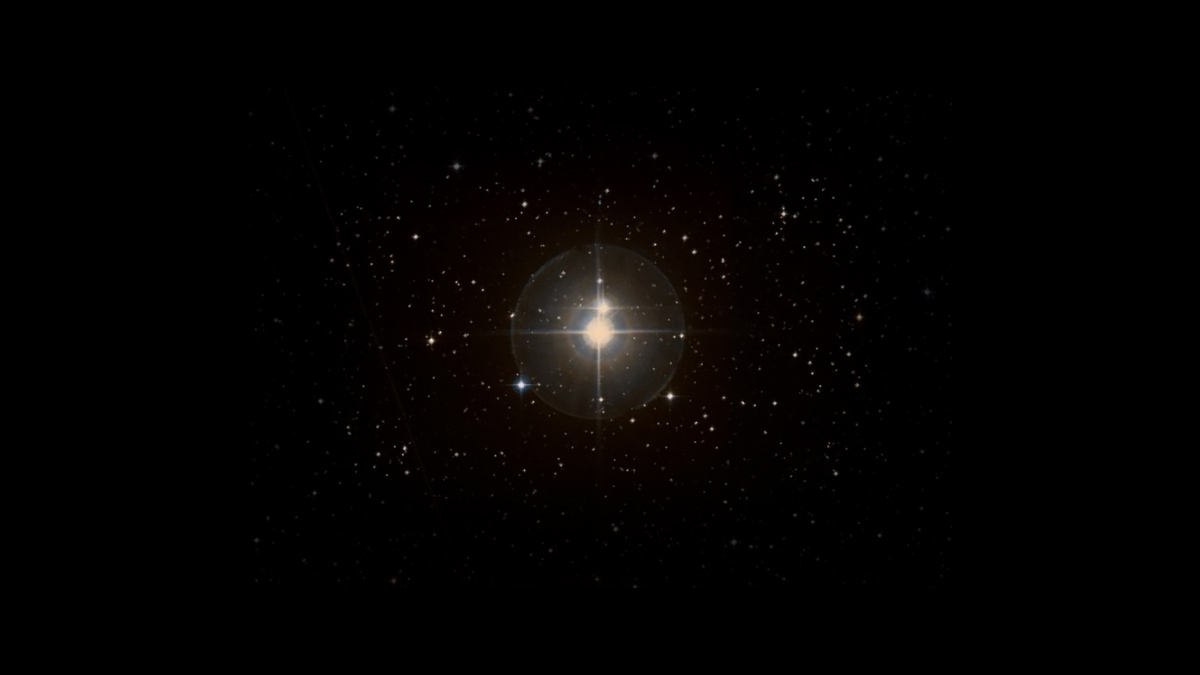
The double star Gamma Leporis makes its home in Lepus, a less-known constellation directly below Orion. The pair consists of a bright yellow star along with a dimmer orange one. Interestingly, Jim Kaler notes earlier astronomers described the pair as “light yellow and pale green.”1
Splitting this double will not be difficult with binoculars or a telescope because they are separated by a good amount of length (96 arcseconds). The two lie 864 astronomical units apart and are fairly close to us at a distance of 29 light years.
My Observations
| Date | January 24, 2022 |
| Time | 7:10 p.m. |
| Location | Seattle, WA |
| Magnification | 127x |
| Scope | Meade 8″ SCT |
| Eyepiece | 16mm |
| Seeing | Good |
| Transparency | Good |
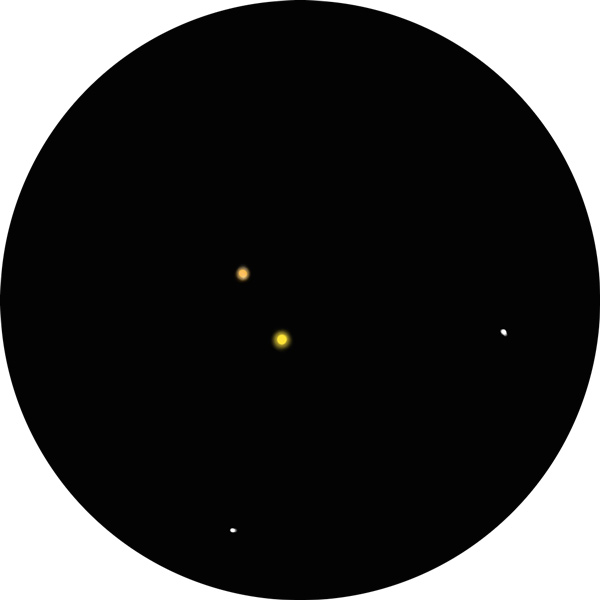
I believe this is my first time taking a walk through Lepus with the help of scope. The brighter primary star is a mustard color, while the secondary is an orange-red hue. This is an easy pair to split and a nice destination after wandering around Orion for a while.
Key Stats
| Constellation | Lepus |
| Best Viewing | Winter |
| Visual Magnitude | +3.6 | +6.3 |
| Absolute Visual Magnitude | +3.8 |
| Distance from Earth | 29 ly |
| Separation | 95″ | 864 AU |
| Milky Way Location | Orion Spur |
| My Viewing Grade | A |
Sources and Notes
Banner shared under the Creative Commons Attribution-Share Alike 4.0 International license. Photo by Aquil Virgos. Details here.
Sketch by Wayne McGraw
1 Gamma Leporis. (n.d.). Retrieved April 28, 2022, from http://stars.astro.illinois.edu/sow/gammalep.html
AKA: SAO 170759, 13 Lep, HD 38393
 The Garden Astronomer