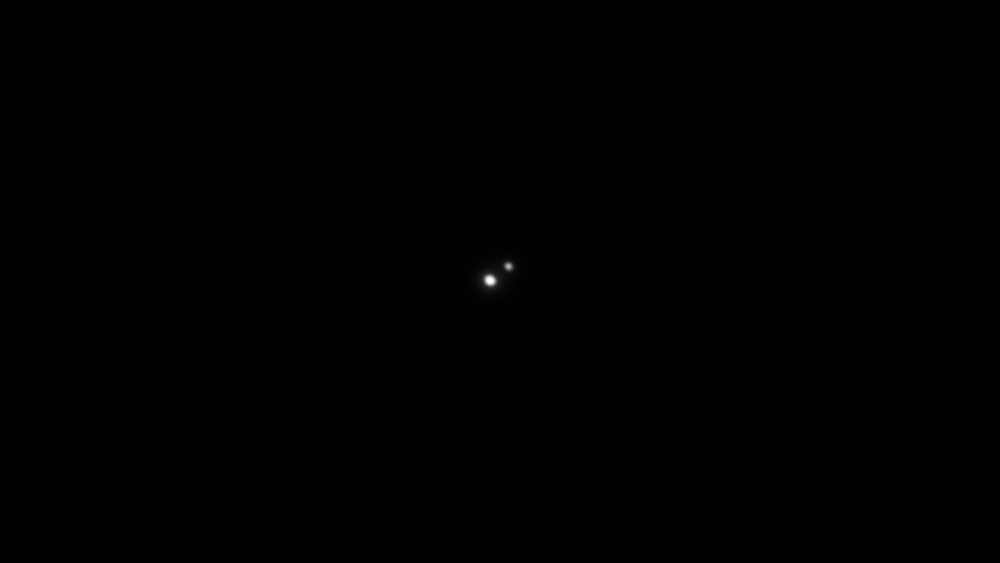
Gamma Leonis, also known by its Arabic name Algieba, is a double star in the constellation Leo. It’s best viewed in the spring.
Algieba is viewable with the naked eye, but it will take at least a small telescope to see both stars. The brighter star, called Gamma-1 Leo, is a magnitude 2 star, while the dimmer star, called Gamma-2 Leo, is a magnitude 4. Upon viewing the double star, the nineteenth-century observers Smyth and Chambers wrote that Algieba “a splendid double star…bright orange and greenish yellow” and a “most beautiful object.” 1
What makes this double especially interesting is the discovery of an exoplanet orbiting Gamma-1 Leo. According to NASA, the planet Gamma Leonis b, is a gas giant planet orbiting Gamma-1 Leo every 428 days. Its mass is almost 9 Jupiters!
My Observations
| Date | May 21, 2022 |
| Time | 11:37 p.m. |
| Location | Seattle, WA |
| Magnification | 169x |
| Scope | Meade 8″ SCT |
| Eyepiece | 12mm |
| Seeing | Average |
| Transparency | Above Average |
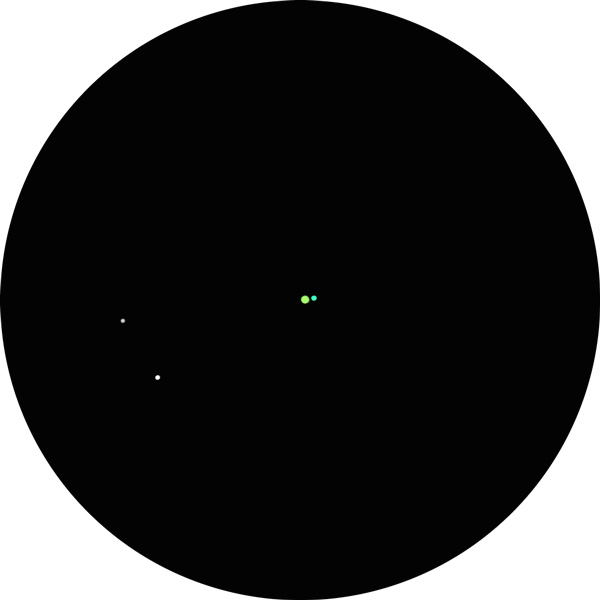
Algieba is a treat in the eyepiece. It’s an exceptional pair of stars that contrast nicely. The primary brighter star appears yellow-orange, while the secondary smaller star appears lime green to me. After trying various powers, I landed on my 12mm eyepiece to give me my favorite view.
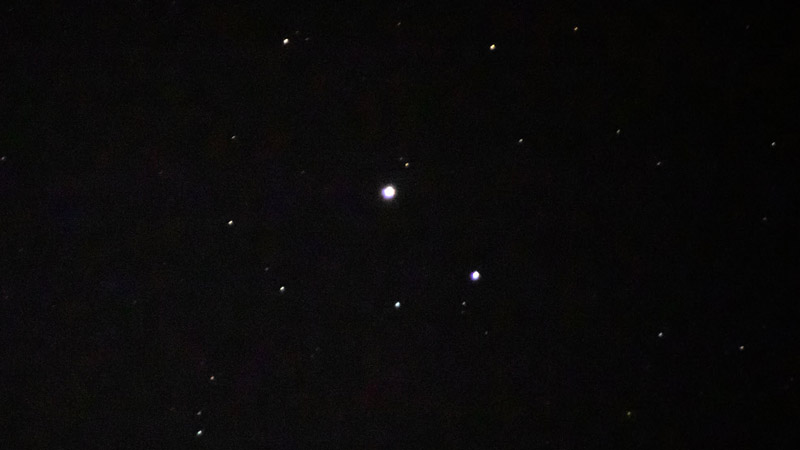
Backyard Photo
Key Stats
| Constellation | Leo |
| Best Viewing | Spring |
| Visual Magnitude | +2.2 | +3.6 |
| Absolute Visual Magnitude | -.77 |
| Distance from Earth | 130 ly |
| Separation | 4.8″ | 235 AU |
| Orbital Period | 554 years |
| Milky Way Location | Orion Spur |
| My Viewing Grade | A |
Sources and Notes
Photo of Algieba by STF8LZOS6. This file is licensed under the Creative Commons Attribution-Share Alike 4.0 International license.
1 Algieba. (n.d.). Retrieved May 22, 2022, from http://stars.astro.illinois.edu/sow/algieba.html
 The Garden Astronomer