
HD 919, also known as HIP 1124 or STTA 1, is a variable double star in the constellation Cepheus that warrants a look due to the pretty red color of the primary star. It’s best viewed on autumn nights.
The constellation Cepheus holds a number of gems for backyard astronomers, but HD 919 doesn’t come up often on popular observing lists. It should since this is an enjoyable double star to take in. The primary star is a variable red giant and is a whopping 48 times larger than our sun. The secondary star sits 73 arcseconds away and is a touch dimmer.
My Observations
| Date | September 26, 2022 |
| Time | 10:13 p.m. |
| Location | Seattle, WA |
| Magnification | 169x |
| Scope | Meade 8″ SCT |
| Eyepiece | 12mm |
| Seeing | Good |
| Transparency | Good |
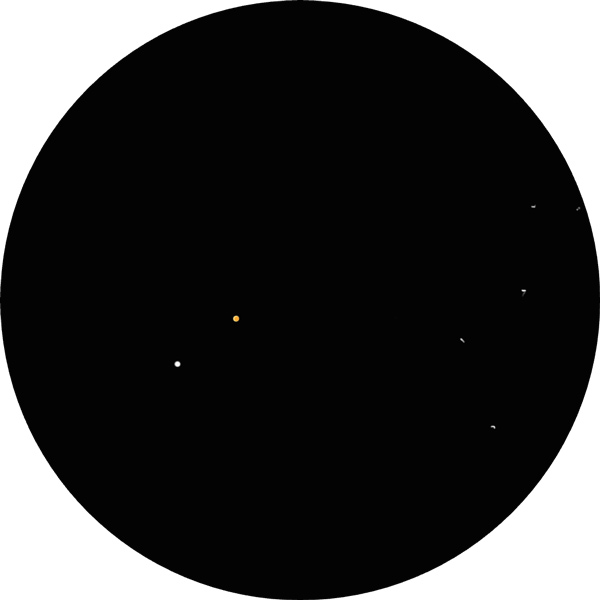
I’m glad I found this object during my online research. The primary is slightly brighter and is red/orange in color. The secondary looks really close in brightness, which adds to the allure of this pair. The secondary appears white to beige in color.
Key Stats
| Constellation | Cepheus |
| Best Viewing | Autumn |
| Visual Magnitude | +7.2, +7.8 |
| Separation | 73″ | 20055 AU |
| Spectral Class | A=M1, B=? |
| Absolute Visual Magnitude | +.01 |
| Distance from Earth | 890 ly |
| Milky Way Location | Orion Spur |
| My Viewing Grade | B |
Sources and Notes
Banner illustration was created by the European Southern Observatory (ESO) and is under the Creative Commons Attribution 4.0 International License. Per ESO agreement: Here is the original image on the ESO website.
Sketch by Wayne McGraw
AKA: SAO 4062, HIP 1124, STTA 1
 The Garden Astronomer