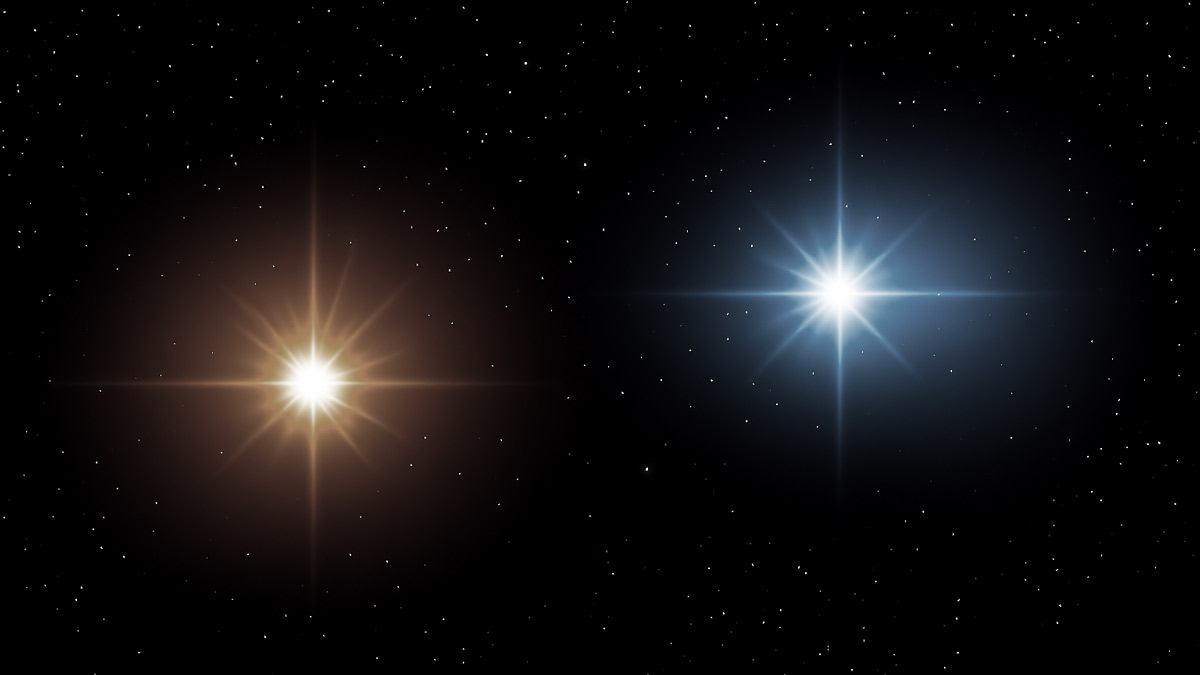
Anser, also known as Alpha Vulpeculae, is a bright orange variable and double star in the constellation Vulpecula. Observers can enjoy seeking out the star on summer nights.
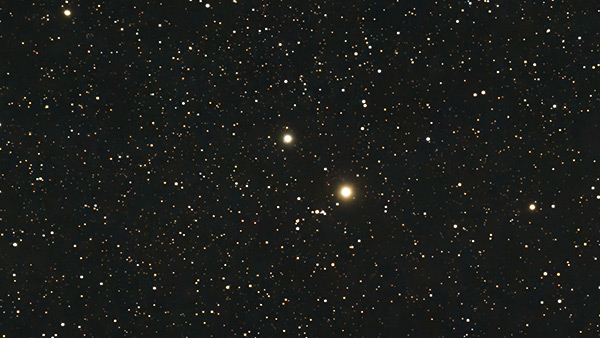
Even though it’s 295 light-years away, Anser shines at a relatively bright magnitude of +4.4 in the summer sky. Using binoculars or a telescope, backyard astronomers can easily spy Anser’s companion, 8 Vulpeculae. Anser is an optical double star since it’s not bound to 8 Vulpeculae. In fact, 8 Vulpeculae is 457 light-years away from us.
One interesting thing about Anser is that it most likely didn’t start life in the Milky Way. Instead, the star belongs to the Arcturus stream, a group of stars that originated in an ancient dwarf galaxy consumed by our galaxy. The Arcturus stream contains 53 stars that move at similar speeds and in the same direction. Another popular member of the group is the star Arcturus,
My Observations
| Date | October 1, 2022 |
| Time | 9:40 p.m. |
| Location | Seattle, WA |
| Magnification | 169x |
| Scope | Meade 8″ SCT |
| Eyepiece | 12mm |
| Seeing | Good |
| Transparency | Good |
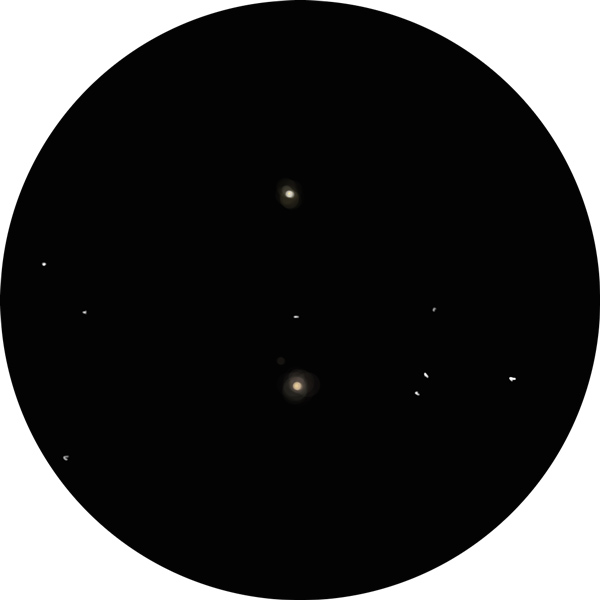
First off, the second I centered Anser in my eyepiece, the most hideous, piercing chirp from some flying animal shot out of the darkness straight above me! It seemed to emanate from 100 feet up near the treetops. I actually jumped, and my heart raced for a minute as I tried to see the location of this eagle—or whatever bird that was!
In an area of sky with dimmer stars, Anser is a welcoming double star. It has an orange hue, and its optical companion (8 Vulpeculae) is yellow-orange. Through my 12mm eyepiece, both stars look like embers against a background of dimmer stars.
Also observed on October 22, 2025, from Tampa, Florida, with a Seestar S50.
Key Stats
| Constellation | Vulpecula |
| Best Viewing | Summer |
| Visual Magnitude | +4.4, +5.9 |
| Separation | 427″ |
| Spectral Class | A=M0 III, B=K0 III |
| Absolute Visual Magnitude | -.36 |
| Distance from Earth | 297 ly |
| Milky Way Location | Orion Spur |
| My Viewing Grade | A- |
| Designations | SAO 87261, 6 Vul, STFA 42, HD 183439 |
Sources and Notes
Sketch and photo by Wayne McGraw
Kushniruk, I., & Bensby, T. (2019). Disentangling the Arcturus stream. Astronomy & Astrophysics, 629, A78. https://doi.org/10.1051/0004-6361/201935234
 The Garden Astronomer