
NGC 6830 is a distant open star cluster in the constellation Vulpecula best viewed on moonless autumn nights.
Approximately 50 faint stars make up NGC 6830. The fairly dim cluster lies 5,300 light-years away and can be tough to resolve—and enjoy—when viewing under light-polluted skies. However, a handful of brighter stars stand out in an “x” pattern, which gives this stellar object some visual interest.
In 2016, astronomers published a paper detailing how the cluster contains three Be stars, a special type of B star. According to Phys.org, the findings “could shed new light on the presence of this type of star in old open clusters like NGC 6830.”1
Historically speaking, the astronomer William Hershel first cataloged the cluster in 1784.
My Observations
| Date | October 1, 2022 |
| Time | 9:30p.m. |
| Location | Seattle, WA |
| Magnification | 169x |
| Scope | Meade 8″ SCT |
| Eyepiece | 12mm |
| Seeing | Average |
| Transparency | Average |
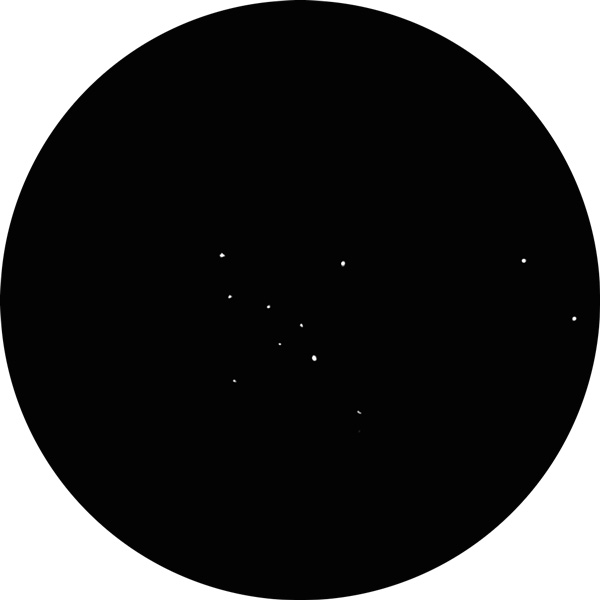
This is a smaller cluster with a good number of dimmer stars scattered loosely. A handful of brighter stars cross in the middle in an “x” pattern. The moon floats above me tonight, adding to the suburban light pollution, so I’m struggling to get a transparent view of this cluster. I’m sure darker skies bring out this cluster’s dimmer stars beautifully.
Key Stats
| Constellation | Vulpecula |
| Best Viewing | Autumn |
| Visual Magnitude | +7.9 |
| Distance from Earth | 5,300 ly |
| Milky Way Location | Orion Spur |
| My Viewing Grade | B- |
Sources and Notes
Banner graphic by Trinitrix. The file is licensed under the Creative Commons Attribution-Share Alike 3.0 Unported license.
1 Nowakowski, Tomasz. “Astronomers Discover Two New Stars in a Distant Open Cluster.” Phys.org, Phys.org, 12 Apr. 2016, https://phys.org/news/2016-04-astronomers-stars-distant-cluster.html.
 The Garden Astronomer