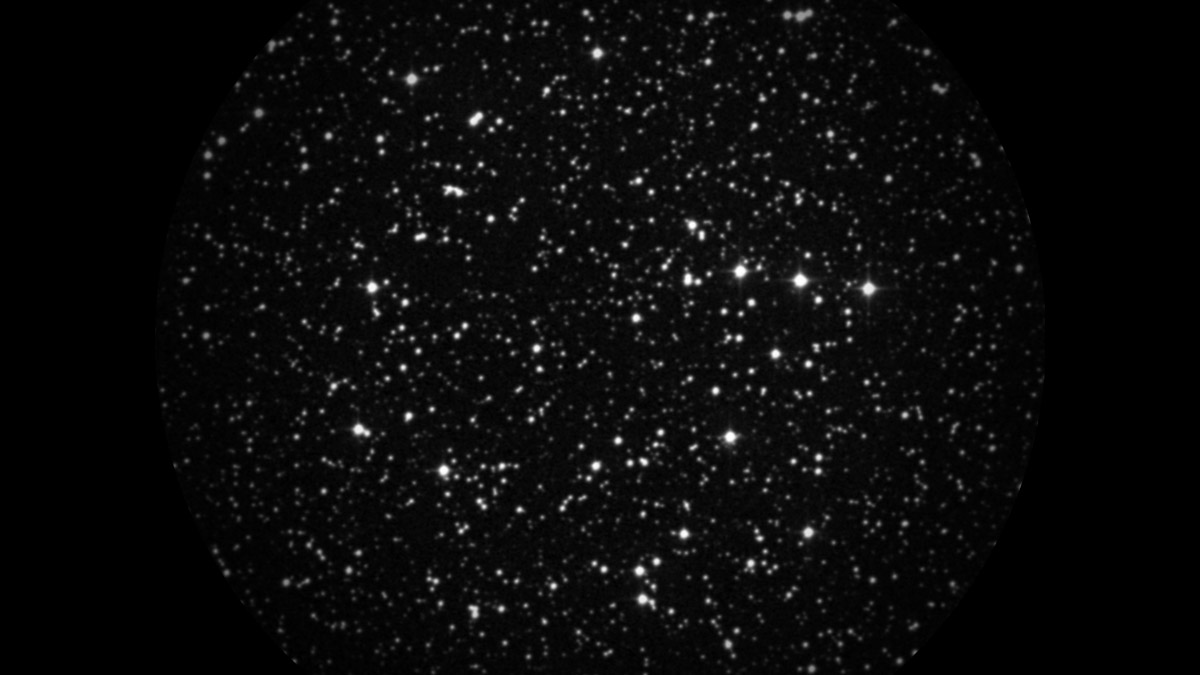
NGC 7281 is an open cluster in the constellation Cepheus best viewed on autumn nights.
The cluster lies 5,284 light-years away, with an approximate diameter of 12 arcminutes in the sky, which indicates that it’s physically around 18 light-years in diameter. Out of NGC 7281’s 20+ star members, three brighter equidistant stars make a line across the cluster. This line will help backyard astronomers confirm they’ve landed on the correct target.
According to the Webb Deep-Sky Society, some debate exists about NGC 7281 regarding its classification as a true star cluster. You can read more here.
Historically speaking, John Herschel first recorded NGC 7281 as he swept the sky on October 5, 1829, describing it as a large “coarse, not extremely poor, [with] the stars scattered and 10 – 16 magnitude.”
My Observations
| Date | October 28, 2022 |
| Time | 8:35 p.m. |
| Location | Seattle, WA |
| Magnification | 169x |
| Scope | Meade 8″ SCT |
| Eyepiece | 12mm |
| Seeing | Average |
| Transparency | Below Average |
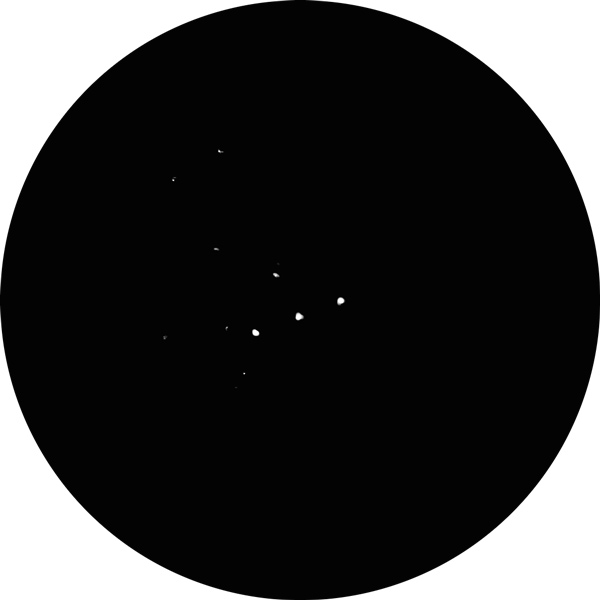
Due to hazy conditions tonight, I’m unable to resolve dimmer stars in this cluster. Most notably, the three most prominent stars in the cluster are bright white and run in a straight line, looking somewhat like a miniature Orion’s belt.
Key Stats
| Constellation | Cepheus |
| Best Viewing | Autumn |
| Visual Magnitude | +8 |
| Distance from Earth | 5284 ly |
| Milky Way Location | Orion Spur |
| My Viewing Grade | C+ |
Sources and Notes
Banner graphic created from R/B-band color composite image from the Second Digitized Sky Survey (DSS2), measuring 10 arcminutes across.
 The Garden Astronomer