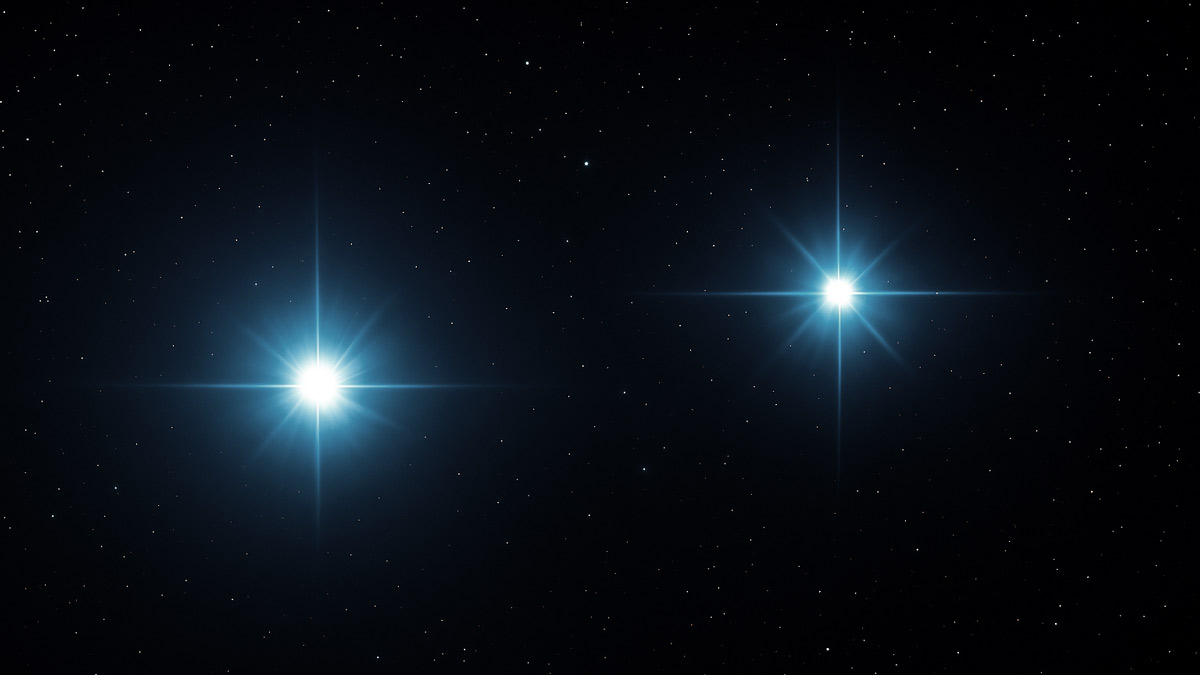
The double-star system known as 10 Lacertae resides in Lacerta, the constellation of the lizard, a dim constellation visible in the autumn and winter nights. The sky lizard offers a rich collection of deep-sky objects, and 10 Lacertae is one of them. Compared to 8 Lacertae, with its well-known multiple bright blue stars, 12 Lacertae and 10 Lacertae are not as visually interesting, but they are still essential objects in astronomy.
Notably, 10 Lacertae’s brighter primary star is a hot, blue main-sequence star that is extremely massive and extremely hot, with a surface temperature of 32,000 Kelvin. Furthermore, 10 Lac was one of the first stars identified as O-type, and astronomers continue to use it as a reference point for these stars. The star’s life will not be long as it will burn through its fuel over a 10-million-year period and eventually go supernova.1
The secondary companion star lies nearby at 62 arcseconds away.
My Observations
| Date | November 18, 2022 |
| Time | 8:32 p.m. |
| Location | Seattle, WA |
| Magnification | 169x |
| Scope | Meade 8″ SCT |
| Eyepiece | 12mm |
| Seeing | Above Average |
| Transparency | Above Average |

While not as alluring as 8 Lacertae with its star cluster-looking appeal, 10 Lac offers a nice blue double as I skim through this constellation. By how it looks, one could view 10 Lac as a twin system of 12 Lacertae, minus the fact that the secondary star in 10 Lac is brighter. Plus, there are a few more noticeable stars in my field of view.
Key Stats
| Constellation | Lacerta |
| Best Viewing | Autumn |
| Visual Magnitude | +4.8 | +10.3 |
| Absolute Visual Magnitude | -3.7 |
| Distance from Earth | 1,700 ly |
| Separation | 62.6″ |
| Orbital Period | Unknown |
| Milky Way Location | Orion Spur |
| My Viewing Grade | B |
| Designations | 10 Lac, HR 8622, SAO 72575, HD 214680 |
Sources and Notes
1Kaler, Jim. 10 Lacertae, http://stars.astro.illinois.edu/sow/10lac.html.
Sketch by Wayne McGraw
 The Garden Astronomer
4 thoughts on “10 Lacertae: A Blistering, Brillant Hot Blue Double Star”