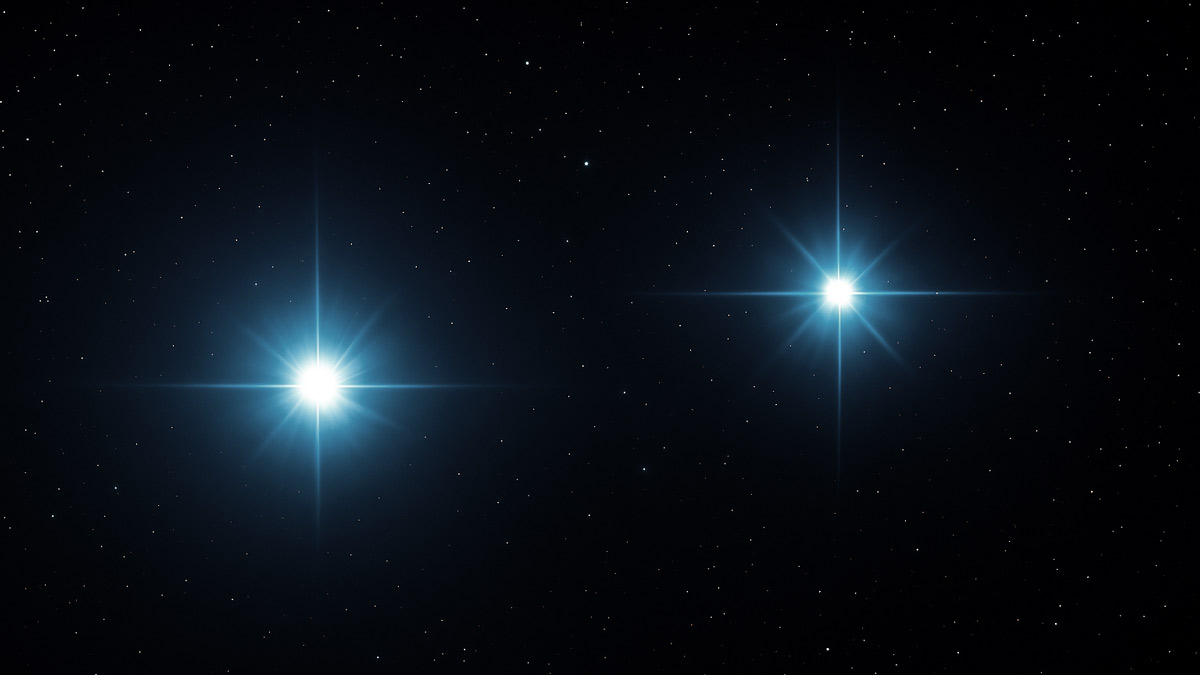
The double-star system called 12 Lacertae makes its home in Lacerta, the lizard, a dim constellation of autumn and winter nights. The sky lizard offers a rich collection of deep-sky objects, and 12 Lacertae is one of them. Compared to 8 Lacertae, with its well-known multiple bright blue stars, 12 Lacertae and 10 Lacertae are blue double-star systems worth visiting.
12 Lacertae’s brighter primary star is a blue-white giant that is also a Beta Cephei variable. Its magnitude brightens and dims between magnitudes 5.16 and 5.28.1
The secondary companion star lies nearby (at least as viewed through a telescope).
My Observations
| Date | November 18, 2022 |
| Time | 8:40 p.m. |
| Location | Seattle, WA |
| Magnification | 169x |
| Scope | Meade 8″ SCT |
| Eyepiece | 12mm |
| Seeing | Above Average |
| Transparency | Above Average |

While not as alluring as 8 Lacertae with its star cluster-looking appeal, 12 Lac offers a nice blue double as I skim through this constellation. From its appearance, one could view 12 Lac as almost a twin to 10 Lacertae, except that the secondary star in 12 Lac is dimmer.
Key Stats
| Constellation | Lacerta |
| Best Viewing | Autumn |
| Visual Magnitude | +5.2 | +10.8 |
| Absolute Visual Magnitude | -2.8 |
| Distance from Earth | 1,300 ly |
| Separation | 65.8″ |
| Orbital Period | .19 days |
| Milky Way Location | Orion Spur |
| My Viewing Grade | B |
Sources and Notes
Banner adapted from an illustration created by Pablo Budassi. The illustration is licensed under the Creative Commons Attribution-Share Alike 4.0 International license. Full details here.
Sketch by Wayne McGraw
Aka: 12 Lac, 12 Lacerta, DD Lac, SAO 72627, HD 214993
 The Garden Astronomer
2 thoughts on “12 Lacertae: Crystal Blue Double”