
Writer and astronomer C.E. Barns described Messier 37 as a “diamond starburst.”1 Without question, his opinion is accurate. M37 is one of the most beautiful clusters in the northern winter sky. Another popular name for this cluster is the Salt and Pepper Cluster.
Even under suburban skies, M37 is a nice target for any optical instrument. Binoculars and smaller scopes will provide a fuzzy, nebula-like smudge in the eyepiece. Scopes three inches or more in diameter have the ability to pull out individual stars. Observers are treated to a view of stars like glowing glitter spread across a dark blanket.
If you are a first-time traveler through the constellation Auriga, don’t forget to look at the triplet of rich clusters in the region: M36, M37, and M38.
My Observations
| Date | January 20, 2023 |
| Time | 7:42 p.m. |
| Location | Seattle, WA |
| Magnification | 85x |
| Scope | Meade 8″ SCT |
| Eyepiece | 24mm |
| Seeing | Good |
| Transparency | Below Average |
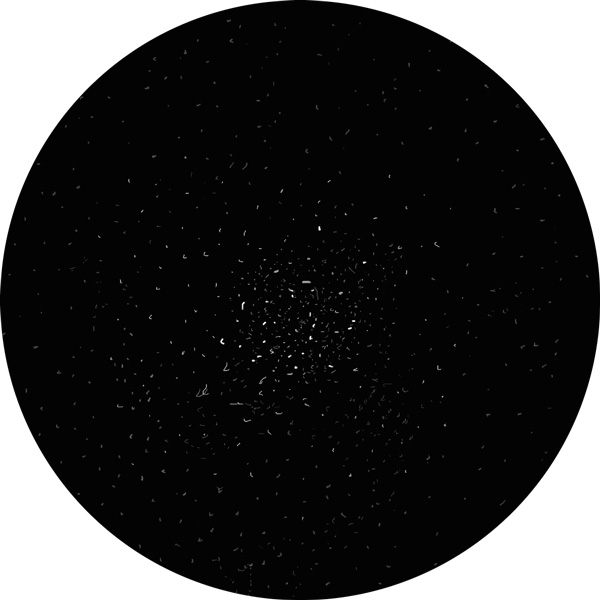
First observed on November 7, 2020, at 12:15 am.: The Auriga constellation is rich with beautiful star clusters. Before studying the sites in Auriga with a telescope, observers should scan the region with binoculars. Even under light-polluted skies, binoculars can pull out M36, M37, and M38. This evening, I’m using a 14mm eyepiece on M37. I find myself immersed in the cluster, and it’s difficult to take my eyes away. I can see individual stars—many more than what I observed in M38.
Key Stats
| Constellation | Auriga |
| Best Viewing | Winter |
| Visual Magnitude | +5.6 |
| Absolute Magnitude | -5.1 |
| Distance from Earth | 4,500 ly |
| Diameter | 18.4 ly |
| Apparent Size | 14′ arcmin |
| Milky Way Location | N/A |
| My Viewing Grade | A- |
Historical Observations
September 2, 1764 observation by Charles Messier
“In the same night [September 2 to 3, 1764], I have observed a second cluster of small stars which were not very distant from the preceding, near the right leg of Auriga & on the parallel of the star Chi of that constellation: the stars there are smaller than that of the preceding cluster: they are also closer to each other, & contain a nebulosity. With an ordinary [non-achromatic] refractor of 3 feet & a half, one has difficulty to see these stars; but one distinguishes them with an instrument of greater effectivity. I have determined the position fo this cluster, which may have an extension of 8 to 9 minutes of arc: its right ascension was 84d 15′ 12″, & its declination 32d 11′ 51″ north.”
Sources and Notes
M37 photo provided by Starhopper and licensed under the Creative Commons Attribution-Share Alike 4.0 International license.
1 Burnham, Robert. Volume 1: Burnham’s Celestial Handbook: An Observer’s Guide tot he Universe Beyond the Solar System. 1968. Dover, 1978.
Charles Messier Observations: SEDS Messier Database
AKA: NGC 2099, M37
 The Garden Astronomer

4 thoughts on “Messier 37 (NGC 2099): A Diamond Starburst in Auriga”