
NGC 1502 is a rich, attractive open star cluster in the constellation Camelopardalis (the giraffe). As a circumpolar constellation, Camelopardalis never sets in the northern hemisphere. The constellation may be tough to pronounce and too dim to see from the suburbs, but one should never give up on it because several notable deep sky objects lie in its midst, including NGC 1502.
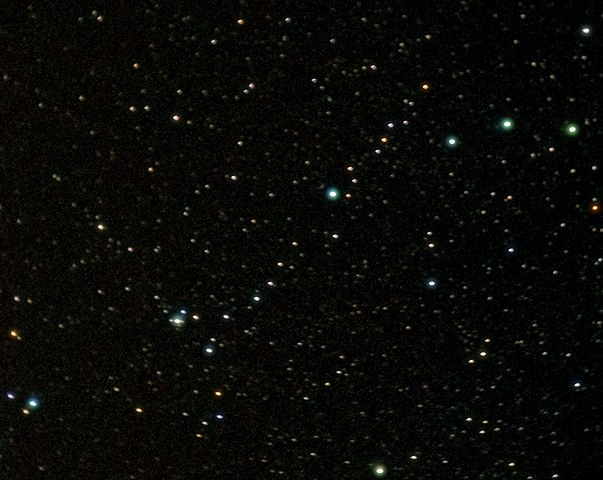
While suburban light pollution wipes away NGC 1502’s brighter stars, the cluster remains fairly bright for suburban astronomers viewing it through a telescope. The cluster shines at magnitude 6. Also, observers cannot miss the beautiful asterism known as Kemble’s Cascade that runs into NGC 1502. The asterism is a line of equally bright, 8th-magnitude stars and looks great in binoculars.
Also, one of the brighter stars within NGC 1502 is called SZ Camelopardalis (SZ Cam), a 6th magnitude variable double star. SZ Cam is also known as Struve 485 and is one of several variable stars that call NGC 1502 home.
Historically speaking, William Herschel first recorded NGC 1502 on November 3, 1787.1
My Observations
| Date | March 16, 2023 |
| Time | 8:45 p.m. |
| Location | Seattle, WA |
| Magnification | 169x |
| Scope | Meade 8″ SCT |
| Eyepiece | 12mm |
| Seeing | Below Average |
| Transparency | Poor |
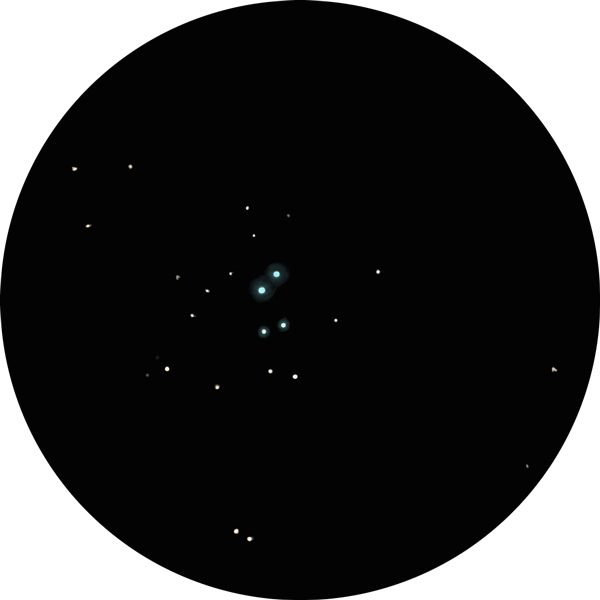
NGC 1502 hides out in an “empty” region of the sky circling Polaris. I started studying the region because I wanted to view Kemble’s Cascade. While navigating the area, I came upon this quaint and pretty cluster. There are several nice pairs of stars in the center. Even though tonight has poor skies (very hazy and humid), this cluster fairs well as it breaks through the haze.
Key Stats
| Constellation | Camelopardalis |
| Best Viewing | Winter |
| Visual Magnitude | +6.9 |
| Absolute Magnitude | -3.1 |
| Distance from Earth | 3,300 ly |
| Diameter | 7.6 ly |
| Apparent Size | 8 arcmin |
| Milky Way Location | Orion Arm |
| My Viewing Grade | A |
| Designations | NGC 1502, Struve 485 (STF 485) |
Other Observations in Camelopardalis
Sources
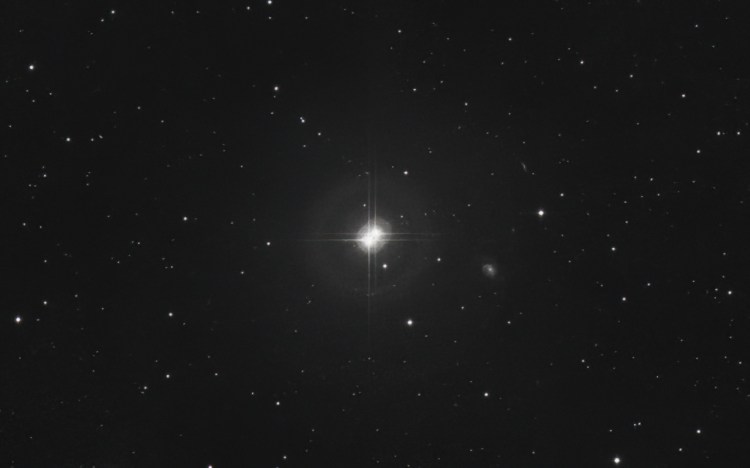
The top banner image includes a photo of NGC 1502 by photographer Kamil Pecinovský (http://astrofotky.cz/~caradoc). The image is licensed under the Creative Commons Attribution-Share Alike 4.0 International license. Full details.
The photo of Kemble’s Cascade is by Wayne Young and is licensed under the Creative Commons Attribution 2.0 Generic license. Full details.
1“NGC 1502.” Wikipedia, Wikimedia Foundation, 6 Mar. 2023, en.wikipedia.org/wiki/NGC_1502. Accessed 17 Mar. 2023.
Sketch by Wayne McGraw
 The Garden Astronomer
