
The Pinwheel Galaxy, also known as Messier 101 or NGC 5457, is a large spiral galaxy located in the constellation Ursa Major, also known as The Big Dipper. Springtime in the Northern Hemisphere finds the galaxy nearly straight overhead, so April through June is prime time for observing this beautiful face-on spiral.
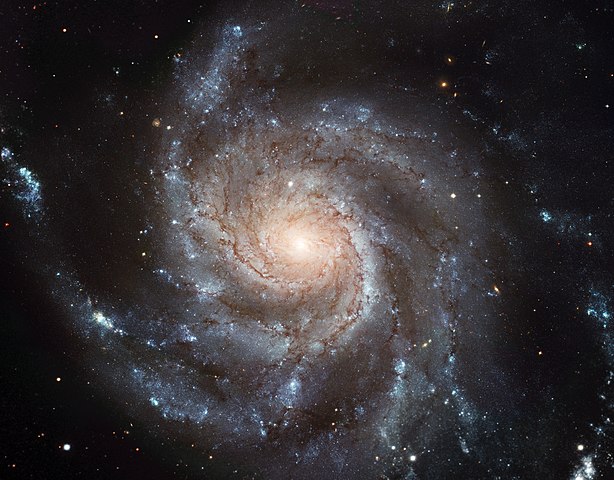
M101 is one of the closest galaxies to the Milky Way at 21 million light years away. With a diameter of 170,000 light years, the Pinwheel is almost twice the size of our Milky Way home. These figures may be astounding, but so is the galaxy’s beauty. Active star-forming nebula and alluring blue newborn stars permeate the spiral arms. And when a star’s life ends amongst the galaxy’s sea of a trillion stars, it sometimes goes in a grand explosion with piercing unbelievable light.
My Friday Night Supernova
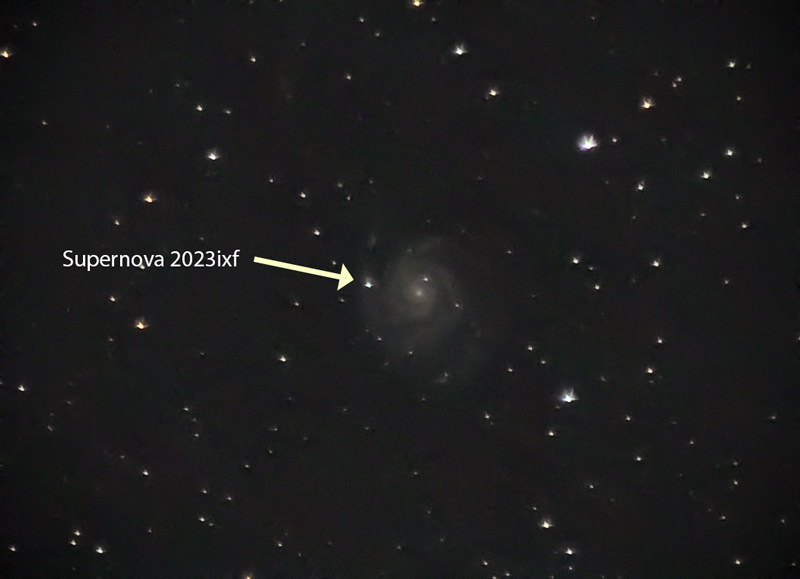
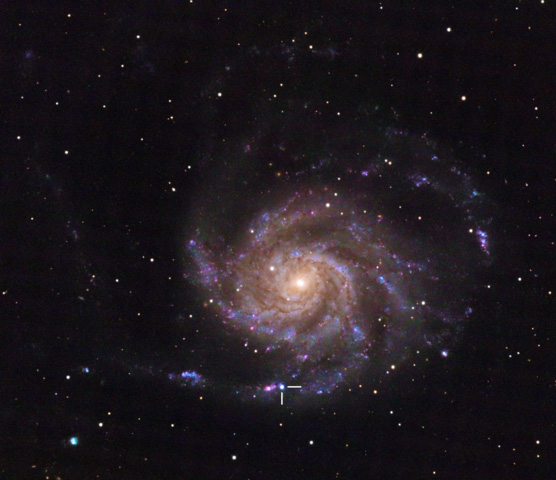
News of a new and brightening supernova in the Pinwheel spread across the world’s media outlets on May 19, 2023. That’s when amateur astronomer Koichi Itagaki spotted a unique light point in one of the galaxy’s spiral arms. As the days passed, the SN 2023ixf supernova grew brighter. For example, when Itagaki initially discovered the supernova, its magnitude was +14.9. However, within a mere three days, the light had significantly intensified to a magnitude of 11.1
Since the supernova appeared, I’ve been curious whether I could capture its light from my backyard in Seattle. Unfortunately, the mix of heavy light pollution and moonlight fight against me and my telescope regarding galaxies. The faint glow of these grand universe structures washes away easily in the suburbs, and sometimes only a patch of haze is noticeable.
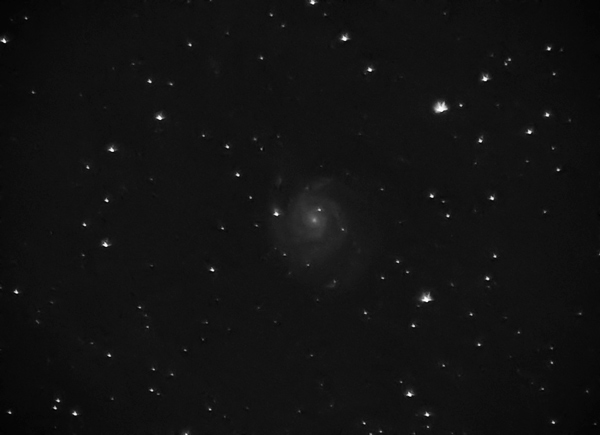
As my work week ended on Friday, I passed on the 8-inch Meade and used the Star Adventurer tracker with my old Canon 70d on board. I knew the tracker could capture the delicate galaxy light through multiple exposures. I set up and aligned the gear near the garden, letting the night sink in. After 15 minutes of trial and error, I found M101 using my old 300mm lens.
I must confess preparing the camera for M101 filled me with great excitement and anticipation. There, on a warm spring Seattle night, I lay on the cold grass listening to the DSLR click, the mirror opening for seconds at a time. I pondered all these years of enjoying the firmament—my mind jumped from seeing globular clusters as a child to the Milky Way in the Colorado mountains to the recent comets (like Neowise and ZTF). Never did I think I could “capture” a distant supernova light.
I consider myself a visual astronomer and only attempt astrophotography occasionally, so I tend to guess a lot when setting up shots. That evening, I ended up processing and stacking 70 photos. Although the end product does not match up to the quality of other galaxy shots, I am grateful that the brilliance of this colossal explosion graced me with its presence on a quiet Friday night.
Key Stats
| Constellation | Ursa Major |
| Best Viewing | Spring |
| Visual Magnitude | +7.77 |
| Absolute Visual Magnitude | -21.49 |
| Distance from Earth | 23 million ly |
| Designations | M101, NGC 5457, Arp 26 |
Historical Observations
First discovered on March 27, 1781, by Pierre Méchain.
“Nebula without star, very obscure & pretty large, of 6 or 7 minutes [of arc] in diameter, between the left hand of Bootes & the tail of the great Bear [Ursa Major].”2
Sources and Notes
Banner photo of M101 is by ESA/NASA. This file is licensed under the Creative Commons Attribution 4.0 International license. Details here.
1 Bartels, M. (2023, May 24). Astronomers have spotted a once-in-a-decade supernova-and you can, too. Scientific American. https://www.scientificamerican.com/article/astronomers-have-spotted-a-once-in-a-decade-supernova-and-you-can-too/
2 McArthur, G., & Frommert, H. (n.d.). Messier 101. Messier Object 101. http://www.messier.seds.org/m/m101.html
 The Garden Astronomer


One thought on “Messier 101: The Pinwheel Galaxy and Brilliant Supernova SN 2023ixf”