
NGC 6356 is a globular cluster located a stunning 50,000 light-years away from Earth. This smaller globular is best viewed on summer nights in the constellation Ophiuchus.
While NGC 6356 doesn’t illuminate and impress like others in this rich region of the sky, it is denser than many others. Specifically, it is a Class II on the Shapley–Sawyer Concentration Class. I noticed this density while making my own observation of the cluster (see below).
The astronomer William Herschel discovered this cluster on June 18, 1784.
My Observations
| Date | July 8, 2023 |
| Time | 11:35 p.m. |
| Location | Seattle, WA |
| Magnification | 169x |
| Scope | Meade 8″ SCT |
| Eyepiece | 12mm |
| Seeing | Above Average |
| Transparency | Above Average |
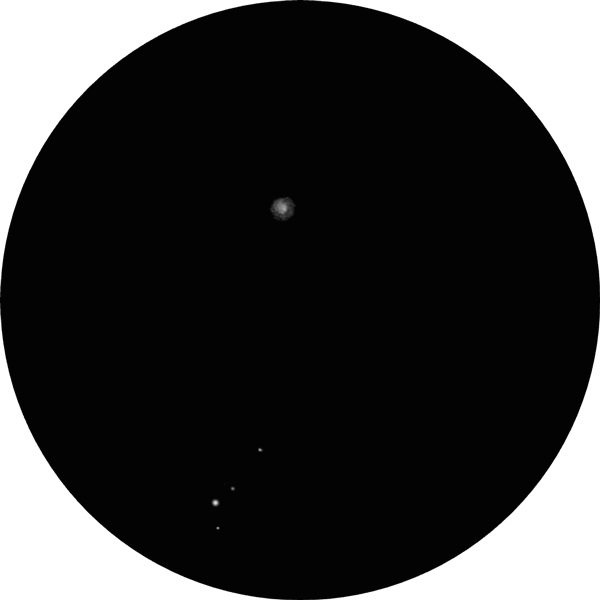
Tonight is a great night. The weather is perfect, the skies are clear, the moon is down, and while it’s the middle of summer, the mosquitoes have vanished. I decided to set the scope up further north in the yard, allowing me to see the lower south.
NGC 6356 is a small cluster. I’m unable to pick out any individual stars from my suburban location. The faint glow brightens considerably in the center. While this globular is unremarkable compared to others, including nearby M9, it’s still a nice target on summer nights.
Key Stats
| Constellation | Ophiuchus |
| Best Viewing | Summer |
| Visual Magnitude | +8.25 |
| Absolute Magnitude | -7.64 |
| Distance from Earth | 50,000 ly |
| Diameter | 143 ly |
| Apparent Size | 10 arcmin |
| My Viewing Grade | B- |
| Designations | NGC 6356 |
Sources
Banner photo of NGC 6356 by Azuma Ayu and licensed under the Creative Commons Attribution-Share Alike 4.0 International license. Source info.
Sketches by Wayne McGraw
 The Garden Astronomer
