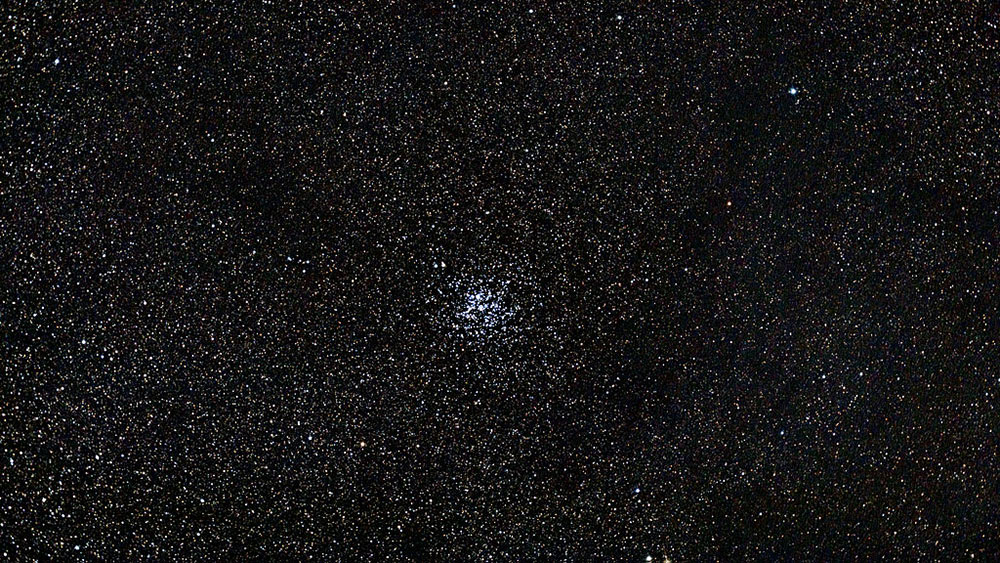
Messier 11 ( M11), affectionately known as the Wild Duck Cluster, is a rich open star cluster in the constellation Scutum. It’s best viewed during the summer months and early autumn from the northern hemisphere.
Backyard astronomers will appreciate the cluster’s compactness and bright magnitude, which allows this “cloud” of thousands of stars to be viewable under good conditions. In fact, M11 is easily visible with binoculars and can be seen as a hazy patch of light with the naked eye under dark skies. It is located around 6,000 light-years away from Earth and has a diameter in the sky of 32 arcminutes, about the same size as a full moon!
Historically speaking, M11 was first discovered by the German astronomer Gottfried Kirch in 1681 and later cataloged by the French astronomer Charles Messier on May 30, 1764.1
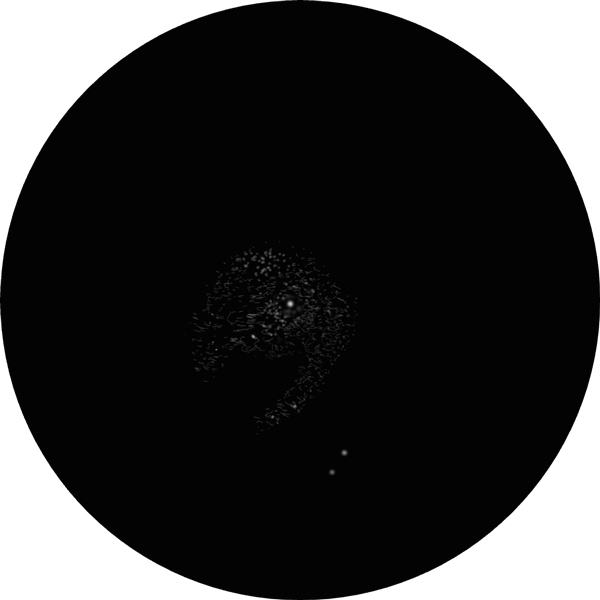
My Observations
| Date | July 9,2023 |
| Time | 12:40 a.m. |
| Location | Seattle, WA |
| Magnification | 127x |
| Scope | Meade 8″ SCT |
| Eyepiece | 16mm |
| Seeing | Above Average |
| Transparency | Above Average |
| Date | August 18, 2020 |
| Time | 9:48 p.m. |
| Location | Seattle, WA |
| Magnification | 127x |
| Scope | Meade 8″ SCT |
| Eyepiece | 16mm |
| Seeing | Above Average |
| Transparency | Above Average |
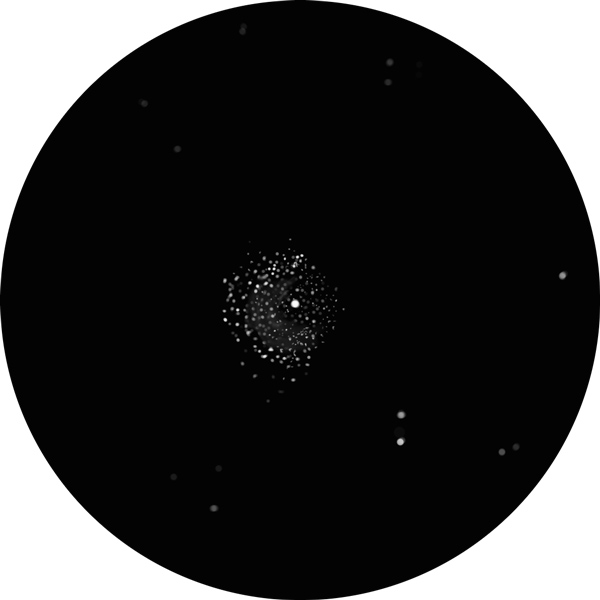
The Wild Duck is a very compact cluster and is a brilliant object in my 8-inch scope, even under these light-polluted suburban skies. There are places within the cluster that look more like nebulosity, but I believe the appearance comes from smaller clustered stars. Also, I notice a fairly bright star near the center with a “c” shape or horseshoe figure of slightly brighter stars going around it. I don’t see this shape in photographs.
Key Stats
| Constellation | Scutum |
| Best Viewing | Summer, Early Autumn |
| Visual Magnitude | +5.8 |
| Absolute Magnitude | -5.57 |
| Distance from Earth | 6,100ly |
| Diameter | 57 ly |
| Apparent Size | 32 arcmin |
| Milky Way Location | Orion Spur |
| My Viewing Grade | B+ |
| Designations | M11, NGC 6705, Salt & Pepper Cluster, Wild Duck |
Historical Observations
May 30 to 31, 1764 observation by Charles Messier
“I have discovered, near the star Kappa of Antinous, a cluster of a large number of small stars which one perceives with good instruments; I have employed for this a Gregorian telescope which magnifies 104 times. When one examines it with an ordinary [non-chromatic] refractor of 3 & a half feet, this star cluster resembles a comet; the center is brilliant, there is among the small stars one star of eighth magnitude; two other, one of the ninth & one of the tenth: this cluster is intermixed with a faint light, & its diameter is about 4 minutes of arc.”1
Sources and Notes
Banner image of M11 is from the ESO. Source link. http://www.eso.org/public/images/eso1430a/. The Image file is licensed under the Creative Commons Attribution 4.0 International license.
1McArthur, Guy, and Hartmut Frommert. “Messier 11.” Messier Object 11, http://www.messier.seds.org/m/m011.html.
 The Garden Astronomer