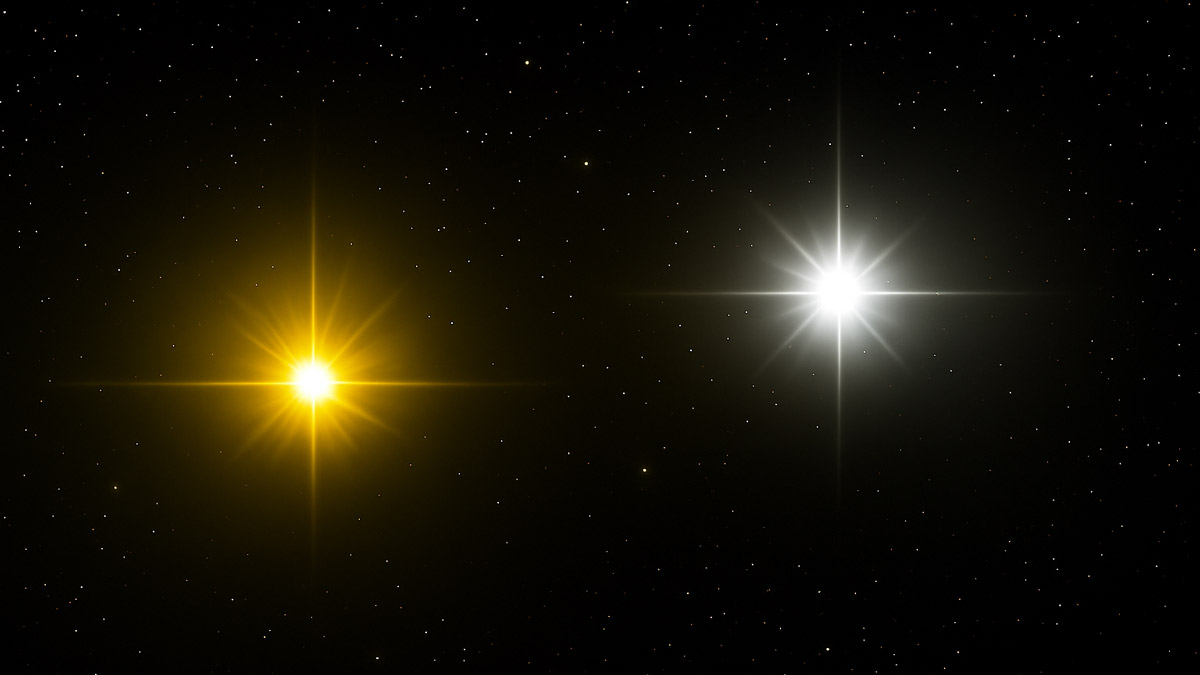
Epsilon Hydrae (ε Hya) may not be the most recognized star name in the night sky, but it is undoubtedly one of the more fascinating binary star systems and is part of a multiple star system. Located in the constellation of Hydra, also known as the Water Serpent, this binary was discovered by Wilhelm Struve in 1825 and lies approximately 129 light-years from Earth.
What makes this binary system interesting is that there is a close companion star orbiting the primary, a magnitude 3 star. According to Jim Kaller, these two stars complete their orbit around each other every 15 years. Additionally, there is another companion star located about 3 arcseconds away, which can be observed using modest telescopes.
It appears this close, dimmer companion will get even closer to the primary throughout the 21st century until it pulls away again over the next few centuries. I recommend checking out the orbit mapped out here. According to Jim Kaller, this dwarf takes about “590 years to orbit the inner pair at a mean distance of about 130 AU.”
My Observations
| Date | February 22, 2024 |
| Time | 9:23 p.m. |
| Location | Seattle, WA |
| Magnification | 169x |
| Scope | Meade 8″ SCT |
| Eyepiece | 12mm |
| Seeing | Average |
| Transparency | Average |
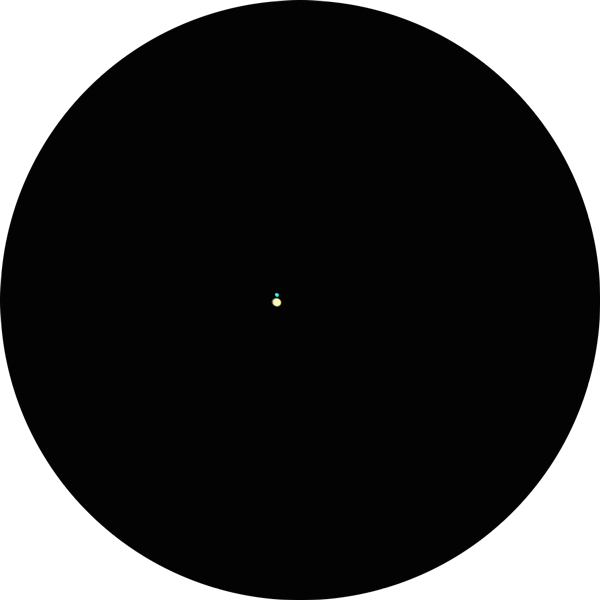
This is certainly a close binary, which will be a challenging yet rewarding target for those with smaller scopes. The primary appears off-white with maybe a tinge of yellow.
Key Stats
| Constellation | Hydra |
| Best Viewing | Spring |
| Visual Magnitude | +3.5 | +6,6 |
| Separation | 2.7″ |
| Position Angle | 313° |
| Distance from Earth | 129 ly |
| Milky Way Location | Orion Spur |
| My Viewing Grade | B |
| Designations | SAO 117112, Eps Hya, 11 Hydrae, ε Hya, HD 74874, HIP 43109, HR 3482 |
Sources and Notes
Banner shared under the Creative Commons Attribution-Share Alike 4.0 International license. Photo by David Ritter. Details here.
Sordiglioni, G. (n.d.). Double Star Database – Stelle Doppie. Retrieved from https://www.stelledoppie.it/index2.php?iddoppia=114911
Kaler, J. (2015, June 17). Epsilon Hydrae. Retrieved from http://stars.astro.illinois.edu/sow/epshya.html
Sketch by Wayne McGraw
 The Garden Astronomer