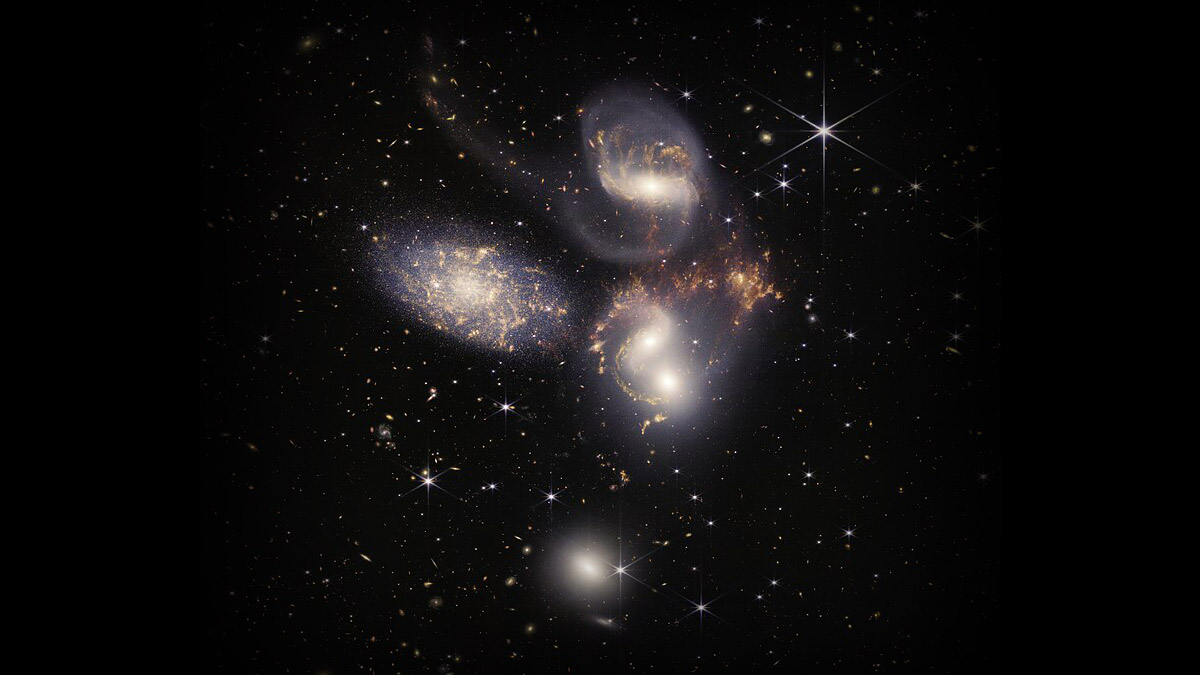
The 1946 film It’s a Wonderful Life opens with a conversation between angels in an ethereal realm represented by galaxies. This otherworldly communication is visualized using Stephan’s Quintet, a striking group of five galaxies in the constellation Pegasus.
As an amateur astronomer, I’ve always been drawn to the black-and-white depiction of the angels conversing in the film. Director Frank Capra uses the Quintet to emphasize the angels’ higher perspective and timeless nature. Their conversations feel grand yet intimate, transcending human understanding and evoking a sense of cosmic guardianship.
About the Galaxies
Four of the five galaxies in Stephan’s Quintet are part of the same system, clustered together roughly 290 million light-years from Earth. They are locked in a long, gradual gravitational interaction, tugging on one another as they move. These encounters churn clouds of gas, create powerful shock waves, and spark bursts of star formation along their paths.
Observing the Quintet in Pegasus
With autumn coming on, Pegasus steps onto the sky from the east, and a handful of celestial objects appear, namely Messier 15, NGC 7331, and the pretty double star, Struve 2841. And who can miss the nearby Andromeda Galaxy!
Earlier this evening, I turned my attention to Stephan’s Quintet, hoping to see it with my 8-inch telescope. However, the dim galaxies, with magnitudes ranging from 13 to 14, don’t pierce the city’s bright skies. So I decided to change scopes and use my Seestar S50 to capture these faint objects. Even with a 15-minute exposure on a moonless night, the galaxies appear as tiny smudges. Nonetheless, one rarely sees “angels,” so I take whatever I can from my urban backyard.
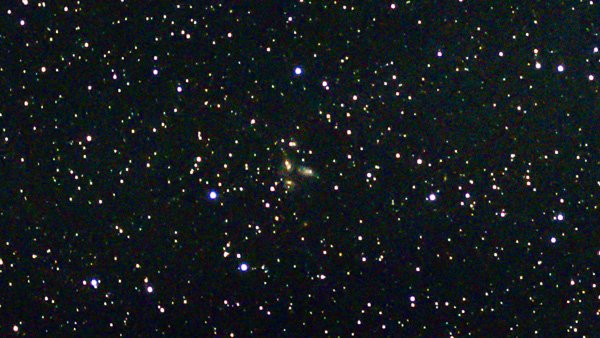
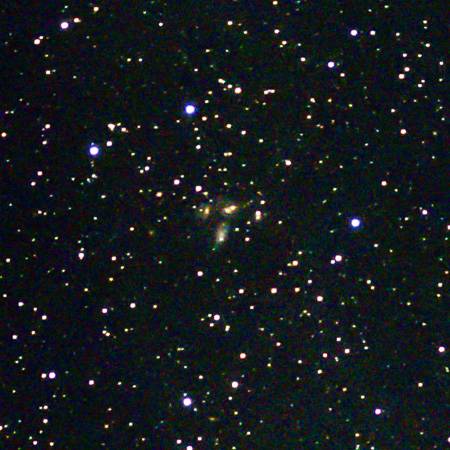
As I look at the fuzzy light of Stephan’s Quintet, I’m reminded of the central lesson of It’s a Wonderful Life. Every person’s life has intrinsic value and can significantly impact others, often in ways they may not fully realize. Even in our darkest moments, our lives are meaningful and worth living. This reminds us to appreciate the people who matter and the unseen ways we contribute to their happiness.
Sources
Banner photo credit: Public Domain Image by NASA, ESA, CSA, STScI. Image data: https://webbtelescope.org/contents/media/images/2022/034/01G7DA5ADA2WDSK1JJPQ0PTG4A
 The Garden Astronomer