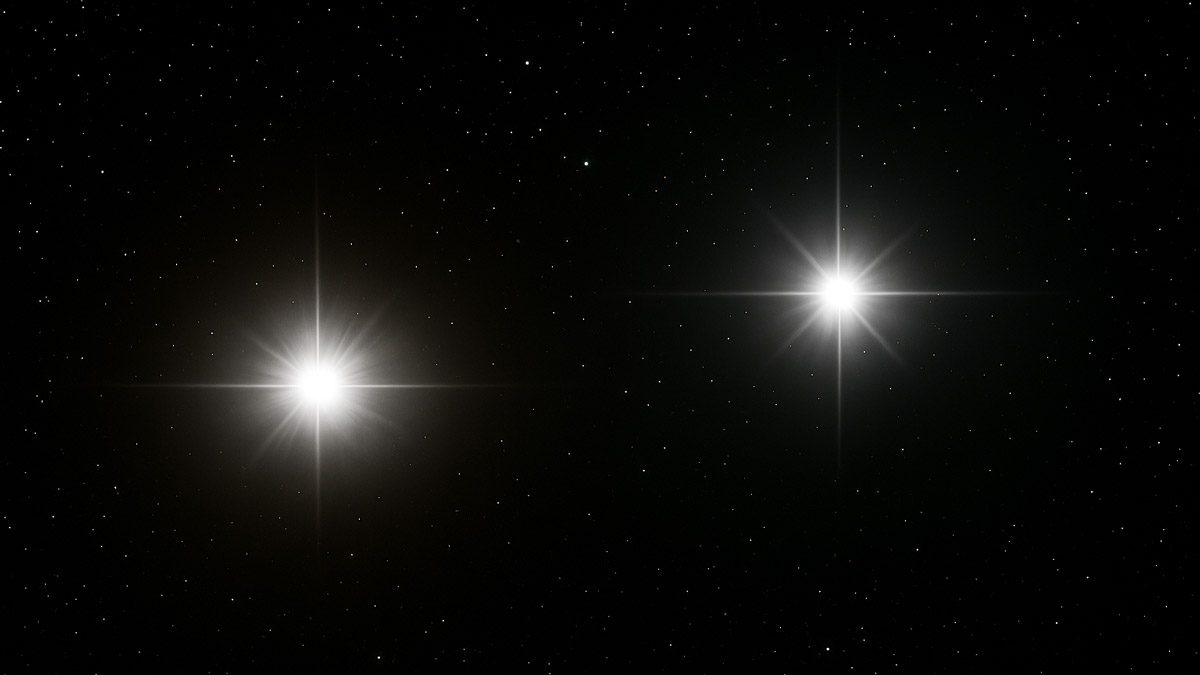
Struve 2742 (STF 2742) is a charming binary star in the constellation Equuleus, best viewed in late summer and early autumn in the Northern Hemisphere. Friedrich Georg Wilhelm von Struve first noted the close pair in the 19th century. For amateur astronomers seeking a rewarding split under moderate apertures, Struve 2742 offers just enough challenge to be engaging without being frustrating.
In this tranquil section of the sky, Struve 2742 consists of two stars that are only three arcseconds apart. To see both stars clearly, you will likely need a telescope with a diameter of at least 6 inches or larger, while using higher magnification. Users with smaller telescopes may only see a single, blurry star; however, some have reported being able to split the pair under optimal viewing conditions.
The primary star has a magnitude of +7.4 and belongs to the F8 spectral class. The nearby companion has a slightly dimmer magnitude of +7.6. The stars are 264 light years away from Earth and offer a rewarding target for anyone interested in splitting close double stars.
My Observations
| Date | September 9, 2023 |
| Time | 9:46 p.m. |
| Location | Seattle, WA |
| Magnification | 338x |
| Scope | Meade 8″ SCT |
| Eyepiece | 12mm+2x Barlow |
| Seeing | Average |
| Transparency | Below Average |
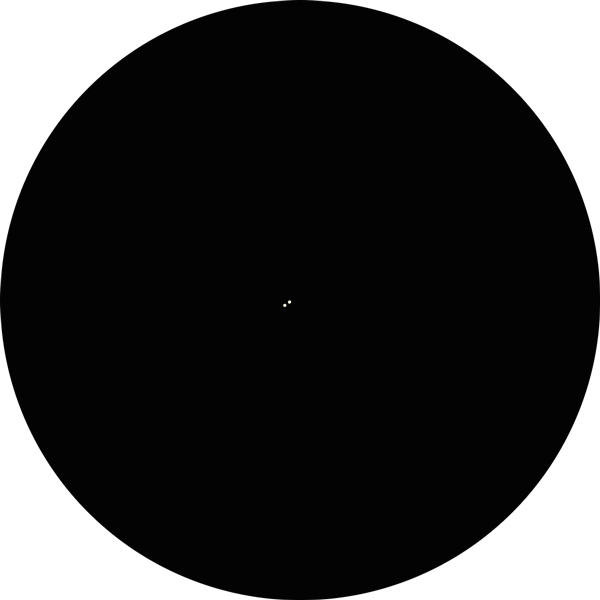
This is one of the tighter binaries I’ve split. It somewhat reminds me of Epsilon Arietis and Porrima. Wisps of very high, transparent haze floated in and out of view, so at first glance, I couldn’t tell if this was a double star when using the 12mm eyepiece alone. I attached my 2× Barlow lens, which dimmed the stars but split them well. The stars appeared to be the same magnitude, though I know the secondary is slightly dimmer. This is for sure an attractive pair. Most observers report the stars as white, though the primary appears a faint yellow to me, perhaps due to the haze in the atmosphere.
Key Stats
| Constellation | Equuleus |
| Best Viewing | Late Summer-Autumn |
| Visual Magnitude | +7.4 | +7.6 |
| Separation | 3″ |
| Position Angle | 213.2° |
| Distance | 264.12 ly |
| My Viewing Grade | B |
| Designations | SAO 126482, HD 200256, HIP 103813, 2 Equulei, Lam Equ, λ Equ |
Sources and Notes
Sketch by Wayne McGraw
 The Garden Astronomer