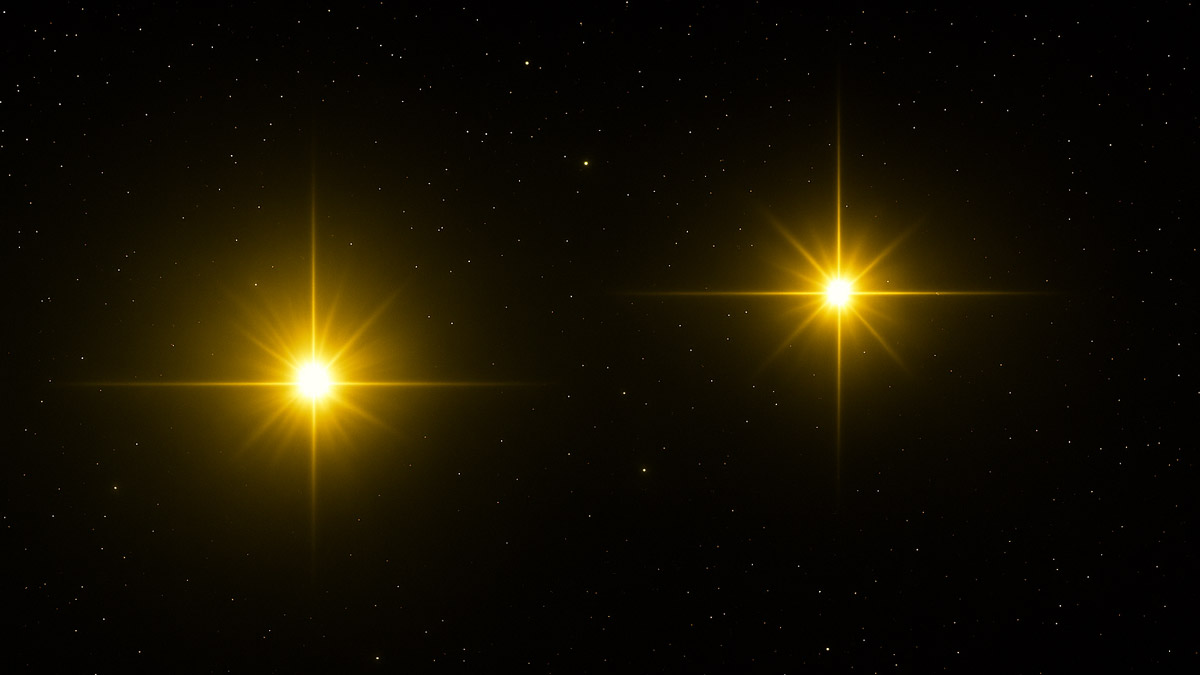
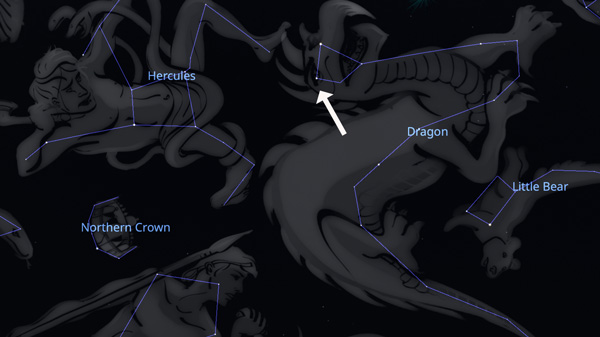
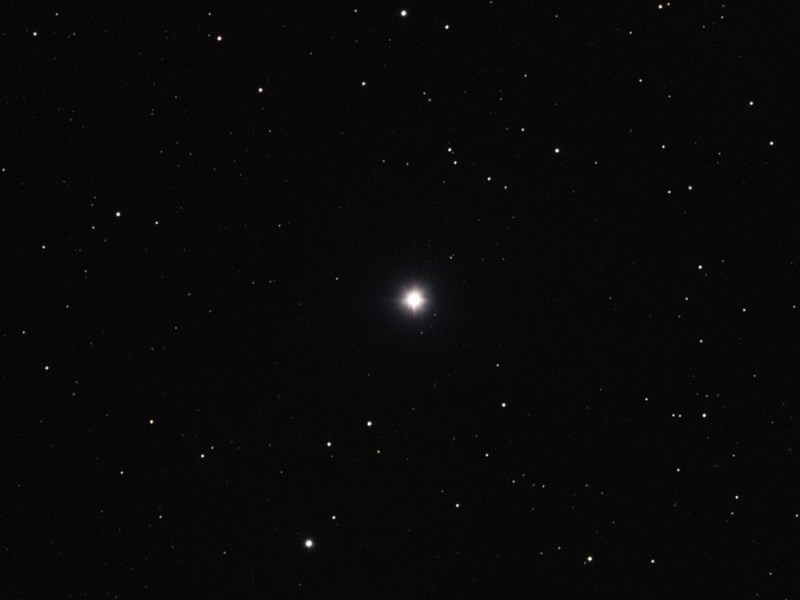
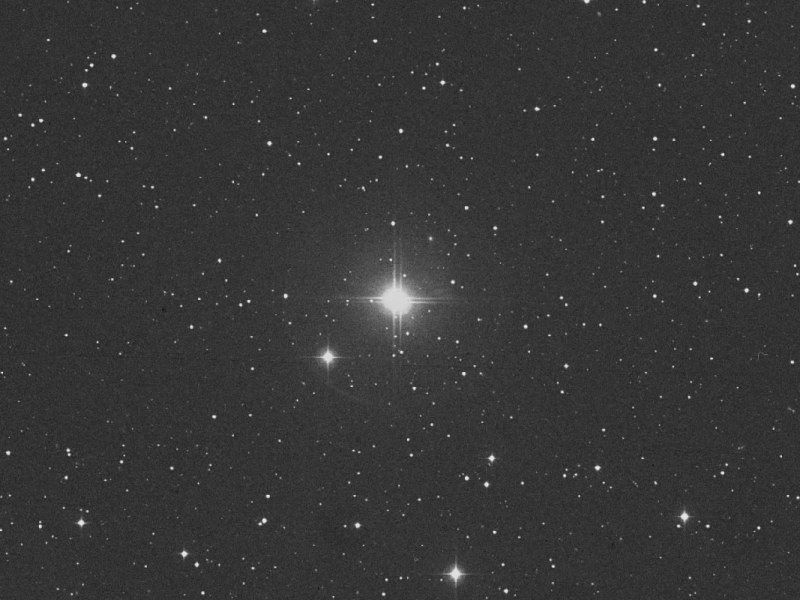
In the sinuous northern constellation of Draco the Dragon, a bright, golden-hued beacon marks the head of the mythical beast: Beta Draconis, also known by its traditional name Rastaban. The name Rastaban, derived from the Arabic ra’s ath-thu’ban (“head of the serpent” or “dragon”), reflects its position in the quadrilateral of stars forming the dragon’s head, alongside Gamma Draconis (Eltanin), Nu Draconis, and Xi Draconis.
A Golden Giant
Beta Draconis shines with an apparent magnitude of about 2.8, making it one of Draco’s brightest stars and an easy naked-eye target. Its warm yellow glow comes from its classification as a G2Ib-II star—a bright giant verging on a supergiant. According to Jim Kaler, this means it has already burned through the hydrogen in its core and has expanded to a size nearly 40 times the Sun’s diameter! Located roughly 380 light-years away, Beta Draconis blazes with about 950 times the Sun’s luminosity, its light crossing centuries before reaching our eyes.
A Hidden Companion
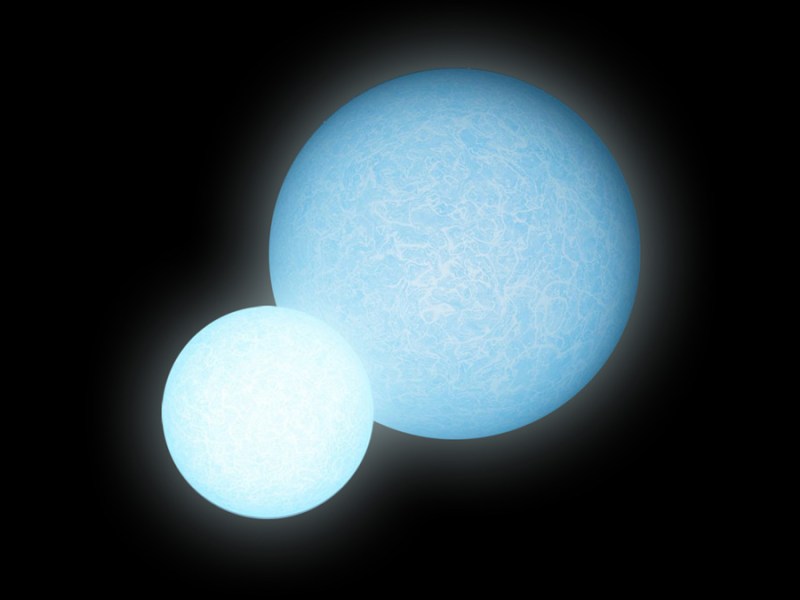
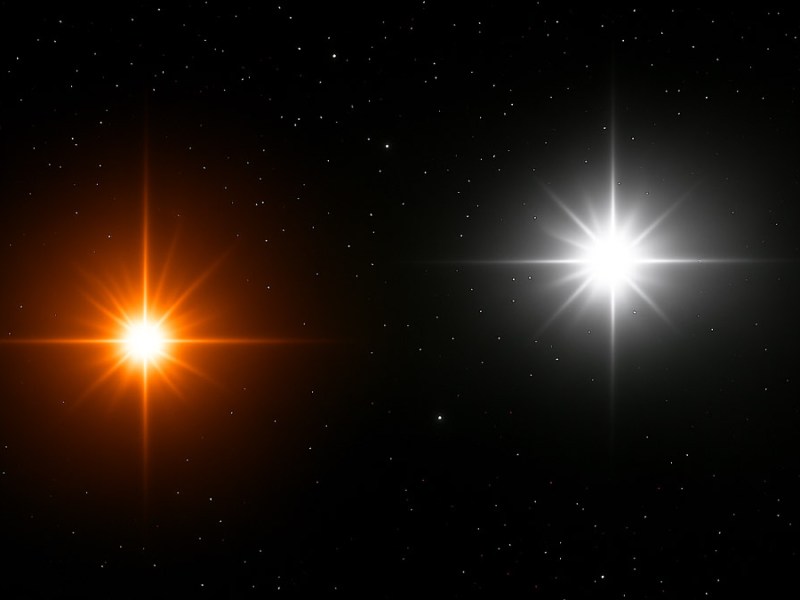
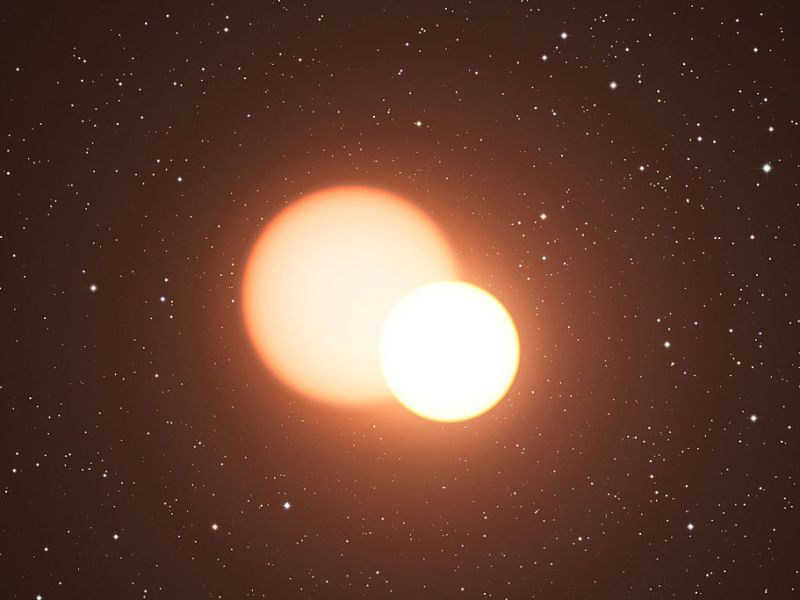
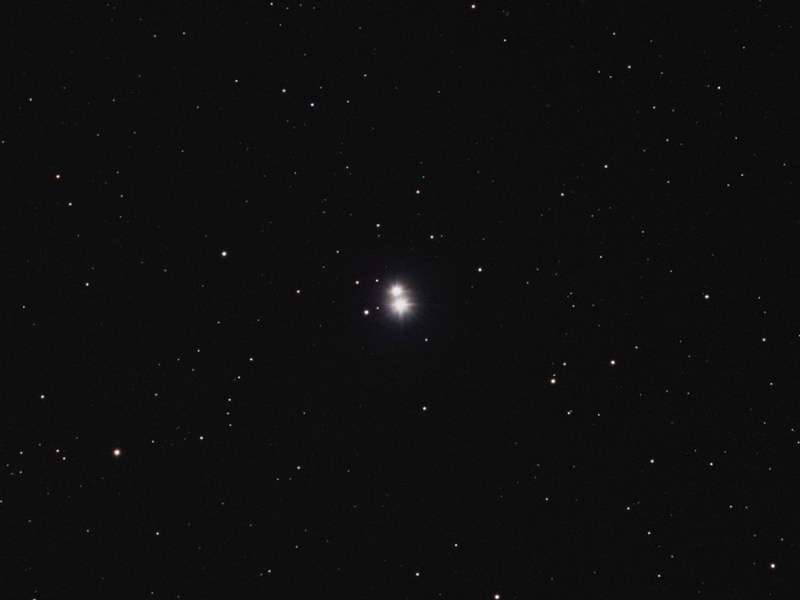
Though it appears as a single point of light to the unaided eye, Beta Draconis is actually a double star system. Separated by only about 4.2 arcseconds on the sky, the two stars orbit at a distance that makes the secondary difficult to spot without good seeing conditions and moderate magnification. Together, they form a pairing that blends the brilliance of an evolved giant with the quiet steadiness of a fainter stellar partner.
Next time you find yourself scanning the northern sky, let your eyes settle on Draco’s head. That warm light is Beta Draconis—a timeless golden eye watching over the dragon’s eternal coil.
My Observations
| Date | July 3, 2023 |
| Time | 11:20 p.m. |
| Location | Seattle, WA |
| Magnification | 338x |
| Scope | Meade 8″ SCT |
| Eyepiece | 6mm |
| Seeing | Above Average |
| Transparency | Above Average |
Fireworks are lighting up the neighborhood around me on this pre-Independence Day evening. I can hear the whistle of rockets and the pop of firecrackers in the distance, but my focus remains on a more distant and ancient display of light.
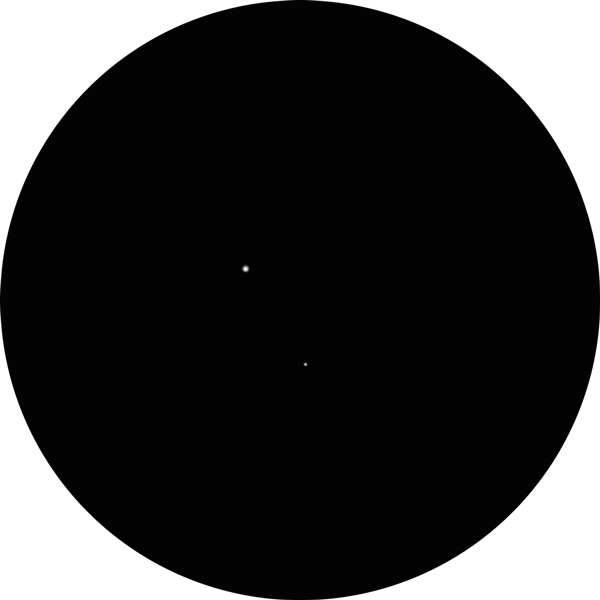
I center the scope on my target, the double star Beta Draconis, but the pair refuses to resolve at lower magnification. I break out my 6mm eyepiece, and as I bring the image into focus, the single point of light splits in two. The faint companion star pops into view, a tiny, steadfast, and very dim pinpoint next to its brilliant sibling, perfectly separated against the night sky.
Key Stats
| Constellation | Draco |
| Best Viewing | Summer |
| Visual Magnitude | +2.79 | +14 |
| Separation | 4.57″ |
| Position Angle | 16.9° |
| Distance | 380 ly |
| My Viewing Grade | B- |
| Designations | Bet Dra, Rastaben, Alwaid, Asuia, SAO 30429, HD 159181, 23 Dra, β Dra, 23 Draconis, HIP 85670, HR 6536, BU 1090 |
Sources and Notes
Stelle Doppie. (n.d.). β 107. Retrieved August 23, 2025, from https://www.stelledoppie.it/index2.php?iddoppia=70182
Kaler, J. (2025). Rastaban – JIM KALER. University of Illinois at Urbana-Champaign. http://stars.astro.illinois.edu/sow/rastaban.html
Johnson, D. (2024, October 9). Meet the Draco Constellation: The Dragon Between the Dippers. Sky & Telescope. https://skyandtelescope.org/astronomy-news/meet-the-draco-constellation-the-dragon-between-the-dippers/

 The Garden Astronomer