
One night, La Superba appeared randomly on my astronomy app while I navigated the springtime sky. I stared at the map for a moment, scratched my head, and believed the name to be a mistake.
I pressed the information icon by the reddish pixel to reveal a summary of La Superba, including the fact that it’s one of the reddest stars in the night sky.
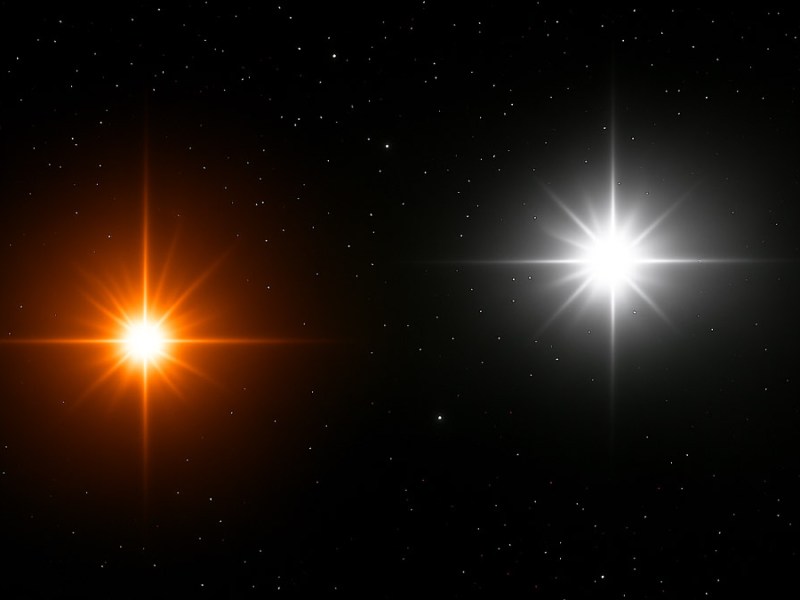
I was intrigued. I’ve always been interested in the bluest, reddest, and yellowest of stars. These objects can be breathtaking in an eyepiece on a crystal clear night. Some of my favorites include Spica with its beautiful blue, and the Garnet Star draped in penetrating red. So, with La Superba, I found a new target to add to my collection of strikingly red stars.

La Superba is a springtime star located in the constellation Canes Venatici and is viewable with the naked eye from a dark site. From the suburbs, a pair of binoculars or a telescope will fare better in bringing the object into view. Some observers refer to it as poppy-red in color, which I agree with 100%. I’ve found the color matches some red poppies in my garden, sitting five feet from the telescope!
A Star Painted in Crimson
The 19th-century Italian astronomer Angelo Secchi, a pioneer in stellar spectroscopy, was so taken with its brilliance that he bestowed the name “La Superba” upon it. Others have echoed the sentiment: observers often describe it as “a drop of blood in the sky,” or “a glowing coal amid ashes.” Also, the American astronomer Agnes Clerke, writing in the late 1800s, referred to La Superba as “the reddest star in the heavens” and marveled at its striking visibility even through small telescopes.
A Variable Star As Well
But there is more to La Superba than its red color. This red ember in the starry sky is a variable star (ranging from 4.8 to 6.4 magnitude) and it’s known as a carbon star. A so-called carbon star contains more carbon than oxygen. These two elements combine to form carbon monoxide, which consumes oxygen. This leads to more carbon compounds absorbing blue light, thus giving the star its deep red color. 1
My Observations
| Date | June 30, 2022 |
| Time | 11:03 p.m. |
| Location | Seattle, WA |
| Scope | Meade 8″ SCT |
| Eyepiece | 12mm |
| Seeing | Average |
| Transparency | Above Average |
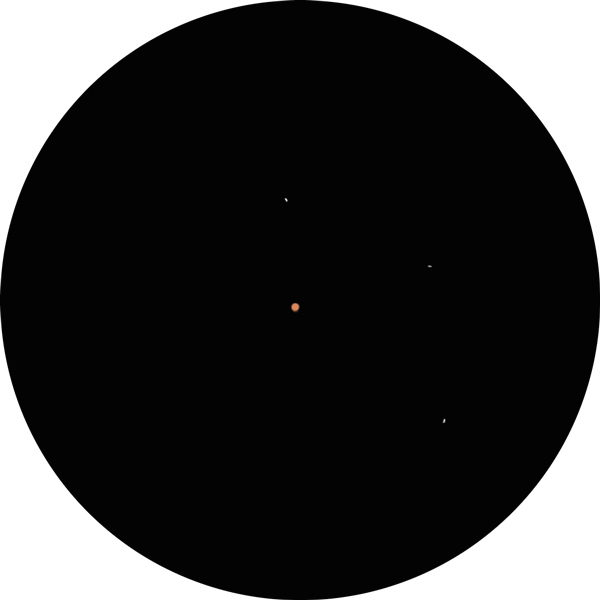
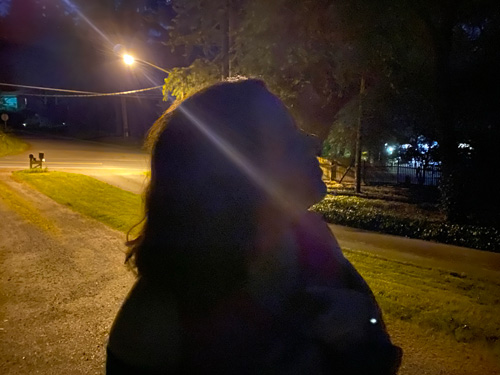
This truly is a poppy-orange-red star. It actually matches one of the poppies growing five feet from me as I write this. This is such a fascinating star to stare at. My wife has come out to check on me on this late June night, so I shared the ruby red star with her and wished her goodnight
Key Stats
| Constellation | Canes Venatici |
| Best Viewing | Late Spring |
| Visual Magnitude | +4.91 |
| Absolute Visual Magnitude | -2.27 |
| Distance from Earth | 890 ly |
| Milky Way Location | Orion Spur |
| My Viewing Grade | A |
| Designations | Y CVn, Y Canum Venaticorum, SAO 44317 |
Sources and Notes
Banner photo by David Ritter and photographed on March 28 and 29, 2019. This file is licensed under the Creative Commons Attribution-Share Alike 4.0 International license.
1 https://en.wikipedia.org/wiki/Carbon_star
 The Garden Astronomer
One thought on “La Superba: One of the Reddest Stars in the Sky”