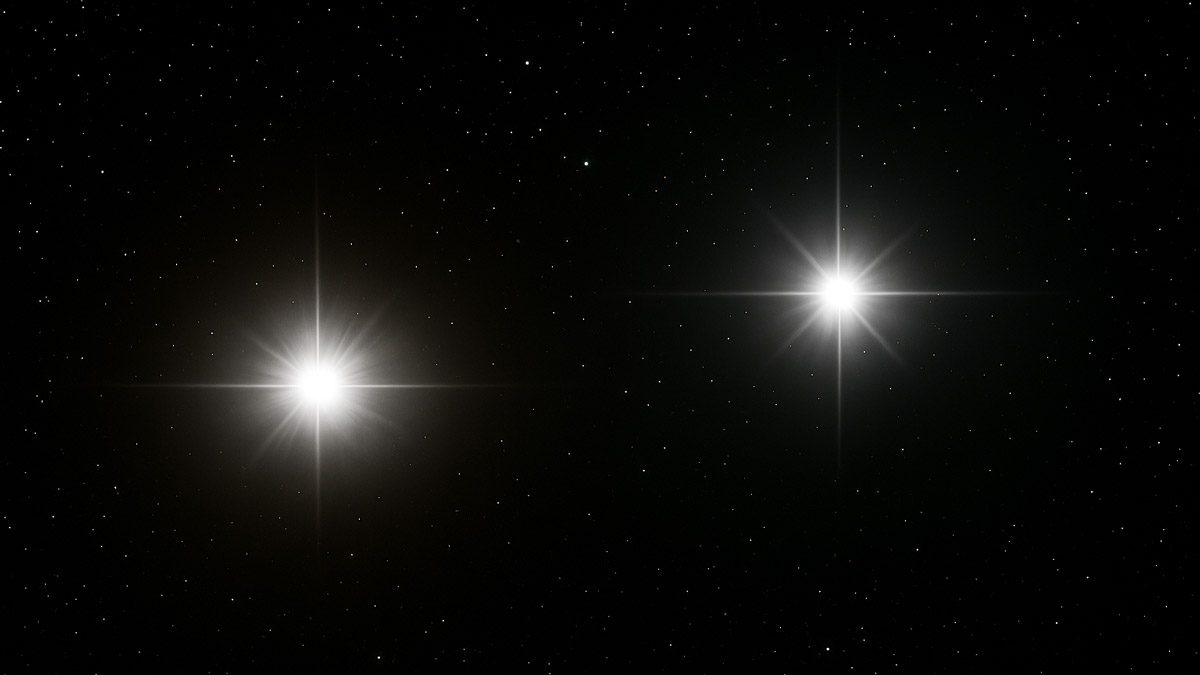
If you follow the winding path of Serpens, the only constellation divided into two parts in the sky, you’ll eventually encounter a star with an intriguing name: Nehushtan. Officially cataloged as Xi Serpentis (ξ Serpentis), this celestial object is not just a single star; it is a fascinating triple star system located approximately 105 light-years from Earth. What’s particularly interesting is that this star is moving toward our sun and will come as close as 27 light-years away in nearly 700,000 years. I suppose I won’t be staying up to witness that!
The name Nehushtan has biblical roots. In 2 Kings 18:4, Hezekiah destroys the bronze serpent idol called Nehushtan, which the Israelites had begun to worship. The International Astronomical Union (IAU) approved this name for Xi Serpentis, making it one of the few modern stars directly tied to such a vivid biblical reference. It’s a reminder that astronomy, myth, and faith often intertwine in the stories we tell about the night sky.
A Triple Star Dance
Xi Serpentis is not a lone traveler. The primary star is a bright, magnitude +3.5 star that’s viewable with the naked eye, and it dominates the system with its brilliance. I encourage those who want to learn more to read Jim Kaler’s article on the star.
The secondary companion is smaller, orbiting at a close distance, and the two together form a spectroscopic binary. This means their tight orbit can be detected by the way their light shifts in spectra, rather than being visually separated through a telescope. In other words, you won’t be able to make out this pair with your telescope.
However, with a larger scope and good seeing conditions, you can make out the dim third star that circles farther out, approximately 24 arcseconds away at a magnitude of +13.
Next time you step outside on a clear night and find Serpens winding across the sky, pause for a moment at Nehushtan, glowing across the vastness of space, carrying with it both ancient memory and present discovery.
My Observations
| Date | July 8, 2022 |
| Time | 11:30 p.m. |
| Location | Seattle, WA |
| Magnification | 169x |
| Scope | Meade 8″ SCT |
| Eyepiece | 12mm |
| Seeing | Above Average |
| Transparency | Above Average |
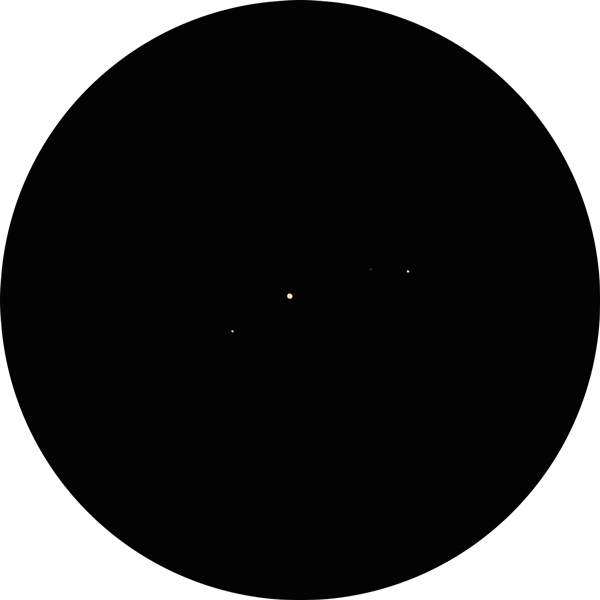
This evening has been wonderful. The air is warm, the night is quiet, and without the moon, the suburban skies are darker than usual. I’ve positioned myself in a spot farther back from the trees to get a better view of the southern skies. As midnight approaches, I focus on the star Nehushtan, which I found on my SkySafari app. Not familiar with this star, I check the details and discover it is also known as Xi Serpentis.
The bright primary appears white with maybe a tinge of yellow, while I’m unable to make out the color of the very dim companion.
Also observed on August 28, 2025: Tonight, I find myself in the southern climes near the Tampa area. While the Sunshine State is renowned for its sun-soaked skies, summer here also brings its share of storms and cloudy nights—quite the contrast to my experiences in Seattle! As I pack up my smaller Seestar, I take out my larger binoculars to gaze at Nehushtan once more. Although I can’t see the faint companion star, I have come to appreciate Nehushtan, especially as I reflect on a quiet night in July 2023 in Seattle, when I walked through the southern constellations.
Key Stats
| Constellation | Serpens |
| Best Viewing | Summer |
| Visual Magnitude | +3.54 | +13 |
| Distance from Earth | 105 ly |
| Separation | 24.5″ |
| Position Angle | 78.4° |
| Milky Way Location | Orion Spur |
| My Viewing Grade | B |
| Designations | 55 Ser, Xi Ser, SAO 160700, HD 159876, HIP 86263, HR 6561, GC 23881 |
Sources and Notes
Stelle Doppie. (n.d.). μ Cephei. Retrieved August 28, 2025, from https://www.stelledoppie.it/index2.php?iddoppia=70691
Stelle Doppie. (n.d.). δ Cephei. Retrieved August 28, 2025, from https://www.stelledoppie.it/index2.php?iddoppia=70690
Kaler, J. B. (n.d.). Xi Serpentis. In Stars and Constellations. University of Illinois. Retrieved August 28, 2025, from http://stars.astro.illinois.edu/sow/xiser.html
Sketch by Wayne McGraw
 The Garden Astronomer