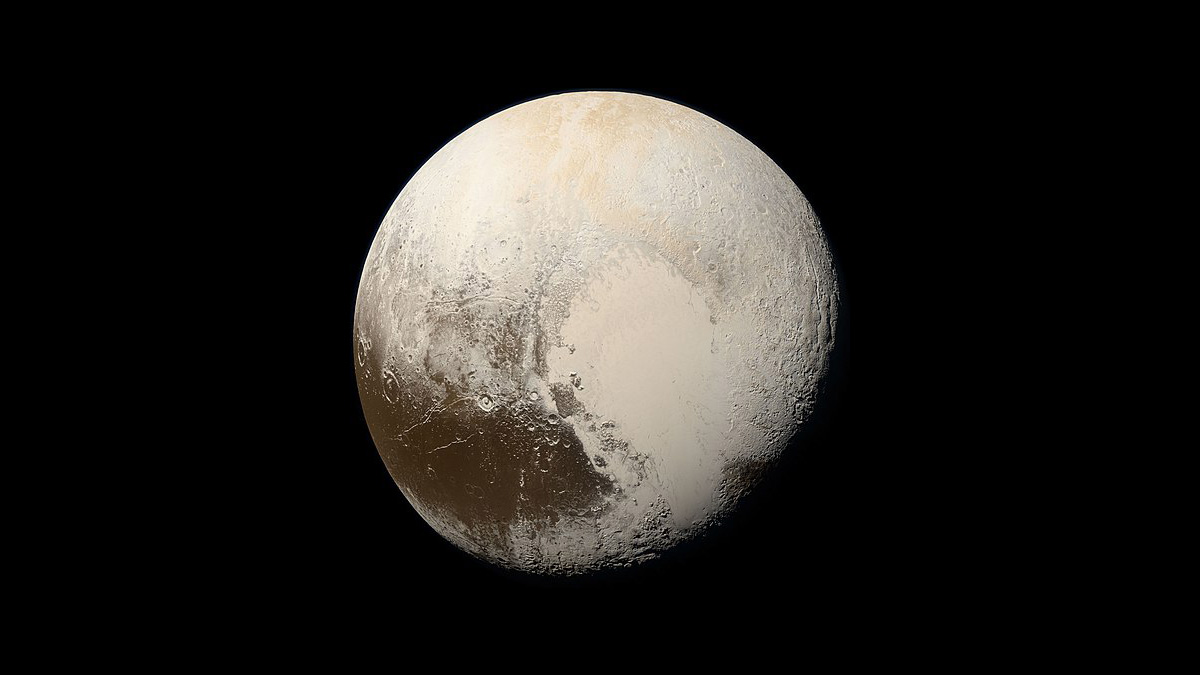
August 27, 2025
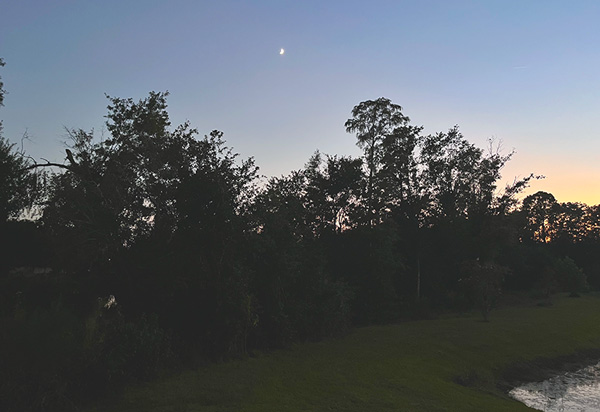
Last night in Tampa, the thunderstorms finally relented, giving the sky a clear window. I set up my Seestar S50 electronic telescope, not expecting much more than the usual astrophoto hunt for nebulae and clusters. But instead, I crossed off something that’s been on my list since childhood. I “saw” Pluto for the very first time.
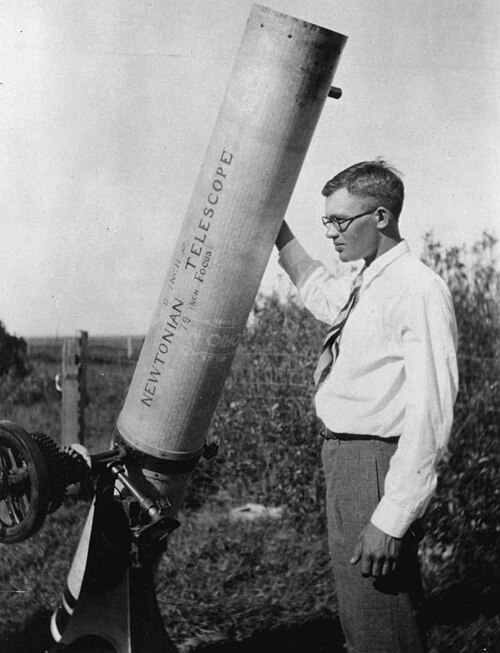
Growing up, Pluto was always part of the official family of planets. It was the mysterious, distant world at the very edge of the solar system, discovered in 1930 by Clyde Tombaugh after painstaking photographic comparisons.
I remember memorizing the lineup of planets in school, Pluto standing faithfully at the end of the list. In 2006, the International Astronomical Union reclassified it as a “dwarf planet,” and while I understand the reasoning, my heart still thinks of Pluto as the ninth planet.
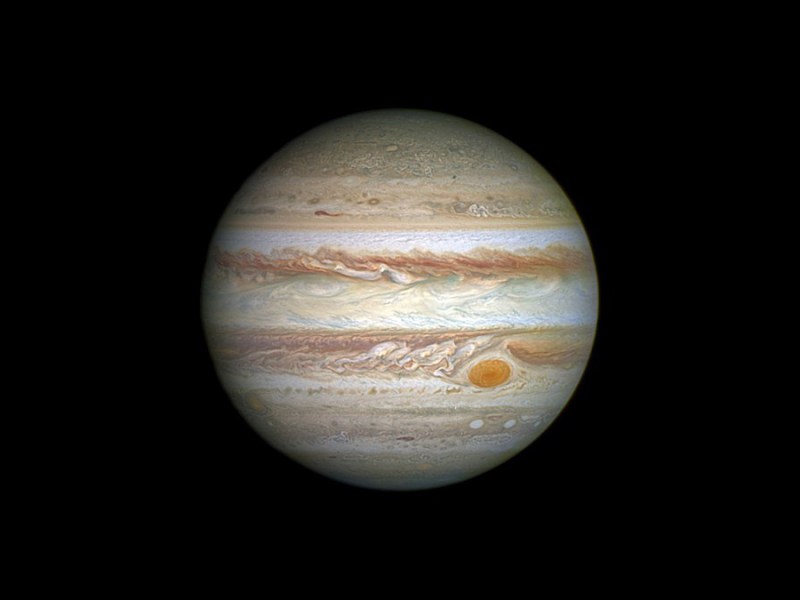
Last night, when the Seestar captured that faint, star-like dot of light, it felt like meeting an old friend. Unlike Jupiter with its bold bands, or Saturn with its dazzling rings, Pluto doesn’t put on a flashy show. At about 3.67 billion miles away, it only reflects the faintest sunlight back to us. Basically, a pixel on a screen! But what it lacks in visual drama, it makes up for in meaning, as it completed my personal quest to see every one of the traditional planets.
Scientifically, Pluto is fascinating in ways its demotion to dwarf planet status doesn’t diminish. It orbits in the Kuiper Belt, a vast region of icy bodies beyond Neptune. Pluto’s orbit is highly elliptical, sometimes bringing it closer to the Sun than Neptune. Its largest moon, Charon, is so big compared to Pluto that the two worlds actually orbit a common center of gravity outside Pluto itself, almost like a double planet. Thanks to NASA’s New Horizons flyby in 2015, we know Pluto’s surface is covered in nitrogen ice plains, jagged mountains of water ice, and even evidence of a thin, hazy atmosphere.

For me, though, last night wasn’t about scientific data. It was about standing in my backyard in Florida, pointing my small electronic telescope toward a break in the storm clouds, and discovering that faint dot, which meant so much more than a smudge of light. With Pluto, I’ve now seen them all, the full roster of planets I grew up with.
So yes, it was a quiet victory, but one worth celebrating. Because in the end, astronomy isn’t just about distant facts; it’s about personal journeys under the stars.
My Observations
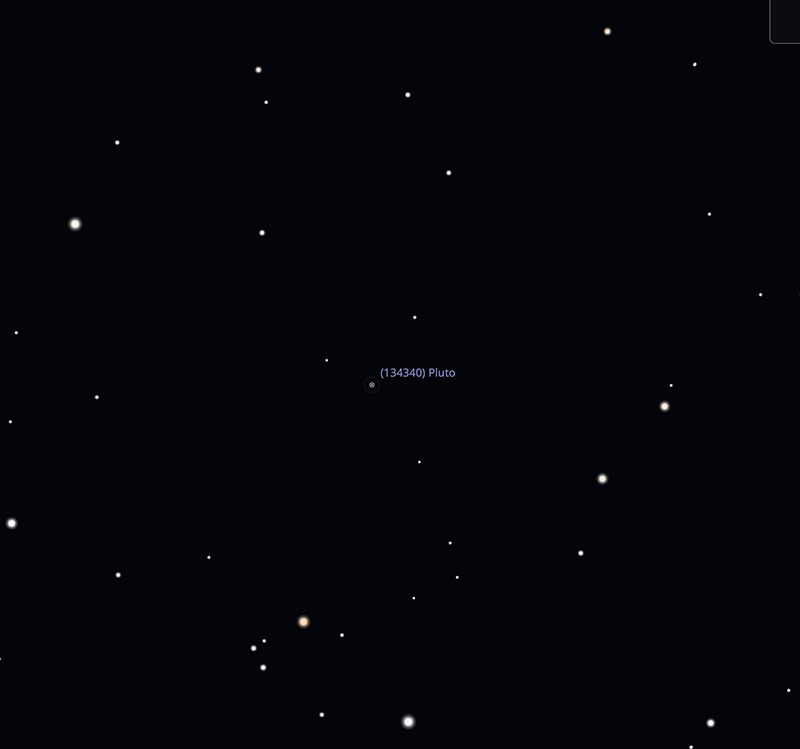
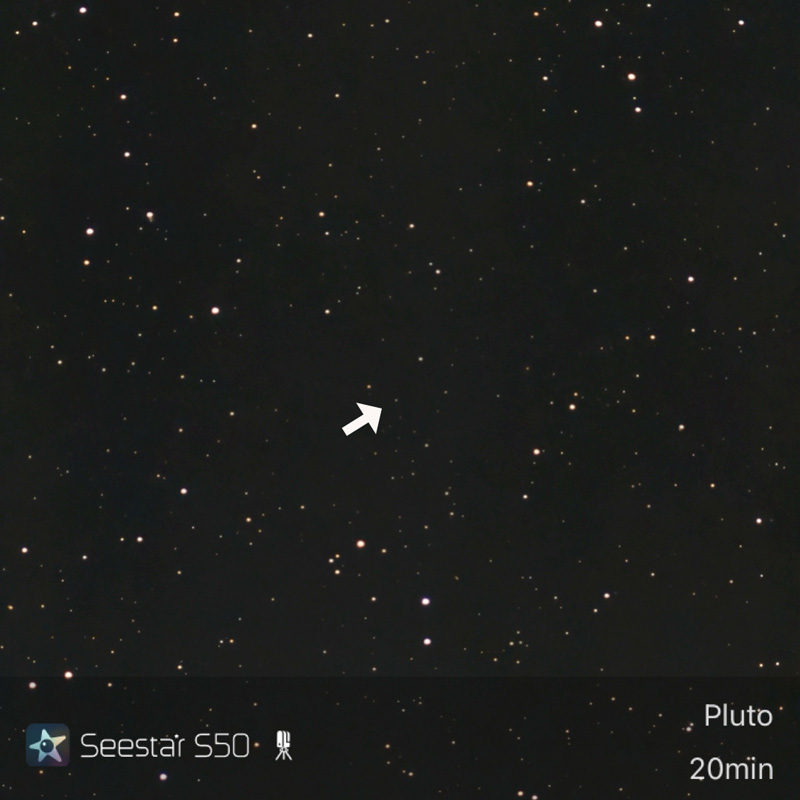

Key Stats
| Constellation | Capricornus at time of photo |
| Season Viewed | Summer |
| Visual Magnitude | +14.47 |
| Distance from Earth | 34.5 AU |
| Diameter | 1,477 miles |
| Orbital Period | 248 yrs |
| Milky Way Location | Orion Spur |
Sources
Banner photo: NASA/Johns Hopkins University Applied Physics Laboratory/Southwest Research Institute/Alex Parker. Public Domain
Sketch by Wayne McGraw






 The Garden Astronomer
2 thoughts on “Finally Meeting Pluto: A Personal Milestone Under Florida Skies”