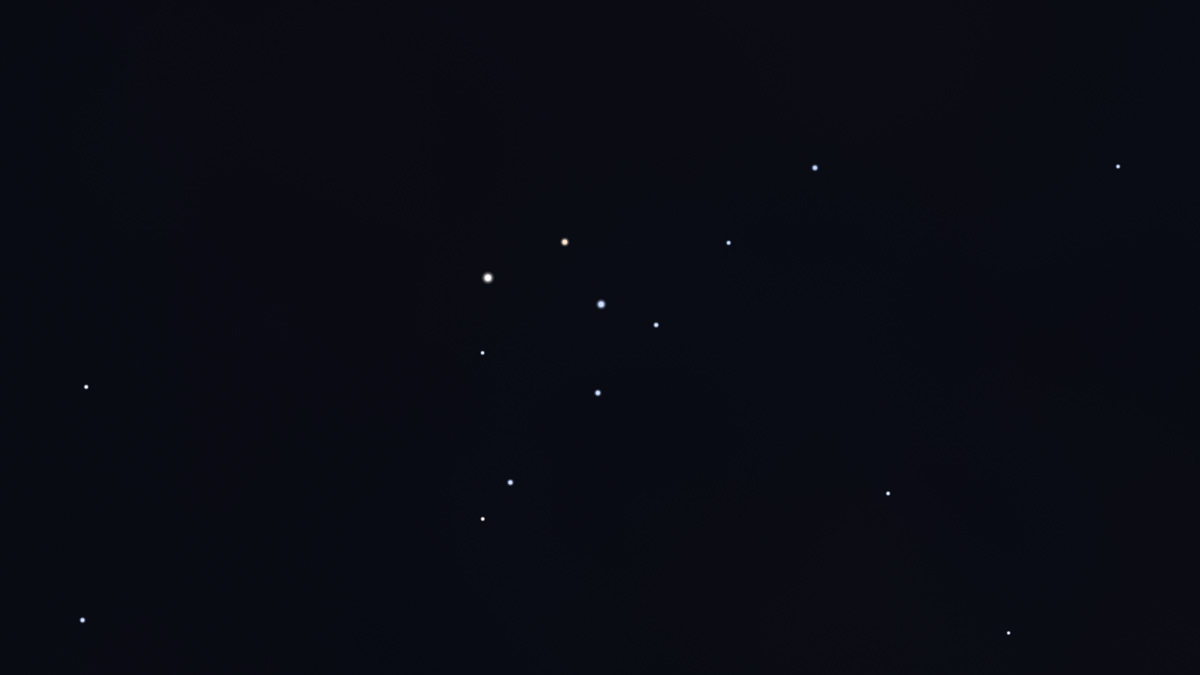
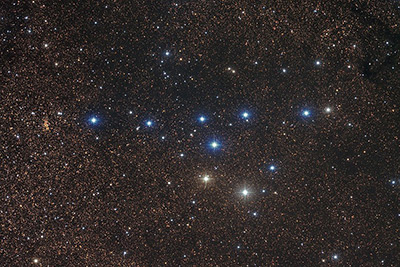
High above us in the constellation Vulpecula, near the border with Sagitta, hangs the Coathanger asterism, one of the night sky’s most charming and easily recognizable star patterns. This delightful arrangement of ten stars creates such a perfect resemblance to an old-fashioned wire coat hanger that even first-time observers often gasp in recognition when they spot it through binoculars.
A Pattern Older Than Telescopes
The Coathanger’s story begins not in our modern era of sophisticated telescopes, but over a millennium ago. The asterism was first described by the 10th-century Persian astronomer Al Sufi in his Book of Fixed Stars in 964.
Italian astronomer Giovanni Battista Hodierna independently discovered the object in the 17th century. Much later in the 1920s, American amateur astronomer and Seattle resident D.F. Brocchi created a map of it for calibrating photometers, which is why it’s also known as Brocchi’s Cluster. It’s also cataloged as Collinder 399.
Not a Cluster After All
For centuries, astronomers believed the Coathanger was a true star cluster. But modern space-age precision revealed a surprising truth. None of these ten stars is believed to be gravitationally bound to the others, so they are not a star cluster.
Measurements taken by the Hipparcos satellite in 1997 established this fact. This makes the Coathanger an asterism, a chance alignment of unrelated stars that just happen to lie along our line of sight.
The pattern itself is distinctive and unmistakable. Six of the stars appear in a row across the night sky, forming the horizontal bar of the coat hanger, while four additional stars create the characteristic hook.
A Perfect Binocular Target
Due to its large size, the Coathanger wasn’t included in many classical catalogs designed for telescopic objects. Instead, it shines as perhaps the perfect binocular target. This makes it an ideal object for casual stargazing sessions and an excellent introduction to deep-sky observing for newcomers.
My Observations
| Date | August 27, 2025 |
| Time | 11:35 p.m. |
| Location | Tampa, FL |
| Magnification | 15x |
| Binoculars | 15 X 75 |
| Seeing | Average |
| Transparency | Average |
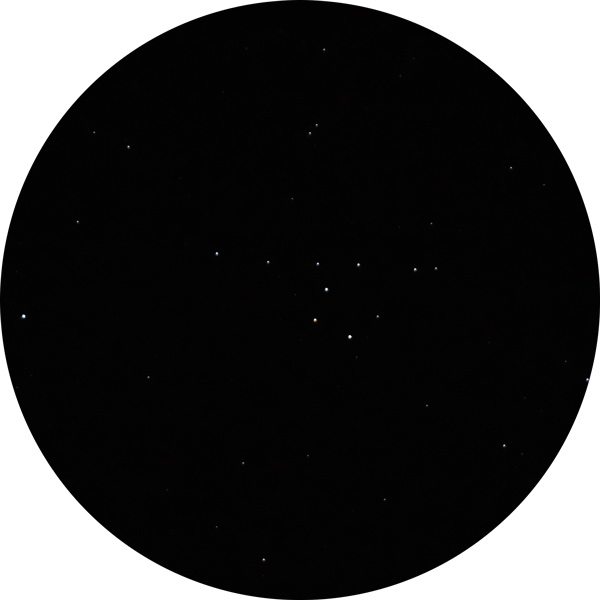
This was a remarkable evening. Clear of thunderstorms, this late August night in Florida was a gift. An hour earlier, I had photographed Pluto for the first time. After packing up my telescope, I decided to grab my binoculars. Standing at the end of the patio, I scanned the skies and settled on the bright light of Altair. I then searched, moving right just a short distance. There, the “cluster” fell into view. Among the croaking frogs, I admired this old friend I had observed numerous times in Seattle. I then made my way upstairs, hung my pants on a non-celestial hanger, and fell deep asleep.
Key Stats
| Constellation | Vulpecula |
| Best Viewing | Summer / Early Autumn |
| Apparent Magnitude | +3.6 (Range from 5-7 mag) |
| My Viewing Grade | A |
Sources and Notes
Banner photo courtesy of Stellarium
Brocchi’s cluster. (2025, June 19). In Wikipedia. Retrieved August 29, 2025, from https://en.wikipedia.org/w/index.php?title=Brocchi%27s_Cluster&oldid=1296381157
Bruce McClure and Deborah Byrd. (2024, July 9). The Coathanger: Brocchi’s Cluster. EarthSky. Retrieved from https://earthsky.org/favorite-star-patterns/coathanger-cluster-brocchis-cluster-collinder-399/
Sketch by Wayne McGraw


 The Garden Astronomer
2 thoughts on “The Coathanger Asterism: A Cosmic Clothes Hanger in the Summer Sky”