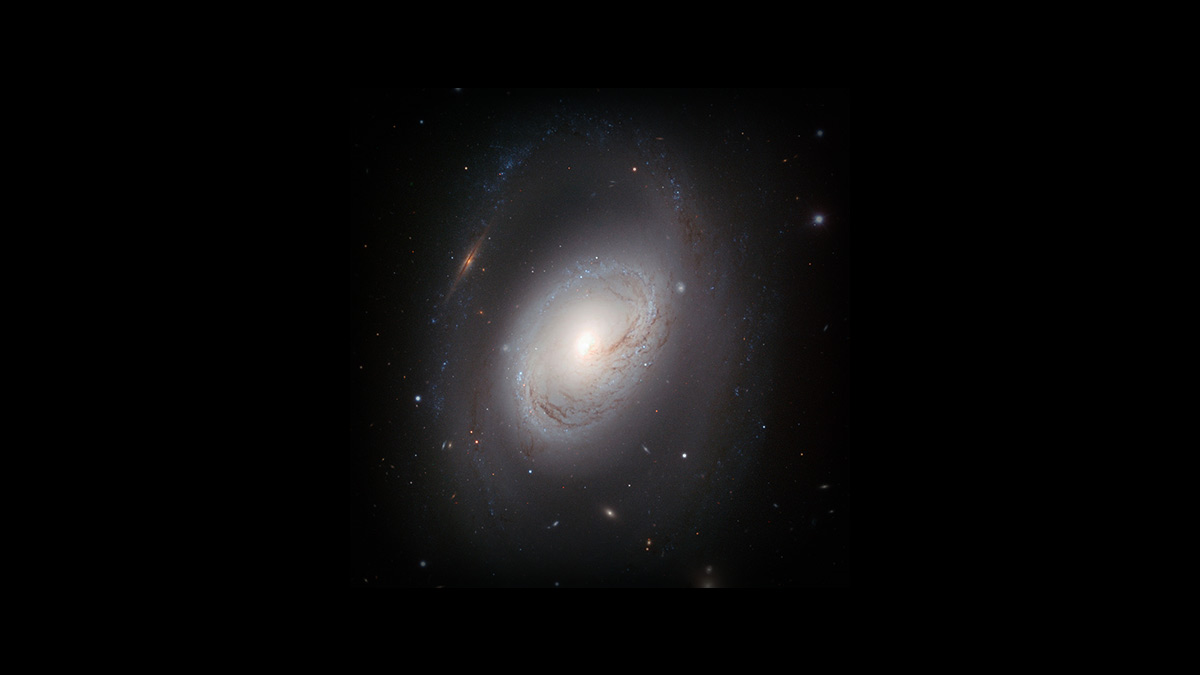
Out on spring night, when backyard astronomers celebrate “galaxy season,” we look across the sky with our scopes, hoping to dig out faint smudges of galaxies buried in the light-washed firmament.
Messier 96 is one of those galaxies that can softly break through the haze of suburban light, as long as one has a modest scope and really transparent conditions. Messier 96 (also known as M96 or NGC 3368) is a spiral galaxy approximately 30 million light-years away from Earth. It was first discovered by French astronomer Pierre Méchain in March 1781 and soon added to Charles Messier’s famous catalog of deep sky objects.
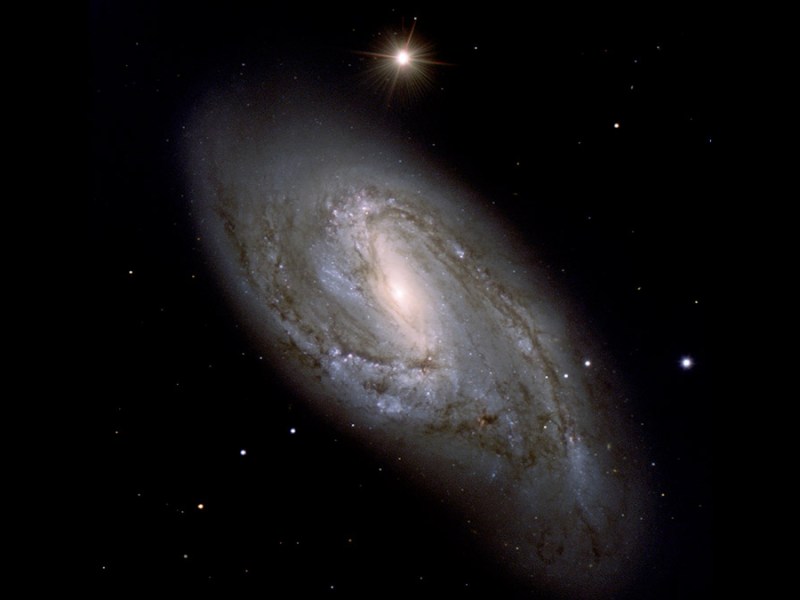
When researching Messier 96, I found Oleg Maliy’s view on the galaxy rather poignant. Maliy points out that M96 is an “imperfect” spiral galaxy. Its spiral arms are not well defined, and the “gas and dust are distributed asymmetrically” But, it’s those interesting differences that make it beautiful. Also, those imperfections most likely show the damage of time. Perhaps another galaxy collided with M96, or the other nearby galaxies are in the process of warping it.2 Either way, M96’s magnitude of +9.1 gives us a fighting chance to see it from our backyards.
My Observations
| Date | March 21, 2023 |
| Time | 9:45 p.m. |
| Location | Seattle, WA |
| Magnification | 127x |
| Scope | Meade 8″ SCT |
| Eyepiece | 16mm |
| Seeing | Average |
| Transparency | Average |
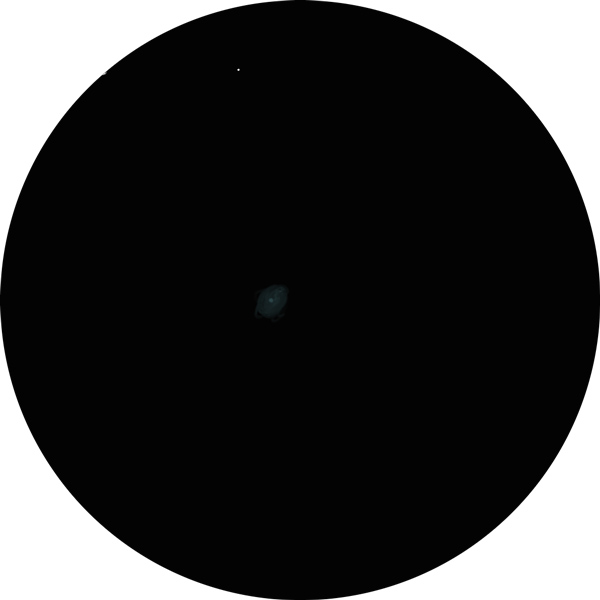
As the galaxy season is upon me, I decided to tackle several of the Messier objects that have been alluding me. I was unable to resolve a few items already tonight, but Messier 96 finally showed up. I had to double check several times to be sure I wasn’t viewing a street light artifact, even though I do use a dew shield to block external light.
As the goto motor guided the scope and stopped on the very faint smudge, I tapped the scope gently to see if the fuzz vibrated—and it did! I then moved the scope back and forth with the motor to check the haze, and it moved.
There is little for me to observe regarding this object, other than it appears to be a diagonal smudge in the eyepiece with a slightly brighter center. I had to use averted vision to extract these details. Overall, it’s challenging to view this object like many galaxies, but I’m glad I was able to resolve it!
Also observed on April 26, 2025, in Tampa, Florida
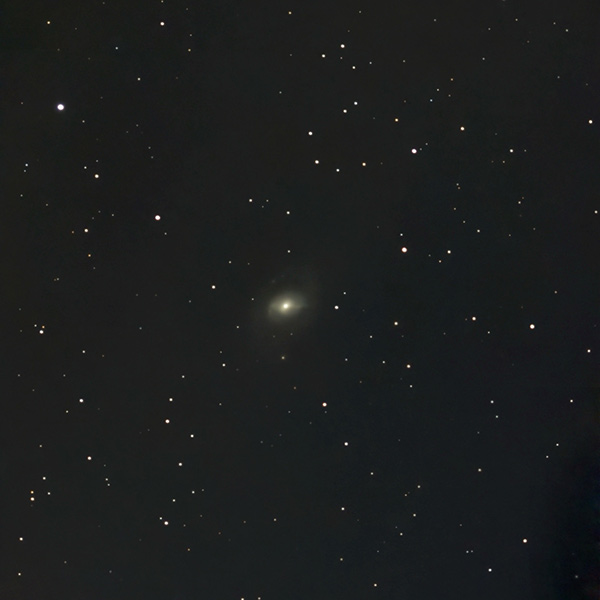
| Constellation | Leo |
| Best Viewing | Spring |
| Visual Magnitude | +9.13 |
| Absolute Magnitude | -20.83 |
| Distance from Earth | 30 million light yrs |
| Diameter | 100,000 ly |
| Apparent Size | 8.3 x 5.5 arcmin |
| Milky Way Location | NA |
| My Viewing Grade | C |
| Designations | M 96, NGC 3368, |
Historical Observations
Discovered on March 20, 1781, by Pierre Méchain. Messier recorded the following note on March 24, 1781:
Nebula without star, in the Lion [Leo], near the preceding [No. 95]: this one is less distinct, both are on the same parallel of Regulus: they resemble the two nebulae in the Virgin [Virgo], Nos. 84 and 86. M. Méchain saw them both on March 20, 1781.
Sources and Notes
Banner photo of Messier 96: ESO/Oleg Maliy. Source here. This file is licensed under the Creative Commons Attribution 3.0 Unported license.
1 Garner, Rob. “Messier 96.” NASA, NASA, 6 Oct. 2017, https://www.nasa.gov/feature/goddard/2017/messier-96.
2 Maliy, Oleg. “Portrait of an Imperfect but Beautiful Spiral.” Www.eso.org, https://www.eso.org/public/images/potw1143a/.
3 Frommert, Hartmut, and Guy McArthur. Messier 96, http://www.messier.seds.org/Mdes/dm096.html.
Sketch by Wayne McGraw
 The Garden Astronomer