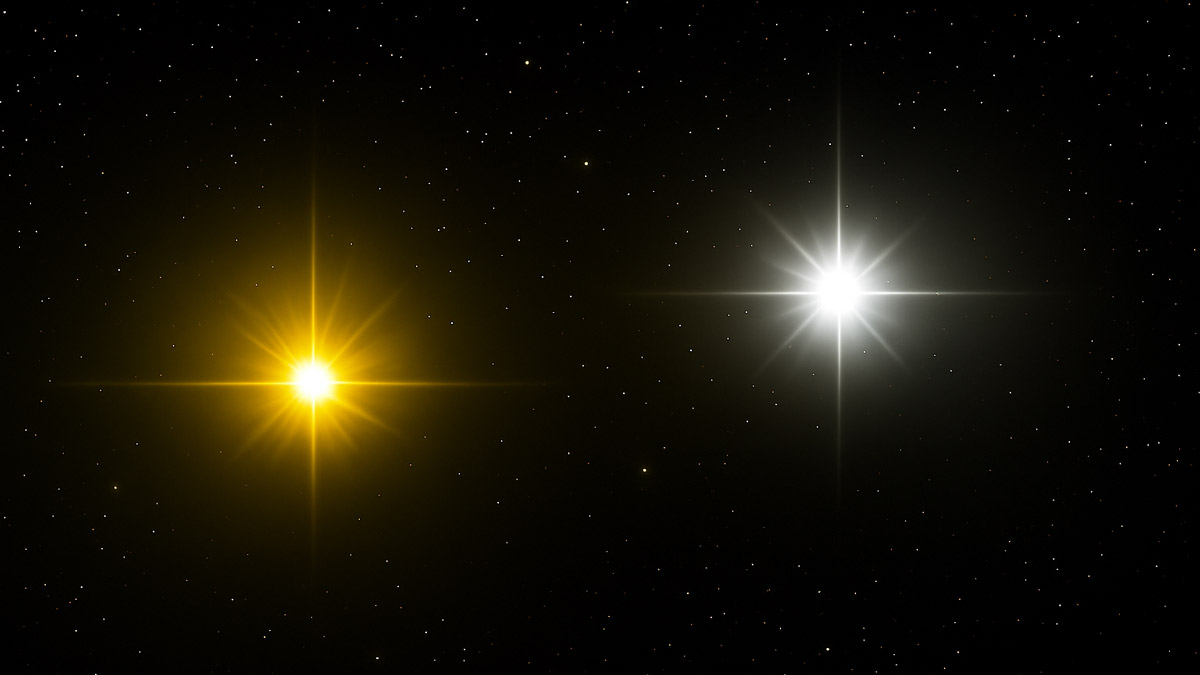
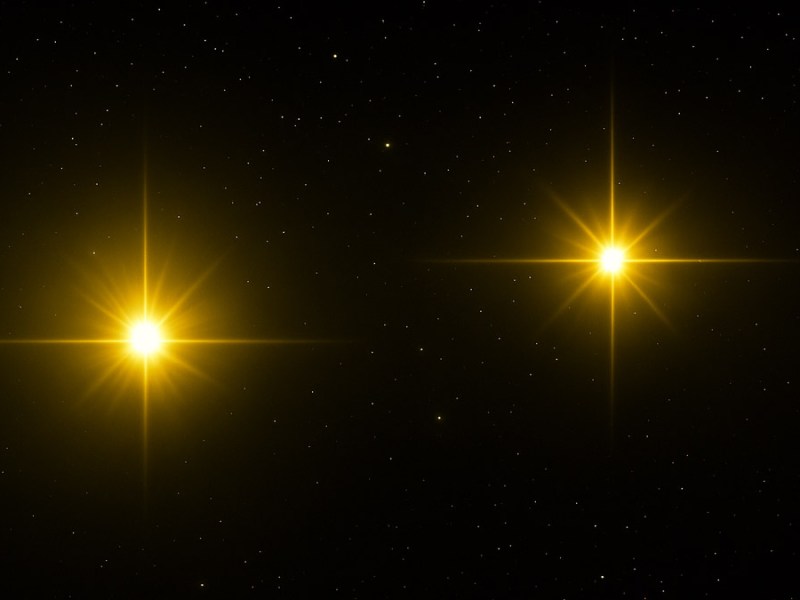
Eta Boötis, better known by its traditional name Muphrid, is one of those bright springtime stars that beckon the eye as soon as Boötes begins to climb the eastern sky. Sitting only about 3° from the brilliant orange giant Arcturus, Muphrid often gets overshadowed by its dazzling neighbor. But take a closer look, and you’ll discover that Eta Boötis has a subtle charm of a wide double.
The Giant vs. the Subgiant
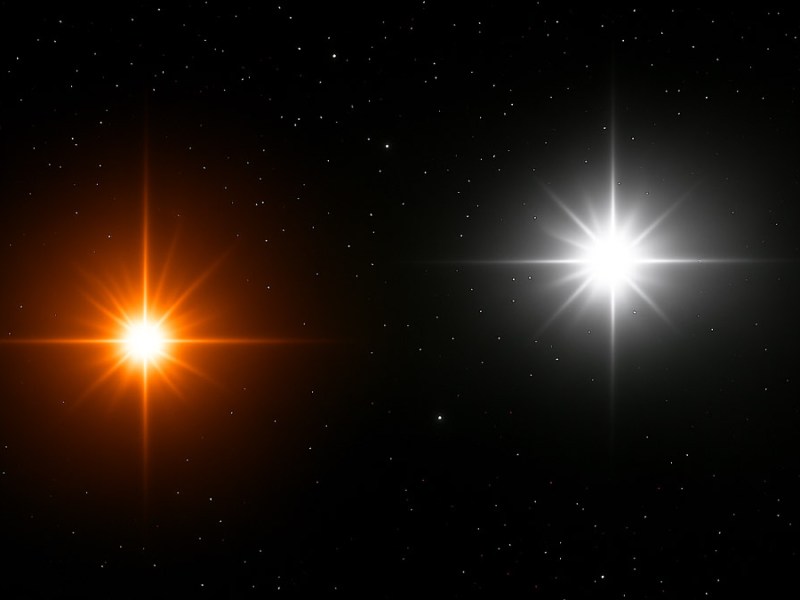
Arcturus is a true giant. Located about 37 light-years from Earth, it has expanded far beyond the size of our Sun, swelling to about 25 times the Sun’s radius. Its sheer size makes it an absolute powerhouse, radiating more than 170 times the Sun’s luminosity! That’s why it blazes in our sky at a striking magnitude -0.05, the brightest star in the northern half of the celestial sphere.
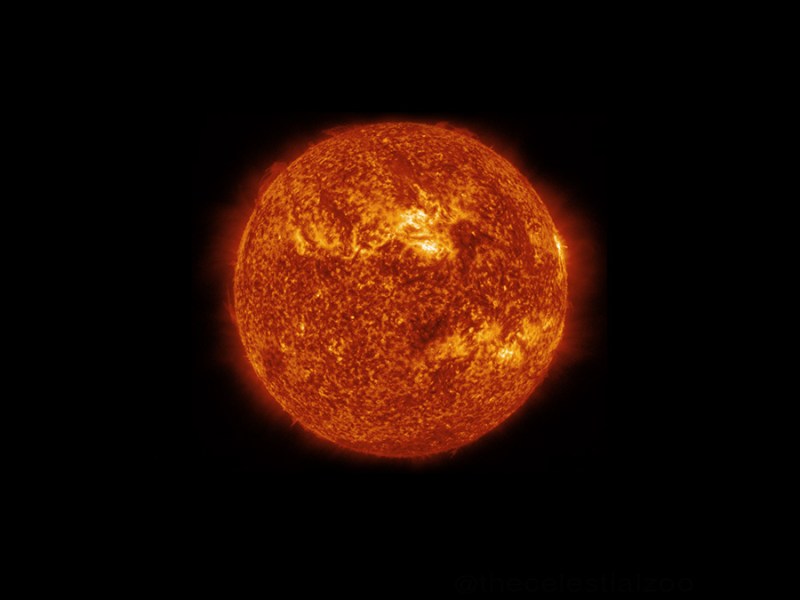
Muphrid, by contrast, is a subgiant star. It sits only a little farther from us than Arcturus at 37 light-years, almost making them “true” neighbors in space. But here’s the kicker: its physical size is much smaller. Muphrid is only about 3 times the Sun’s radius and around 9 times the Sun’s luminosity. That’s still an impressive upgrade from our Sun, but compared with Arcturus, Muphrid looks almost modest.
Muphrid and Companion Stars
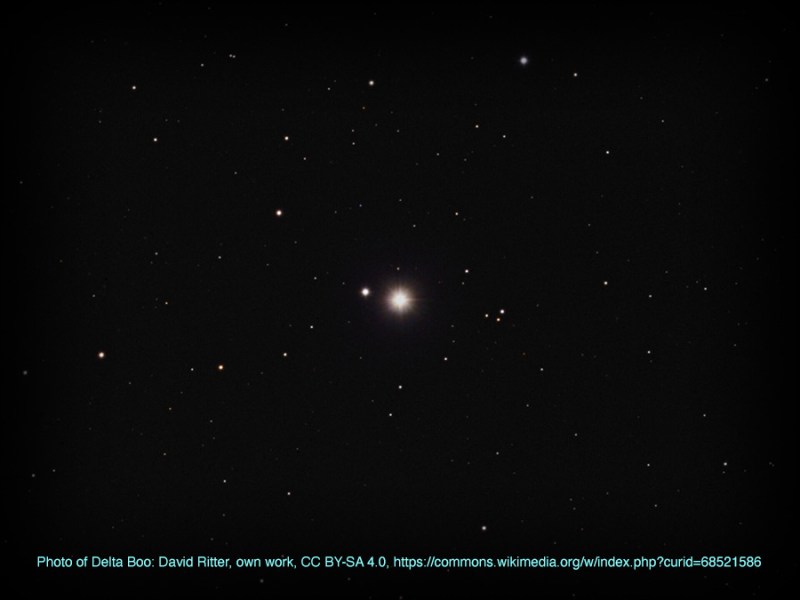
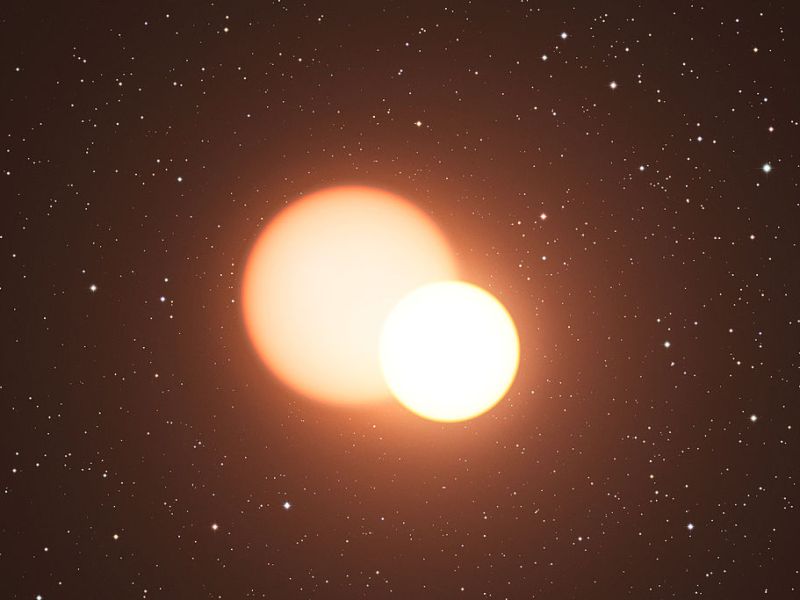
The primary star, a G-type subgiant named Muphrid, is accompanied by a fainter star, BD+19 2726, with a magnitude around +9.9. This companion is listed in the Washington Double Star Catalog as WDS J13547+1824B. The angular separation between the two is approximately 112.6 arcseconds. Something I contend with later down in my observation.
In addition to this wide companion, Muphrid is also a suspected spectroscopic binary according to the Wikipedia research presented. This means that it has a very close companion that cannot be resolved visually with a telescope. The presence of this close-in star is inferred from the Doppler shift in Muphrid’s spectral lines, which suggests an orbital period of about 494 days.
My Observations
| Date | June 18, 2024 |
| Time | 10:46 P.M. |
| Location | Seattle, WA |
| Magnification | 169x |
| Scope | Meade 8″ SCT |
| Eyepiece | 12mm |
| Seeing | Average |
| Transparency | Average |
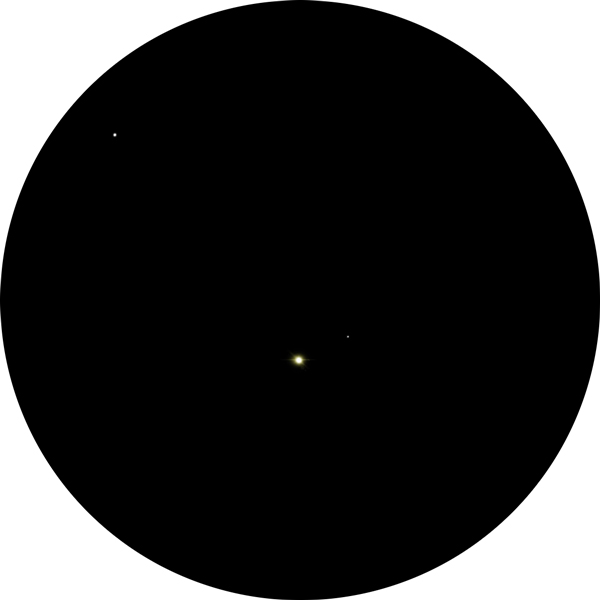
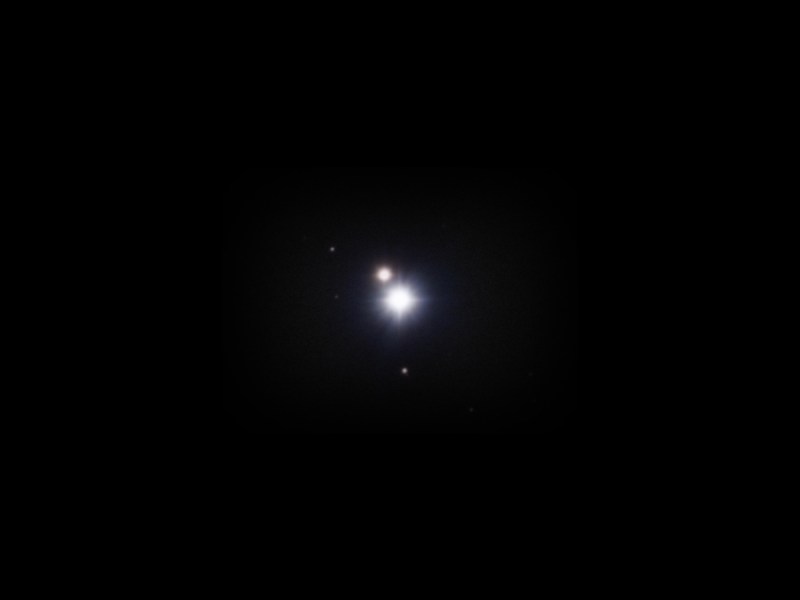
Muphrid, at magnitude 2.7, burned brightly in the eyepiece with a lemon-yellow glow. Teasing out its elusive little companion proved to be a bit of a challenge and, at times, confusing. About 15–20 arcseconds from Muphrid, I noticed a very faint star. At first, I thought this was the companion described in online literature. However, I soon realized that it wasn’t. The companion often referred to is BD+19 2726, which lies much farther away — about 112.6 arcseconds. With a slight adjustment of the scope, I was able to bring this star into view at the top of the eyepiece.
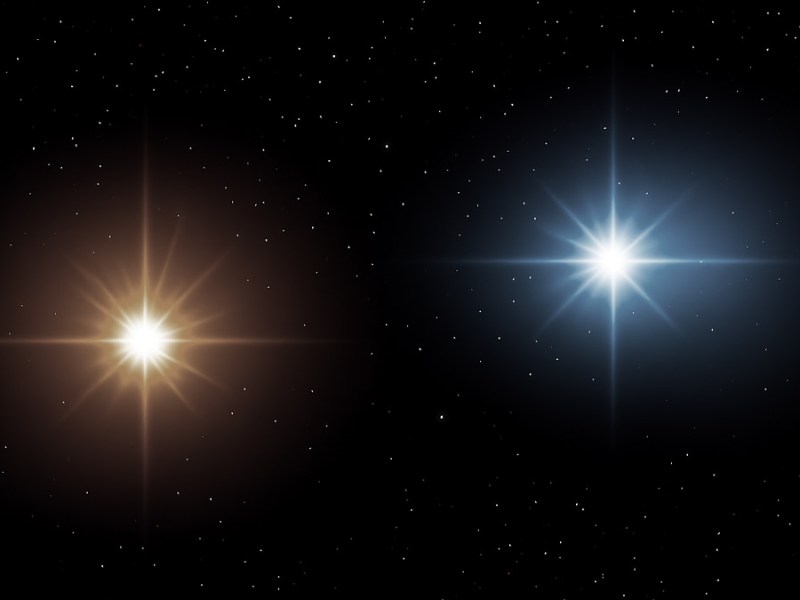
According to the very helpful notes of John Nanson, astronomer Admiral Smyth once described the primary as “pale yellow” and the tenth-magnitude secondary as “lilac.” I share John’s skepticism; it’s hard to imagine even the eagle-eyed admiral truly detecting color in such a dim star. Still, Smyth’s report stands, and I can’t argue with history.
Key Stats
| Constellation | Boötes |
| Best Viewing | Spring |
| Visual Magnitude | +2.7, +9.9 |
| Separation | 114″ |
| Position Angle | 84.8° |
| Distance from Earth | 37.19 ly |
| Milky Way Location | Orion Spur |
| My Viewing Grade | B- |
| Designations | η Boötis, HR 5235, HD 121370, HIP 67848, SAO 100766, BD+18°2759, SHJ 169 |
Sources and Notes
Stelle Doppie. (n.d.). WDS J13547+1824. Retrieved September 1, 2025, from https://www.stelledoppie.it/index2.php?iddoppia=58323
Nanson, J. (2011, June 28). Under the Influence of Arcturus: Pi (π) Boötis, Eta (η) Boötis, Σ1772, Σ1825, S 656. Best Doubles.
Kaler, J. (n.d.). Muphrid. Stars. http://stars.astro.illinois.edu/sow/muphrid.html
Sketch by Wayne McGraw

 The Garden Astronomer