
Most of the public had never heard of the Messier 87 galaxy until a few years ago. This changed on the morning of April 10, 2019, as scientists released the first image of the supermassive black hole at the heart of M87.
When the image appeared in my news feed that morning, I recall rushing to my daughter’s bedroom to wake her up for school. Holding up the image on my phone, I asked, “Do you remember the black hole I told you about? Here it is.” She gasped in awe at the image. Not a bad reaction for a teenager.
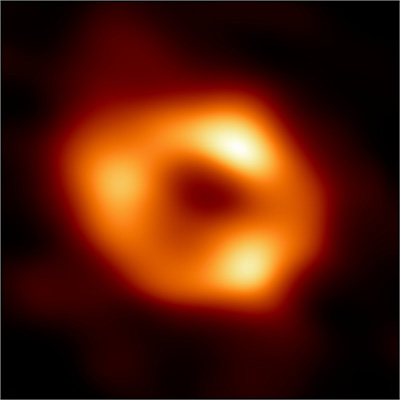
Image Credit: EHT Collaboration / Creative Commons license
M87 and its supermassive black hole will forever hold a special place in the annals of astronomy and history. The elusive black hole, only swirling in the imagination and computations of scientists, was an object to behold — now real, tangible — even beautiful.
So while our backyard telescopes may never resolve anything like the photo by the Event Horizon Telescope, at least we can stare at this patch of light in awe and wonder.
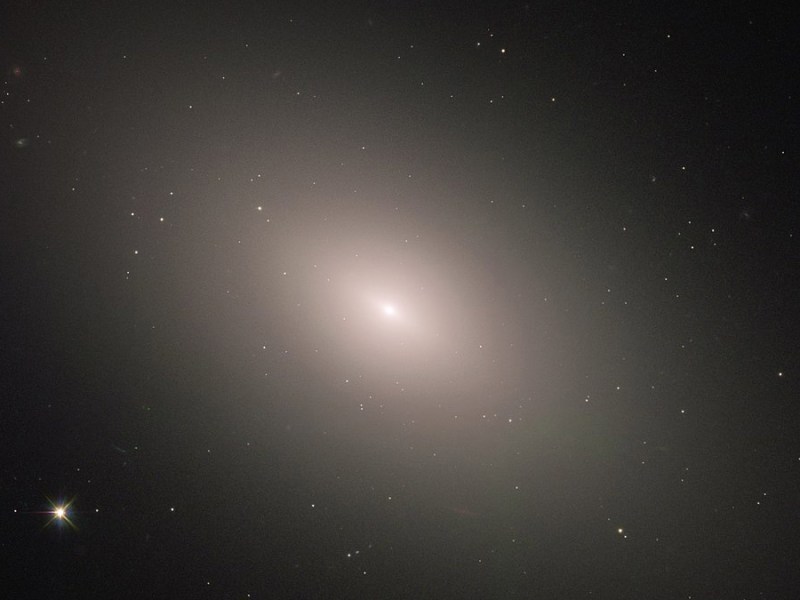
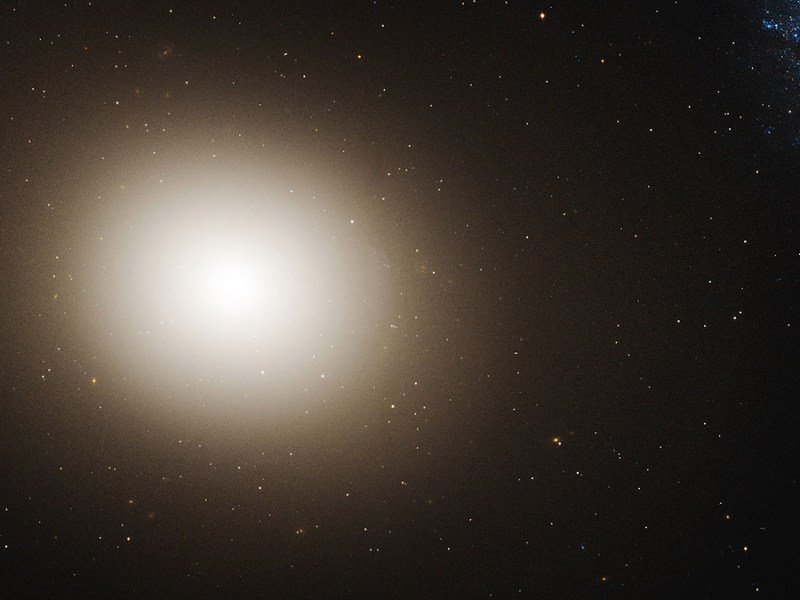
Messier 87 is an elliptical galaxy in the constellation Virgo at 54 million light-years away. Even at that distance, the light of this distant place still finds a way to break through the light pollution dome that surrounds my home.
My Observations
| Date | May 6, 2021 |
| Time | 10:15 p.m. |
| Location | Seattle, WA |
| Magnification | 203x |
| Scope | Meade 8″ SCT |
| Eyepiece | 10mm |
| Seeing | Average |
| Transparency | Average |
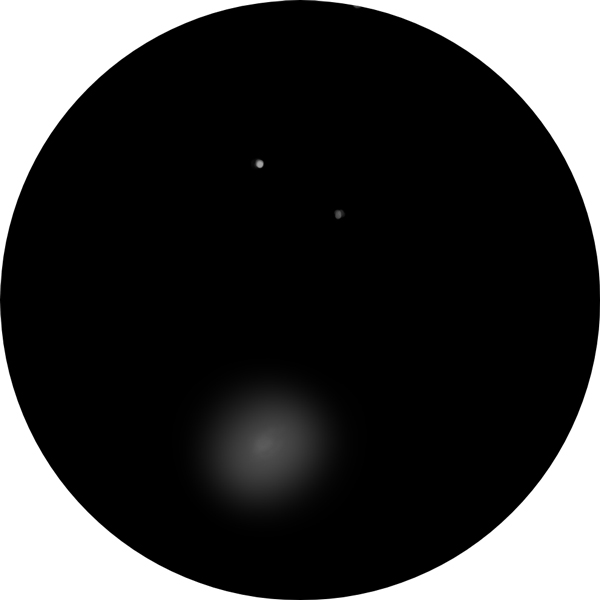
This is my first time setting eyes on the monstrous Messier 87. I wasn’t even expecting to see it since most of today has been rainy and cloudy. A strong breeze from the west cleared the clouds in the last hour, so I’ve taken the chance to set up the scope.
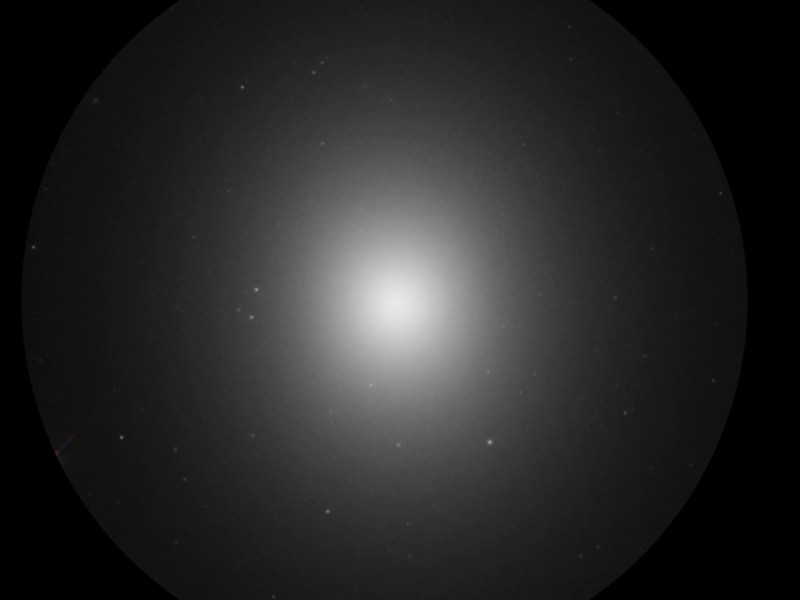
M87 appears as a bright, hazy patch. As expected for an elliptical galaxy, M87 appears as a circular, fuzzy, or hazy object in the eyepiece. Due to light pollution, the patch blends into the slightly darker background. With averted vision, the core of the blotch appears to grow brighter.
Regardless of the image’s quality, I’m in awe. I’m staring at one of the largest known galaxies in our observable universe. And at the heart of this innocent, hazy circle, a supermassive black hole makes its home.
Key Stats
| Constellation | Virgo |
| Best Viewing | Spring |
| Visual Magnitude | +8.7 |
| Absolute Magnitude | -22.4 |
| Distance from Earth | 575 million yrs |
| Diameter | 113000 ly |
| Apparent Size | 7.1 x 6.7 arcmin |
| Milky Way Location | NA |
| My Viewing Grade | B |
| Designations | M87, Virgo A or NGC 4486 |
Historical Observations
Discovered by Charles Messier on March 18, 1781.
“Nebula without star, in Virgo, below & very near a star of eighth magnitude, the star having the same Right Ascension as the nebula, & its Declination was 13d 42′ 21” north. This nebula appears at the same luminosity as the two nebulae Nos. 84 and 86.”1
Sources and Notes
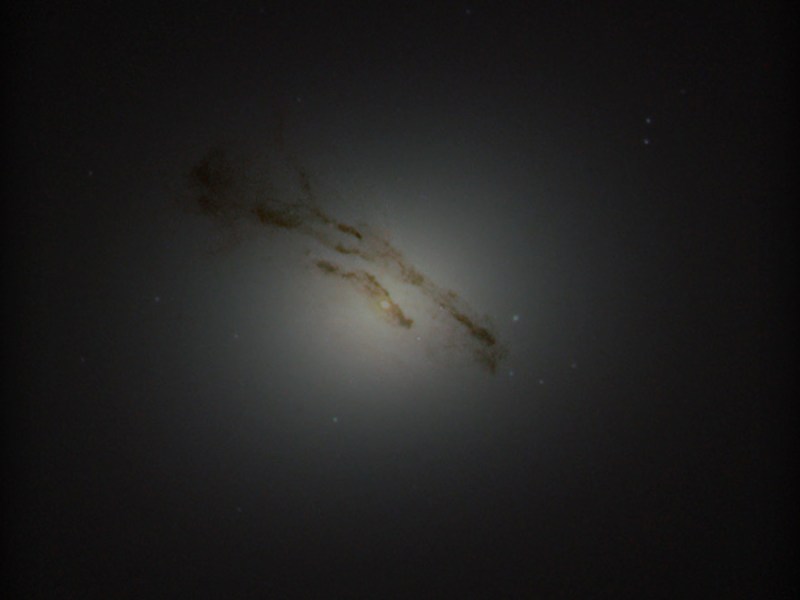
Photo of M87 is authored by NASA, ESA and the Hubble Heritage Team (STScI/AURA); Acknowledgment: P. Cote (Herzberg Institute of Astrophysics) and E. Baltz (Stanford University). The black hole photo is from NASA and the Hubble Heritage Team (STScI/AURA)
The Editors of Encyclopaedia Britannica. (2023, August 23). Virgo A. Encyclopaedia Britannica. https://www.britannica.com/place/Virgo-A
1Historical observation from messier.seds.org.
Sketch by Wayne McGraw
 The Garden Astronomer
One thought on “Messier 87 (NGC 4486): Home of a Famous Black Hole”