
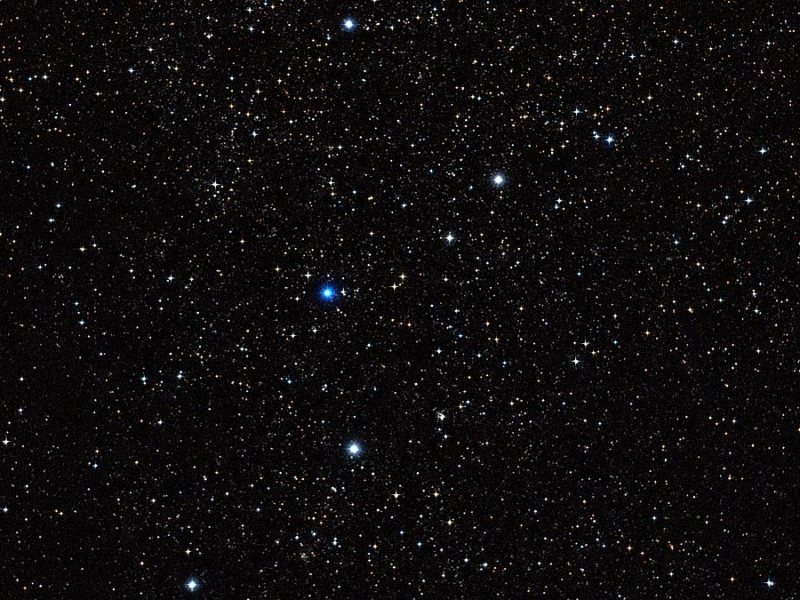
NGC 457 is an open star cluster in the constellation of Cassiopeia. It’s best viewed in autumn through early winter.
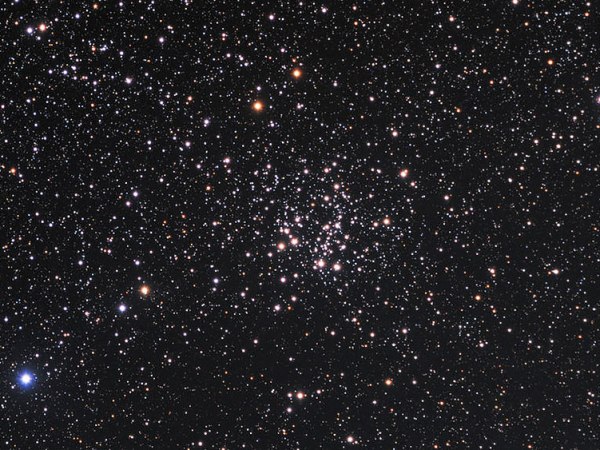
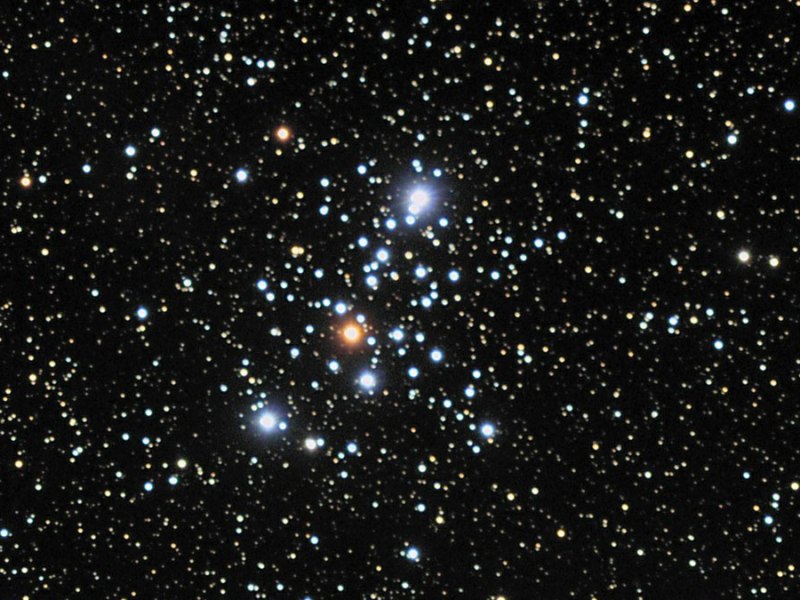
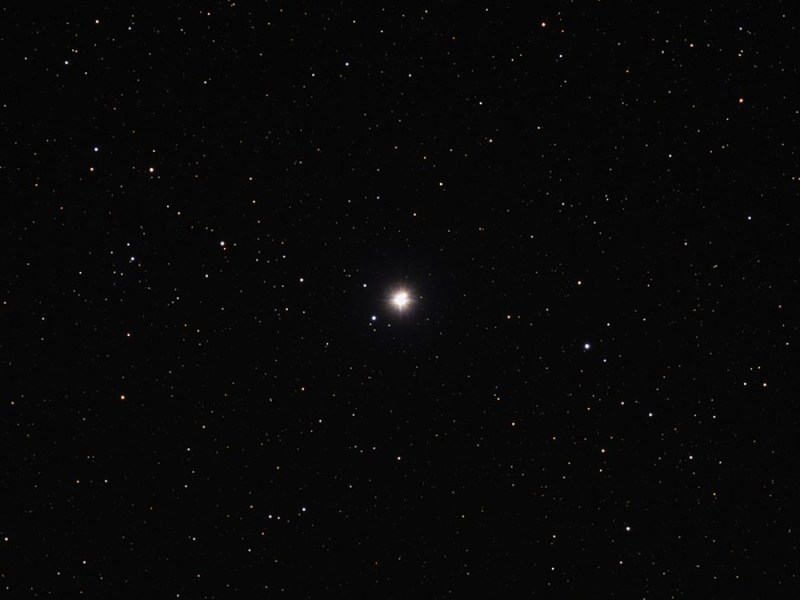
The cluster, also known as the Owl Cluster, resides 7,900 light-years away from Earth and is approximately 21 million years old. On a clear night, even a small telescope can reveal its signature pattern: two bright stars resembling the “eyes” of an owl, surrounded by a smattering of fainter stars that form the “body.” Its brightest stars, Phi Cassiopeiae and HD 7902, are what make the “eyes” stand out, drawing the gaze of skywatchers.
William Herschel discovered NGC 457 on August 18, 1780, using his 6.2-inch reflector telescope.
My Observations
| Date | January 28, 2022 |
| Time | 8:21 p.m. |
| Location | Seattle, WA |
| Magnification | 85x |
| Scope | Meade 8″ SCT |
| Eyepiece | 24mm |
| Seeing | Average |
| Transparency | Average |
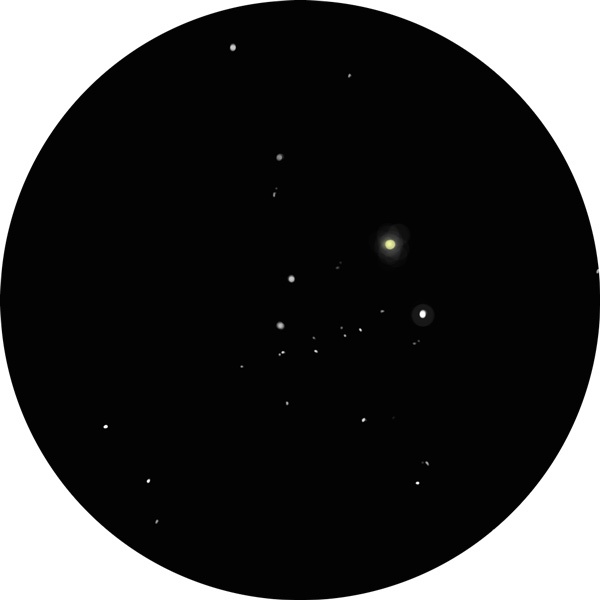
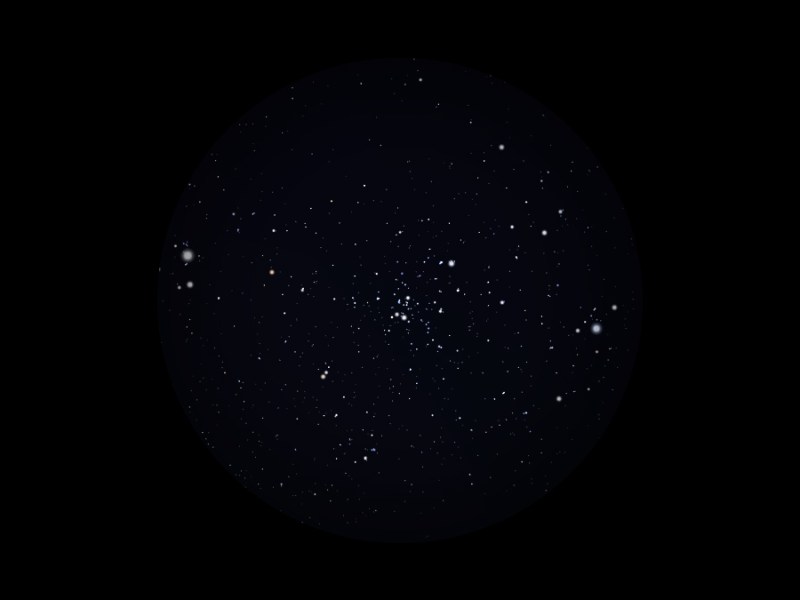
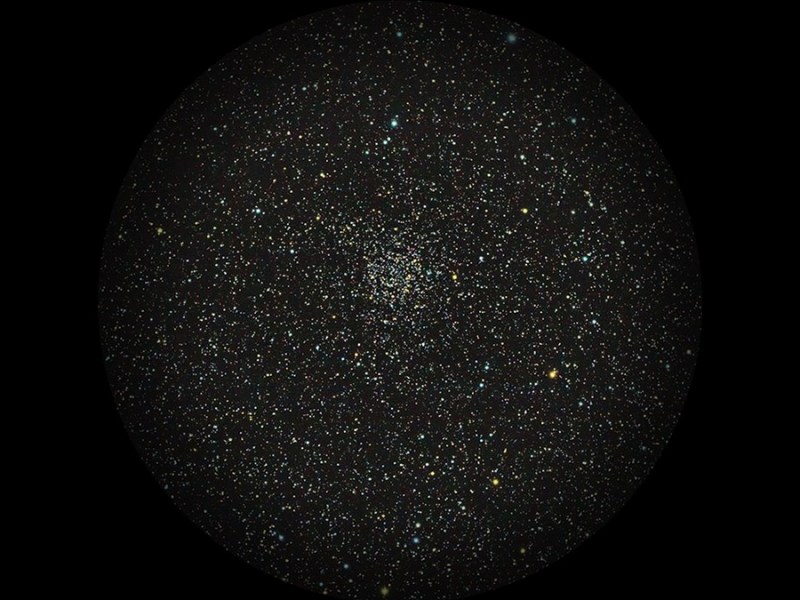
The main eyes of the Owl (the two brighter stars) are clearly visible along with a handful of dimmer stars. I know these light-polluted skies are taking away from a comprehensive view of the NGC, as I cannot make out the many (150 or so) fainter stars. Yet, I’m still able to enjoy the view that fills most of my 24mm eyepiece.
Also viewed on October 6, 2020, at 11:22 p.m.
Key Stats
| Constellation | Cassiopeia |
| Best Viewing | Autumn |
| Visual Magnitude | +6.4 |
| Absolute Magnitude | -5.5 |
| Distance from Earth | 7,900 ly |
| Diameter | 46 ly |
| Apparent Size | 20 arcmin |
| Milky Way Location | Perseus |
| My Viewing Grade | B+ |
| Designations | Caldwell 13, E.T. Cluster, Skiing Cluster, VII 42 |
Sources
Photo of NGC 457 by Gabbygall and is licensed under the Creative Commons Attribution-Share Alike 3.0 Unported license.
Wikipedia contributors. (2025, August 30). NGC 457. Wikipedia.
Sketch by Wayne McGraw


 The Garden Astronomer