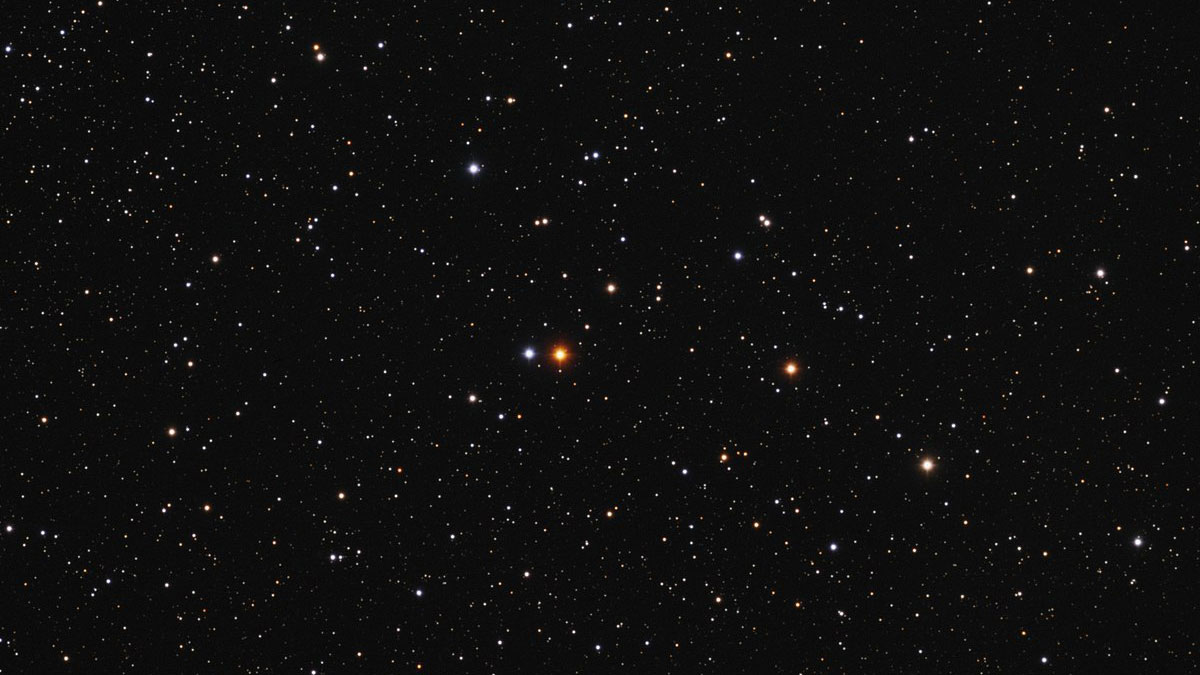
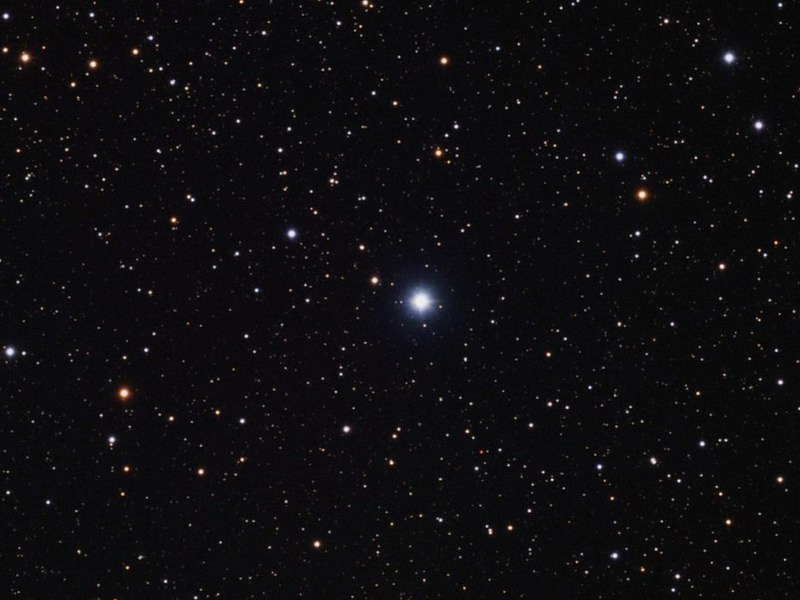
As backyard astronomers saunter through the high northern Autumn skies, they eventually meet eye-to-eye with the large “W” of Cassiopeia hovering above them. Joining the many wonderful deep-sky gems in this region is the carbon star WZ Cassiopeiae, also known as WZ Cas.
WZ Cas shines at a variable magnitude between 6.3 and 8.8, first identified by Brazilian astronomer João de Moraes Pereira in 1893. It’s classified as a C-N7 III star. Its brightness changes over time, but not in a perfectly regular pattern. The light rises and falls roughly every 186 and 366 days. These changes happen because the star itself is expanding and contracting, a behavior common in older stars that are in the later stages of their life.
Adding to the interest of this carbon star is that it’s an optical double star. Its companion star shines at a magnitude of 8.4 and lies 58 arcseconds away.1
My Observations
| Date | November 25, 2023 |
| Time | 6:10 p.m. |
| Location | Seattle, WA |
| Magnification | 169x |
| Scope | Meade 8″ SCT |
| Eyepiece | 12mm |
| Seeing | Above Average |
| Transparency | Above Average |

I’ve enjoyed the crystal clear skies in the Seattle area this Thanksgiving weekend. Tonight, the temperature hovers around freezing, and the humidity is high. But still, as I look at the moon near Jupiter, both are extremely sharp on this icy night.
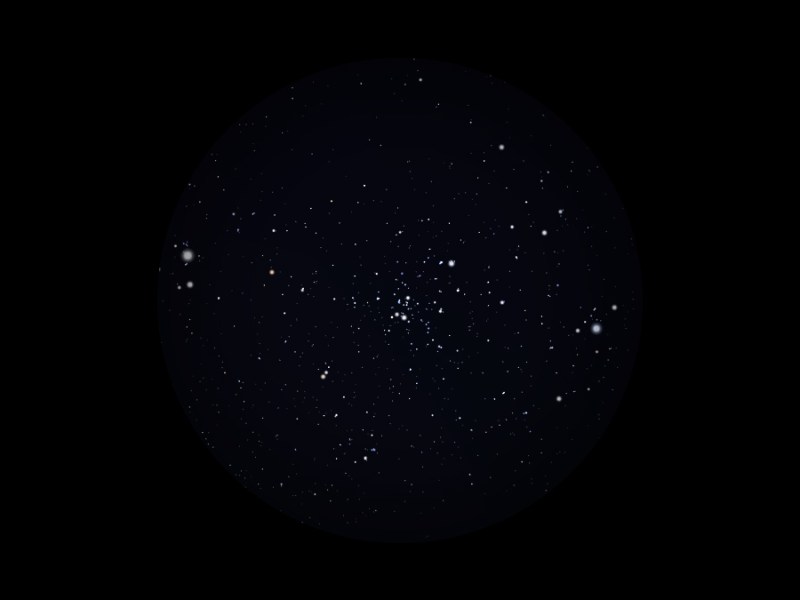
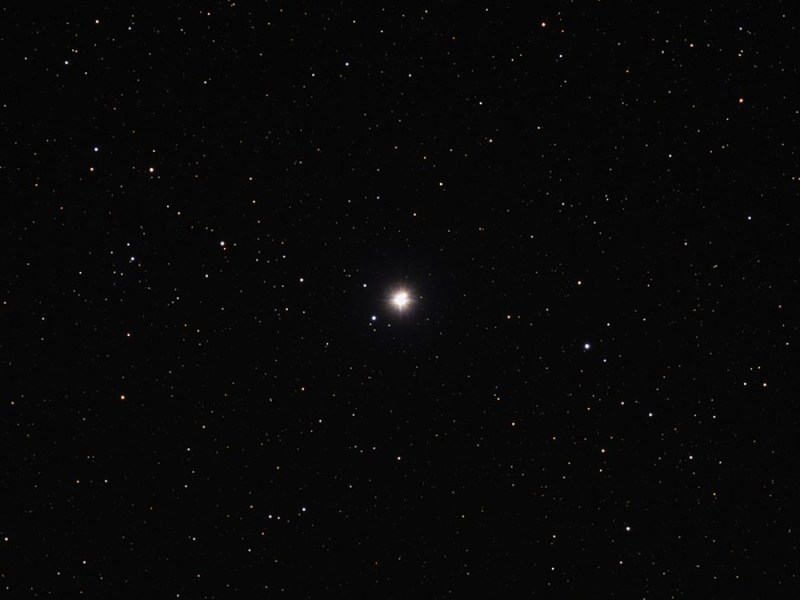
The scope aims nearly straight up and circles a bit until the computer lands on WZ Cas. This star is an orange-red in color, not a deep red. Several white stars lie nearby, including a brighter white-blue one, which I believe is the optical companion.
Key Stats
| Constellation | Cassiopeia |
| Best Viewing | Autumn |
| Visual Magnitude | +6.3 – +8.8 |
| Absolute Visual Magnitude | -2.59 |
| Distance from Earth | 2900 ly |
| Milky Way Location | Orion Spur |
| My Viewing Grade | B+ |
| Designations | SAO 21002, HIP 99, HD 224855 |
Sources and Notes
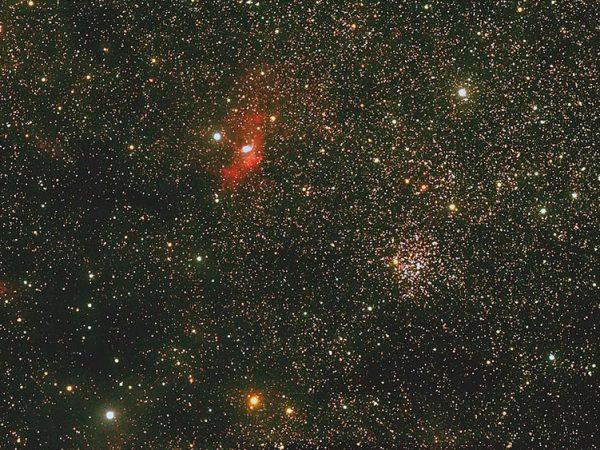
The banner featuring WZ Cassiopeiae in optical light is by David Ritter and was photographed from Edmonton, Canada, on the night of October 4, 2018. This image by David is licensed under the Creative Commons Attribution-Share Alike 4.0 International license. Full details are here on the image.
1Wikimedia Foundation. (2023b, August 12). WZ Cassiopeiae. Wikipedia. https://en.wikipedia.org/wiki/WZ_Cassiopeiae
Sketch by Wayne McGraw


 The Garden Astronomer

One thought on “WZ Cassiopeiae: A Scarlett Variable Double Star in Cassiopeia”