The constellation Orion is one of the sky’s great treasures. Most observers know it for the bright stars of Orion’s Belt, the fiery red supergiant Betelgeuse, and the glowing Orion Nebula, but this winter constellation is also rich with double stars and multiple systems.
Orion offers endless opportunities for binocular stargazers and telescope users alike. Among these lesser-known doubles lies S 503, a wide system that may not be gravitationally bound but still rewards a closer look in the eyepiece.
According to the Washington Double Star Catalog, S 503 has multiple components associated with this system. For a deeper dive into these numerous stars, I suggest reading Bob Argyle’s S 503 post on the Webb Deep-Sky Society site and reading Stelle Doppie.
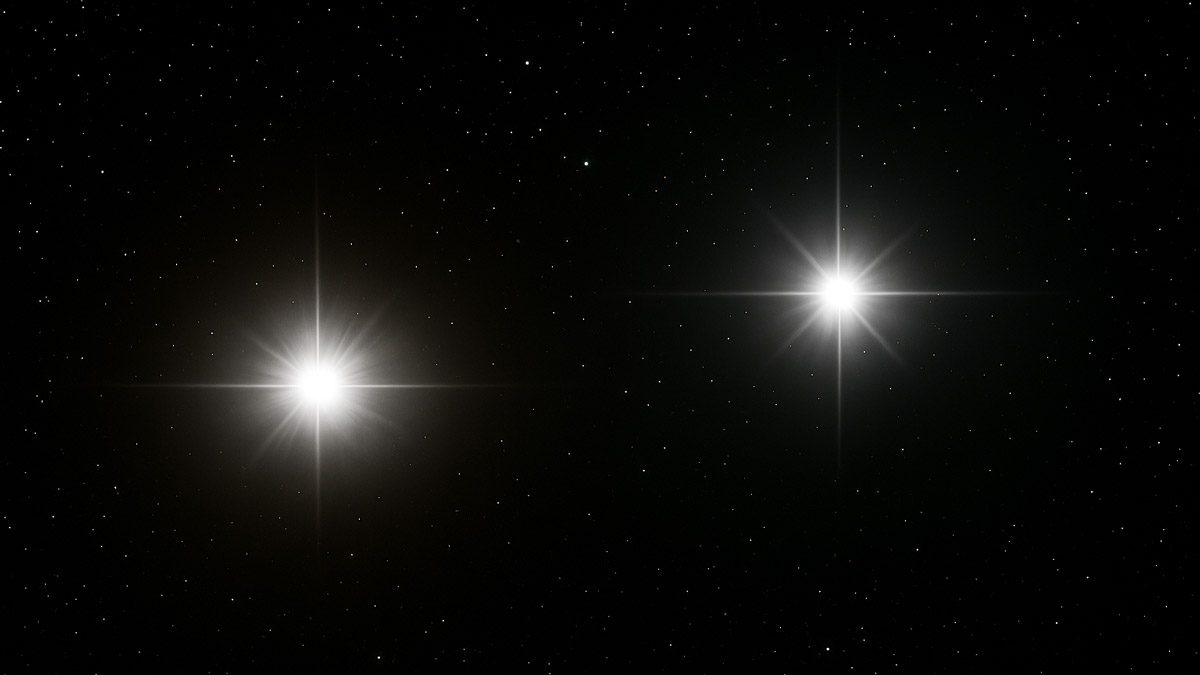
On the early morning of my observation (more below), I only observed the brightest components, designated as A and B. The primary star (A) shines at a magnitude of +6.59, and is cataloged as a yellow subgiant. Lying 85.6 arcseconds away is the secondary component (B), which is dimmer at a magnitude of +8.41.
S 503 may lie outside the main body of Orion, but it’s worth a visit above the hunter’s head to check out this system.
My Observations
| Date | September 16, 2023 |
| Time | 5:54 a.m. |
| Location | Seattle, WA |
| Magnification | 169x |
| Scope | Meade 8″ SCT |
| Eyepiece | 12mm |
| Seeing | Above Average |
| Transparency | Above Average |

This is the first time I’ve observed in the early morning since starting this site. Autumn is just around the corner, and I can feel it in the cool morning air. The world is peaceful and quiet, as if it’s finally getting some rest. After having a few moments enjoying Jupiter, I turn my scope toward Orion. The hunter appears from behind the eastern trees, reminding me of August nights when I would stay up all night, watching the stars until the first sign of Orion appeared.
I’ve been spending these few moments jumping quickly between stars as the dawn light creeps up the eastern sky. For S 503, I see a wide pair, both with a white hue. The sky is getting washed out, so I don’t see any other fainter stars, unfortunately.
Key Stats
| Constellation | Orion |
| Best Viewing | Winter |
| Visual Magnitude | +6.6 | +8.4 |
| Distance from Earth | 86.77 ly |
| Separation | 85.6″ |
| Position Angle | 421° |
| Milky Way Location | Orion Spur |
| My Viewing Grade | B |
| Designations | SAO 95004, HD 39881, HR 2067, HIP 28066, BD+13 1036, GC 7469, 0728-03142-1 |
Sources and Notes
Sketch by Wayne McGraw
 The Garden Astronomer