September 28, 2025
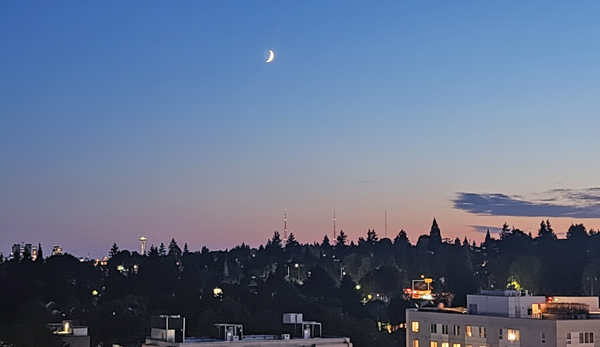
On a recent visit to downtown Seattle, my wife and I joined her sister to watch the sunset from her rooftop apartment. It felt like an island above the city, where the sky’s calming twilight stood out sharply against the electric glow and traffic below. High above Seattle’s glass towers, a few stars began to emerge, including Antares, lying next to autumn’s crescent moon.
As the evening carried the earthy scent of fallen leaves and the distant hum of city life, quiet fell upon me. In a single breath, Seattle softened and dissolved.
I found myself once more on the south side of my childhood home in Denver, decades ago. The crisp air mingled with the metallic chime of my dog’s collar.

Through the window screen, the murmur of the living room TV drifted, accompanied by my parents’ voices. The moment lingered, suspended, as if the world itself had paused to preserve this weave of scent, sound, and light, and I could step into it, endless, eternal, and wholly mine.
My beloved cocker spaniel kept guard, pacing back and forth along the chain-link fence, while I fussed with my department-store Tasco refractor, its wooden tripod crooked and stubborn as I scanned the southern skies for Antares.

And then, summer’s burning star finally broke through the black lace of tree branches.
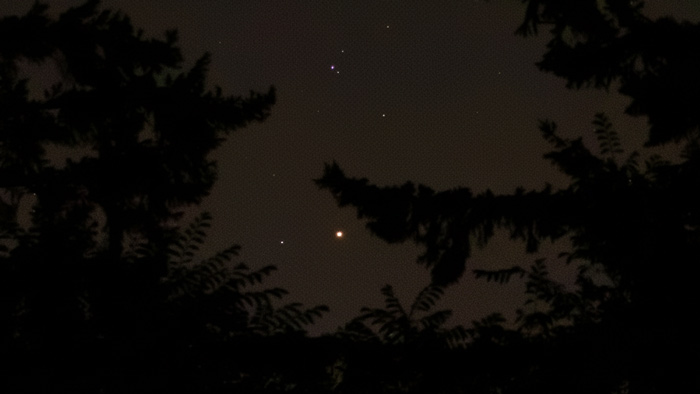
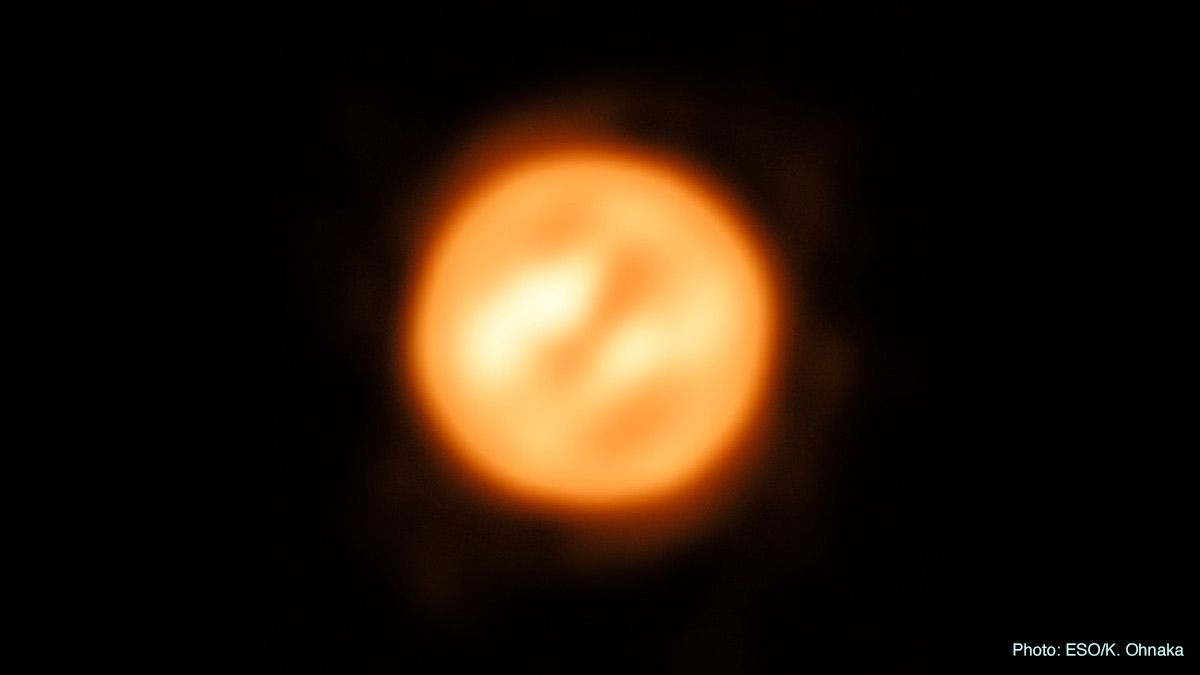
Not diamond, not sapphire, not pearl—this was a coal of light, burning low in the Colorado darkness. I didn’t yet know Antares was a swollen red supergiant, hundreds of times larger than our Sun, nearing its end. Placed at our solar system’s center, it would engulf Mars’ orbit.
And then came something more. Just below the star, shimmering like dust shaken from the hand of God, was Messier 4.
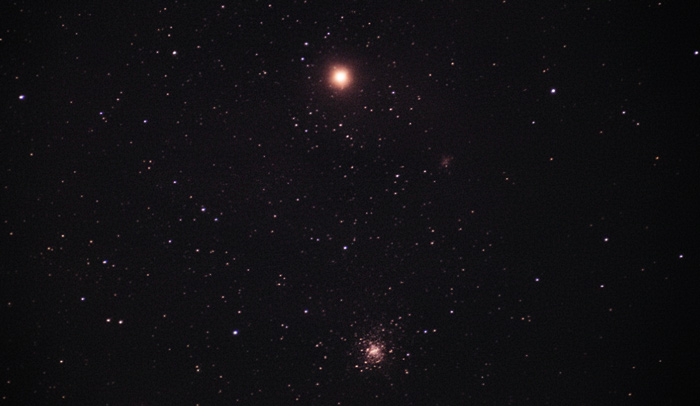
Through the small, imperfect lens of my Tasco refractor, it looked like a thousand tiny sparks flickering together—like looking up at a chandelier swinging in a dark cathedral, its many lights scattering brilliance across vast shadows. Unlike Antares, a lone point, this cluster was a gathering of stars, surviving as one community.
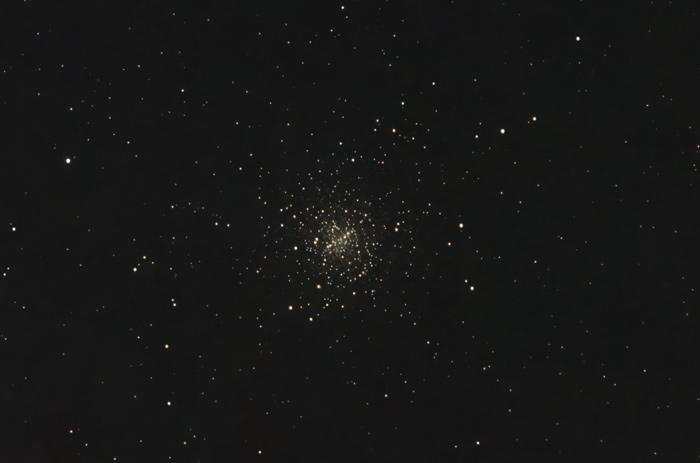
Antares and Messier 4, side by side, shone in tandem: one a single life racing toward its close, the other a congregation of suns enduring across time, pairing solitude with multitude. The stars, like life, oscillate between isolation and a sense of belonging. But both move forward, carrying what came before, fragments of fire to bear across skylines and decades.
And then the memory whispered away.
Sometimes my mind wanders, nothing new to anyone who has ever known me! I imagine that childhood home bending back toward me, waving me in and granting passage. How I desire to knock on the door, introduce myself, walk through to the backyard aluminum screen door, push it open, and step onto my south-facing patch of grass.
I’d lie down and stare at Antares, joining the Greek sailor gazing up from his vessel, whispering tales of destinies. And perhaps Antares would hover just above the treetops, as though it had waited all these years to meet both of us again.
But memory is a harbor visited only in passing. Minutes turn to memories, and life presses sternly against every attempt to row backward. So we raise a different sail on new decks with new crews and new courses.
Finding New Shores
These days, I stargaze from Florida’s Gulf Coast.

The Gulf waters run into the sky, and I stand at the seam of sea and heavens.
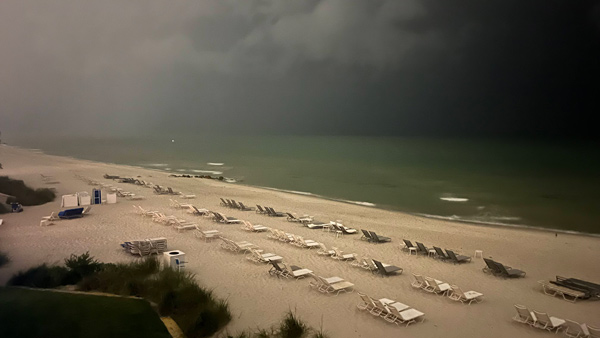
Above, Antares burns higher with its crimson flame—unwavering, even as distant lightning stitches the clouds with electric threads.
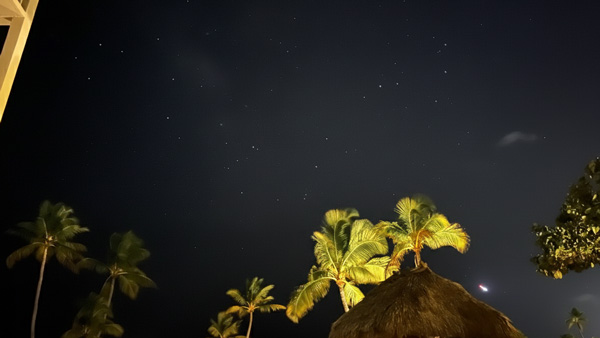
I guess, in a way, Antares has followed me through decades: the boy in Denver, fussing with a crooked telescope; the man in Seattle, tracing memories on a rooftop; and now, here, where past and present converge beneath a salty sky. Its light reminds me that time does not pause.
And so the circle closes: rooftop, yard, and shoreline—all linked by a lonely crimson light. To see Antares in each season of life is to know that memory and the present are not rivals but companions, walking together. We sail forward, yet never alone.
Soon, I’ll board a plane back to the place where salty air blends with the quiet rush of waves, and October will be upon us. Antares will bid farewell, dipping beneath the waves, until it takes its place again inside the vast, vaulted night.
Key Stats
| Constellation | Scorpius |
| Best Viewing | Summer |
| Visual Magnitude | Variable from +.6 to +1.6 |
| Absolute Visual Magnitude | -5.28 |
| Distance from Earth | ~550 light years |
| Milky Way Location | Orion Spur |
| My Viewing Grade | A |
| Designations | α Scorpii, Alpha Scorpii, HD 148478, HR 6134 |
Sources and Notes
Banner image by ESO/K. Ohnaka. Creative Commons. Source
Other photos by Wayne McGraw


 The Garden Astronomer
One thought on “Antares: Across the Skylines”