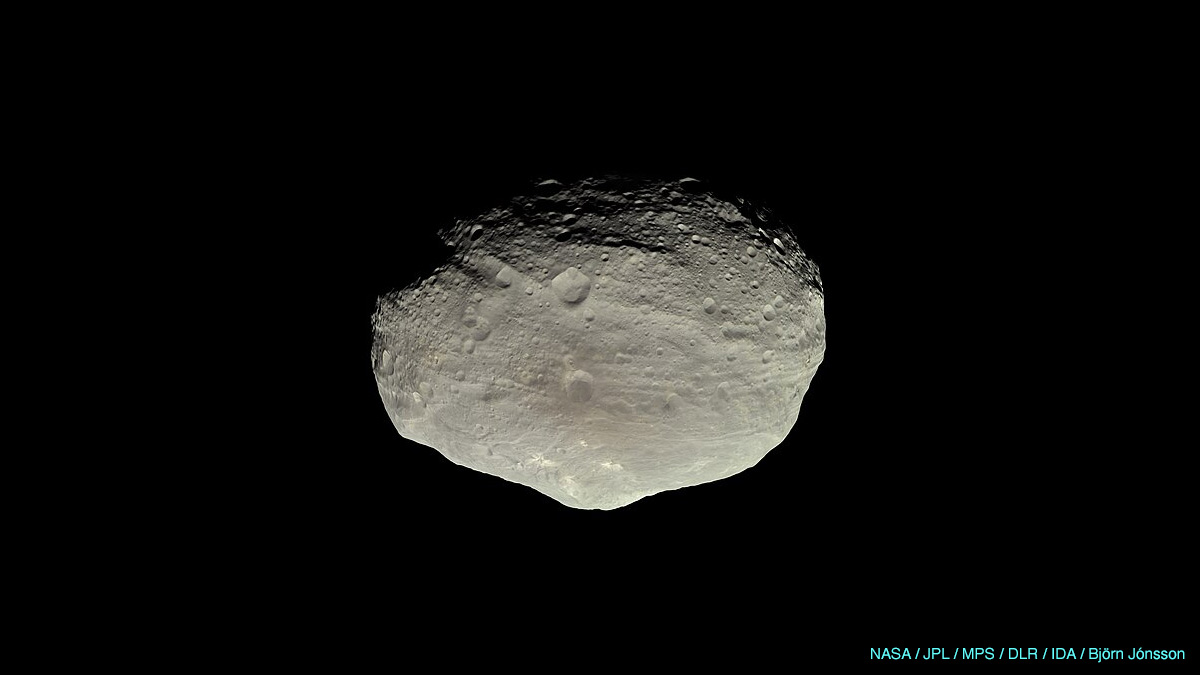
If you’ve ever stared up at the night sky and wished you could spot something beyond the Moon and planets easily, here’s some good news: there’s an asteroid bright enough to catch with your own telescope or even binoculars. Meet Vesta, the brightest asteroid in the sky and one of the easiest to find.
What Vesta Looks Like
Don’t expect fireworks — Vesta won’t show off craters or color bands through your eyepiece. Instead, you’ll see a tiny, steady point of light, almost like a pale star. The giveaway that it’s not a star? It moves. Check its position one night, then again a night or two later, and you’ll see it slowly shift against the background stars. That gentle drift is what makes hunting it so fun.
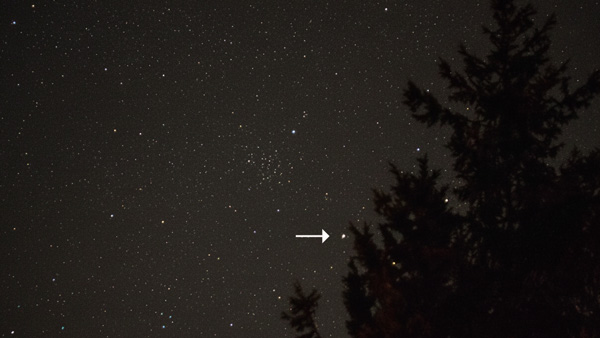
June 17, 2018: Photo taken with a Canon DSLR 70D and a 300mm lens. 2.7-second exposure, f 7.1,
When Vesta is at its brightest, which occurs approximately every 15 to 17 months, it can shine at a magnitude of around 5.5 or 6.0. Under a dark, rural sky, that’s just on the edge of naked-eye visibility. If you live near city lights, binoculars or a small telescope will do the trick. You can check The Sky Live website to track Vesta’s current magnitude.
The Story Behind the Discovery
Vesta was discovered on March 29, 1807, by Heinrich Wilhelm Olbers, a German astronomer with a keen interest in the night sky. By day, he attended to his patients and fulfilled his medical duties. By night, he transformed into an astronomer, balancing medical charts by day and star charts by night.
Astronomers of that time were especially interested in a gap between Mars and Jupiter, a region they believed might harbor a missing planet. Olbers had already discovered one asteroid, Pallas, when he noticed a small dot of light moving through the stars. Bingo, another new world.
It was the fourth asteroid ever discovered, after Ceres, Pallas, and Juno. Olbers named it Vesta, after the Roman goddess of the hearth — a nice touch for something that quietly glows like a tiny ember in the sky.
Why Vesta Stands Out
Vesta is like a mini-planet. It has a core, mantle, and crust, a layered interior similar to that of Earth. It’s about 325 miles wide, making it the second-largest object in the asteroid belt. And thanks to NASA’s Dawn spacecraft, which visited in 2011, we know its surface is scarred with enormous impact craters and mountains taller than Everest.
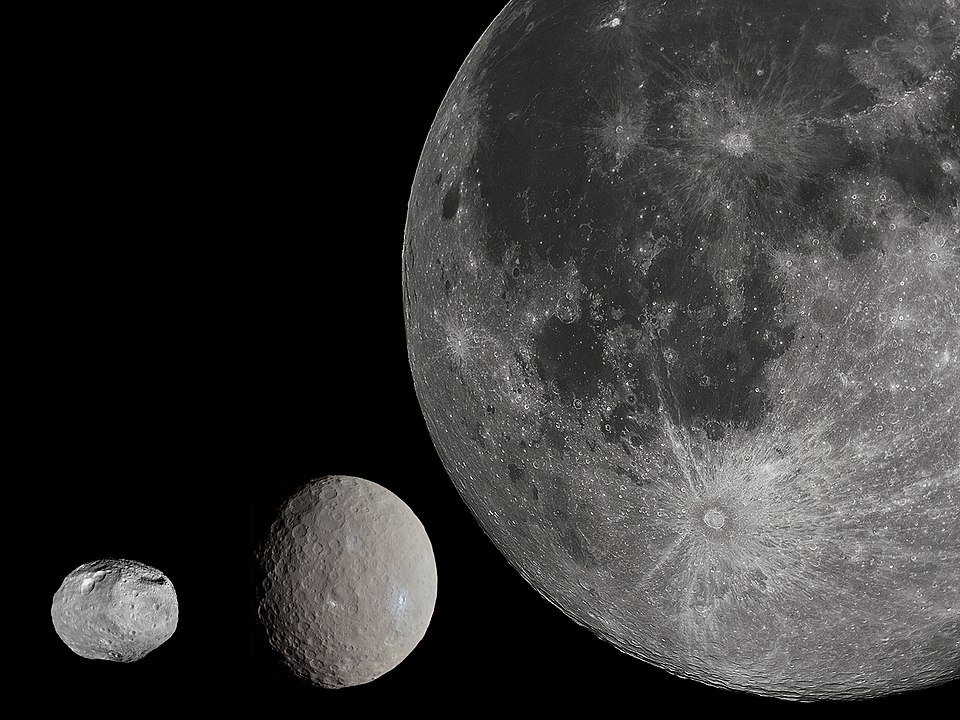
NASA | Public Domain
Even more remarkable: some meteorites found on Earth actually originated from Vesta. When ancient impacts blasted chunks off its surface, a few eventually found their way here.
So next time you’re out under a clear sky, give Vesta a try. It’s not flashy, but there’s something special about seeing one of the solar system’s oldest survivors with your own eyes.
My Observations
| Date | September 10, 2025 |
| Time | 9:05 |
| Location | Seattle, WA |
| Magnification | 254x |
| Scope | Meade 8″ SCT |
| Eyepiece | 8mm |
| Seeing | Average |
| Transparency | Above Average |

I first observed Vesta on a clear June night in 2018 from Seattle. I set up my DSLR on a tripod in my backyard, eager to catch a glimpse of the asteroid. Using short exposures to keep the stars sharp, I navigated the sky with the help of Messier 23, which floated just above the asteroid, serving as a celestial guidepost. To my surprise, Vesta appeared brighter than I expected, making it easy to capture quickly through the lens. The moment was quietly thrilling. There it was, a tiny world millions of miles away, framed against the familiar backdrop of my backyard sky.
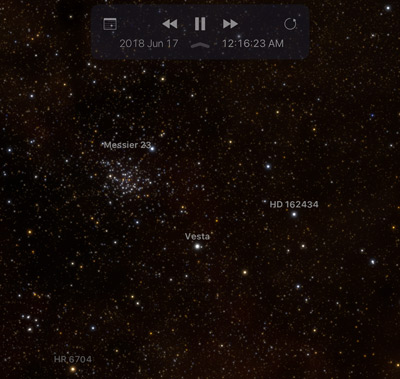
It’s a rewarding experience to search for minor planets, such as Ceres, and asteroids. In addition to observing their movement across the stars, I suggest using a star app to help identify them while navigating with binoculars or a telescope. I’ve found using an iPhone or camera with quick exposure will usually pick up Vesta’s pinpoint of light, as I show above.
Key Stats
| Magnitude | Varies from +5.1 to +8.5 |
| Distance from Earth | Varies from ~1.1 AU to over 2.5 AU |
| Diameter | 326 Miles |
Sources
The banner photo of Vesta is in the public domain in the United States because it was solely created by NASA. Source.
4 Vesta. (2025, September 24). In Wikipedia. Retrieved from https://en.wikipedia.org/wiki/4_Vesta
National Aeronautics and Space Administration (NASA). (2024, November 3). Vesta. NASA Science. Retrieved from https://science.nasa.gov/mission/dawn/science/vesta/
Sketch by Wayne McGraw
 The Garden Astronomer
