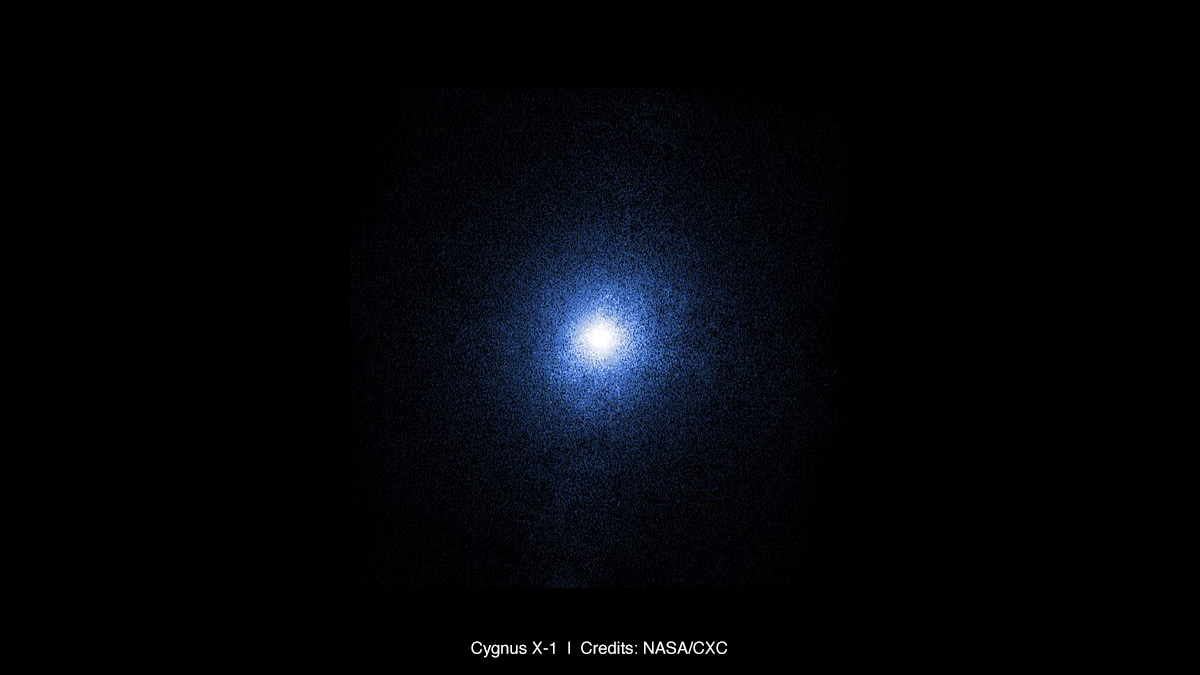
Cygnus, the Swan, is one of the richest parts of the Milky Way. In its star fields sits one of the most famous black holes ever found, Cygnus X-1, along with its visible companion star, V1357 Cygni.
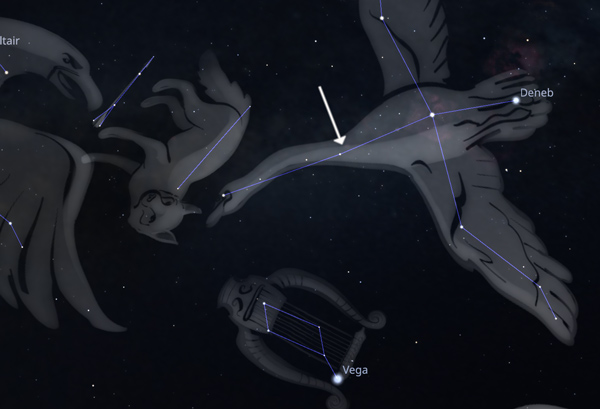
The Star Beside a Black Hole
V1357 Cygni is a blue supergiant star shining at an apparent magnitude of around 8.9, making it visible through small telescopes under dark skies. See my observations below. Its blue-white color is a clue to its high temperature, which is tens of thousands of degrees on the surface and much hotter than our Sun. On its own, this star would already be impressive, but what makes it truly historic is that it orbits an unseen companion: Cygnus X-1.
The Black Hole: Cygnus X-1
Since 1964, when a sounding rocket first detected X-rays from the Cygnus X-1 region, the black hole has served as a testing ground for astrophysics, sparking the imagination of many.
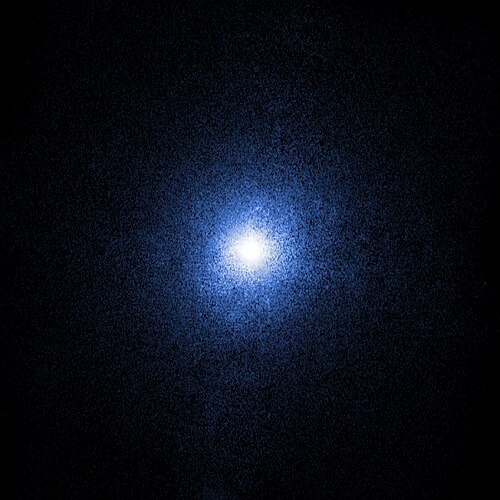
Cygnus X-1 isn’t enormous when compared to the supermassive black holes found in galactic cores, like the one photographed in Messier 87. But for a stellar-origin black hole—one formed from the collapse of a massive star—it’s exceptionally heavy.
With a mass about 21 times that of our Sun, it sits at the upper end of what stellar black holes can reach. Its event horizon is only about 60 kilometers (roughly 40 miles) wide, yet its gravitational influence extends far beyond that tiny boundary, shaping the space and matter around it in dramatic ways.
A Stellar Dance
The black hole orbits incredibly close to its companion star, V1357 Cygni, at a separation of only about 0.2 astronomical units—roughly half the distance between the Sun and Mercury. This tight orbit, completed in just 5.6 days, allows the black hole to siphon material from the star’s outer layers, feeding its accretion disk and producing the powerful X-ray emissions that first revealed its presence.
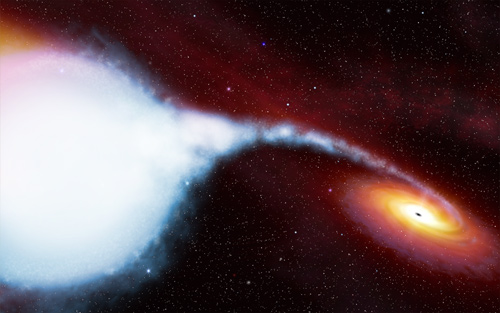
Because the black hole’s gravity distorts the star and pulls material from it, the light we see from V1357 Cygni changes slightly over time. Its orbit also causes small shifts in brightness as the star’s shape and orientation appear differently from Earth.
To a stargazer, V1357 Cygni might seem like just another star. But when you know the story of the black hole it orbits, it becomes a glimpse into some of the most extreme and beautiful events in our galaxy.
My Observations
For me, V1357 Cygni makes the science tangible. It’s not only something in research papers or space observatories—it’s right there in the eyepiece or camera sensor, a small point of light that whispers of black holes, X-rays, and the vast energies at work in Cygnus.
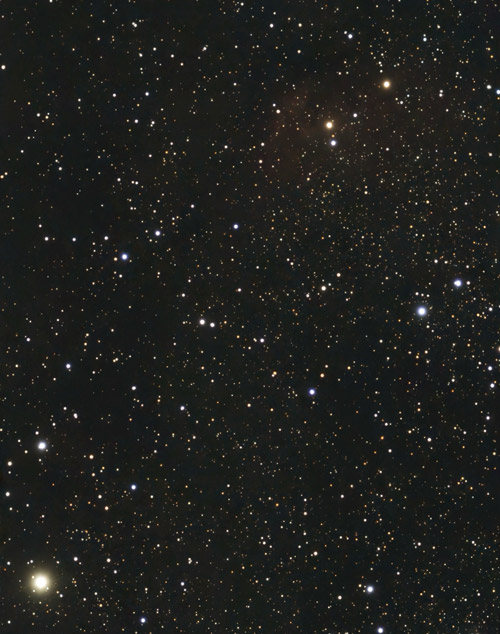
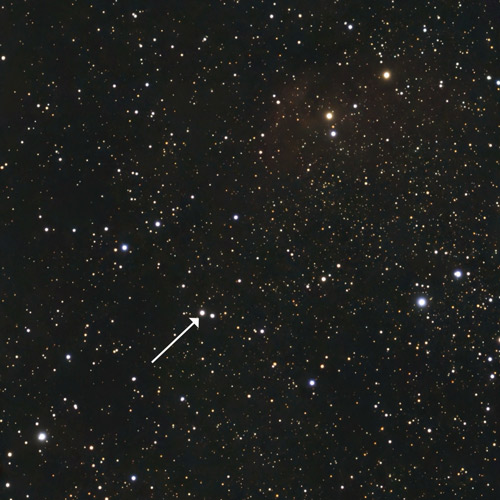
I took the two photos below on October 16, 2025, in Tampa, Florida, at 11:00p.m. The moonless skies were exceptionally clear. The photo on the left captures more of the Cygnus X-1 region, noting the dim red nebulosity in the top right corner and Eta Cygni in the bottom left. The photo on the right has an arrow pointing to V1357 Cygni.
Key Stats for V1357
| Constellation | Cygnus |
| Best Viewing | Summer to early Autumn (Northern Hemisphere) |
| Visual Magnitude | +8.9 (Variable) |
| Distance from Earth | ~ 6,000 light-years |
| Milky Way Location | Orion Spur |
| Designations | V1357 Cyg, HD 226868, HDE 226868, BD+34°3815, HIP 98298 |
Sources and Notes
Miller-Jones, J. C. A., et al. (2021). Cygnus X-1 contains a 21-solar mass black hole—Implications for massive star winds. Science, 371(6533), 1046–1049. https://doi.org/10.1126/science.abb3363
Sky at Night Magazine. (2024, June 5). How to locate black hole Cygnus X-1. Sky at Night Magazine. https://www.skyatnightmagazine.com/space-science/black-hole-cygnus-x-1
Banner photo and sketch by Wayne McGraw
 The Garden Astronomer