
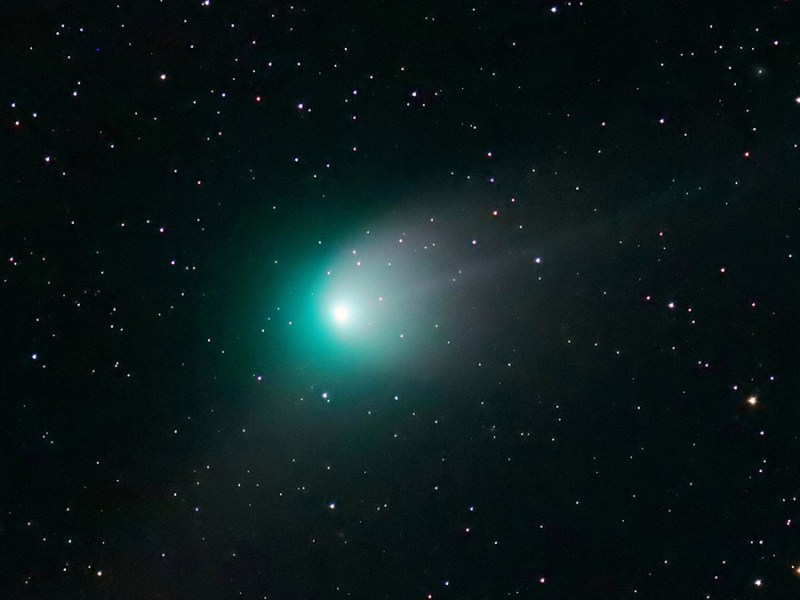
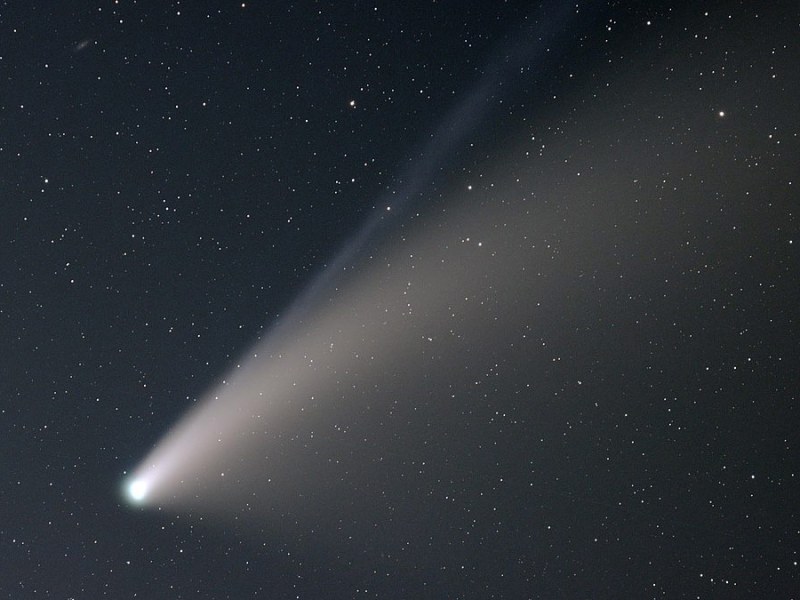
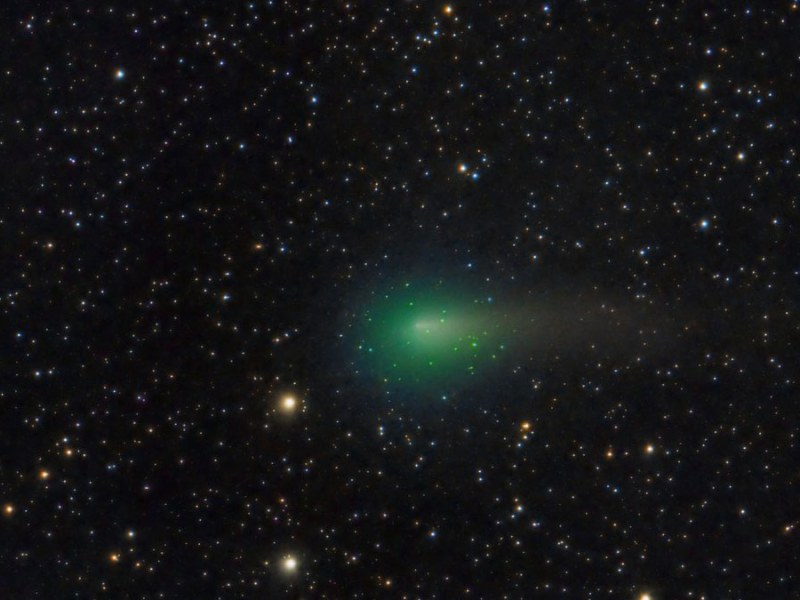
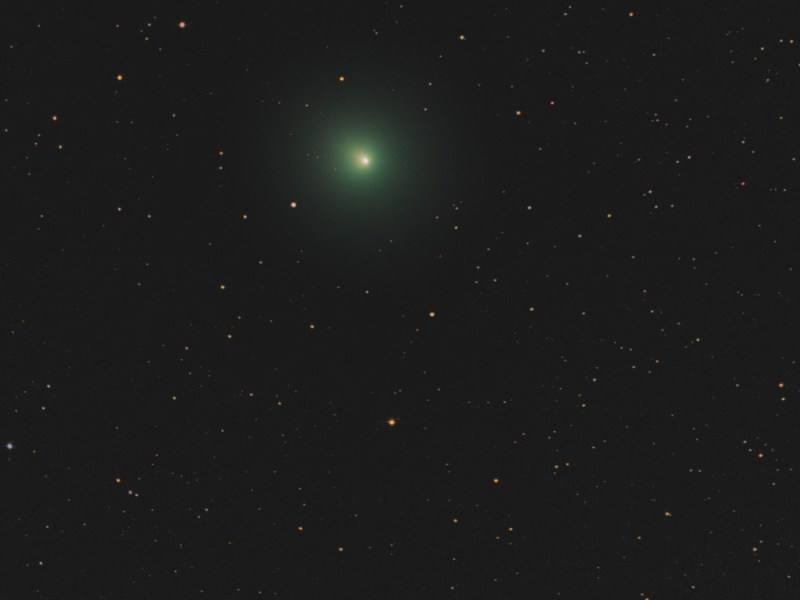
As the nights grow longer and the air cools, Comet C/2025 A6 (Lemmon) is emerging in the sky, offering a rare display of celestial beauty. It is expected to be the brightest comet of 2025, alongside the slightly dimmer Comet C/2025 R2 SWAN.
David C. Fuls discovered the comet using images captured on January 3, 2025, at Mt. Lemmon in Arizona. At the time of its discovery, it appeared extremely faint, with an apparent magnitude of about 21.5. Since then, it has brightened significantly as it moves inward through the solar system.
Classified as a non-periodic, or long-period, comet, it has an inbound orbital period of roughly 1,350 years. Accounting for gravitational influences from the planets, it is not expected to return until approximately 3175.
Stuart Atkinson writes: “So as it passed through solar conjunction on July 2, 2025, and was temporarily lost from view in the Sun’s glare, no one really expected very much from it when it reappeared. Comets love surprising the people who observe them, and proving them wrong if possible.” So true, Mr. Atkinson.
My Observations
At 5:30 in the morning, I found myself tiptoeing onto the front porch like a wannabe astronomer–acrobat, trying to balance the Seestar S50. The comet was hanging just above the rooftops across the street, and of course, the brightest streetlamp in the county was beaming directly across my door!
As I squinted toward the heavens and hoped the Seestar wouldn’t tumble into the shrubbery, an unexpected parade of dog walkers began passing by. Each one gave me the same look: half curiosity, half “should I call someone?” Their dogs stared too, probably wondering why this sleepy human was pointing a sci-fi-looking contraption into space before dawn. If only they knew that right above their heads, a comet was quietly making its way toward us—while I was just trying not to drop my telescope off the porch.
| Date | October 13, 2025 |
| Time | 5:20 a.m. |
| Location | Tampa, FL |
| Binoculars | 25×70 |
| Magnification | 25x |
| Seeing | Average |
| Transparency | Average |

| Date | October 13, 2025 |
| Time | 5:30 a.m. |
| Location | Tampa, FL |
| Scope | Seestar S50 |
| Exposure | 3 Minutes / 10 sec each |
| Seeing | Average |
| Transparency | Average |

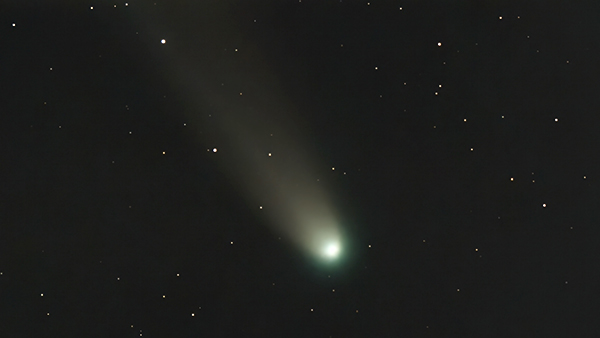
Seestar S50, 3-minute exposure
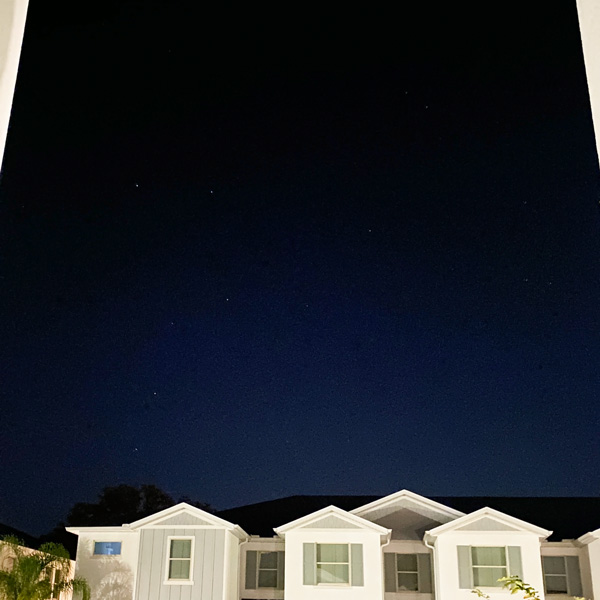
Sometimes, we backyard astronomers need to try anything to capture the heavens. How I wish I lived out in the country away from every streetlight, yet there is something to the challenge of finding an object hidden on the velvet firmament. Looking closely at the photo, you’ll see Ursa Major to the left. Comet Lemmon was just below and to the right.
Additional Photos
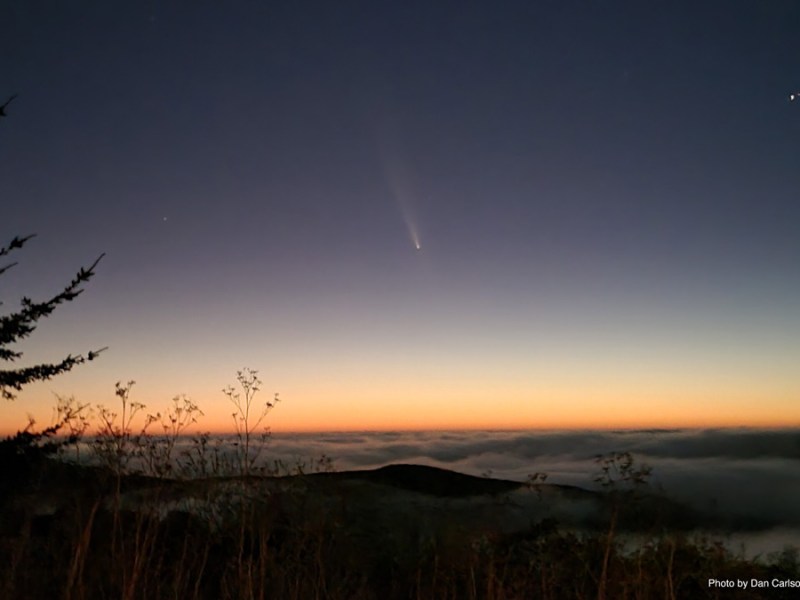
A few weeks after this entry, I traveled to Captiva Island in Southwest Florida. Just off the coast—within a mile—was a dredge illuminated by some of the brightest lights I’ve ever seen on the ocean. Unfortunately, those lights washed out the western sky near Comet Lemmon, but I still managed to capture a few images with a DSLR on a tripod.
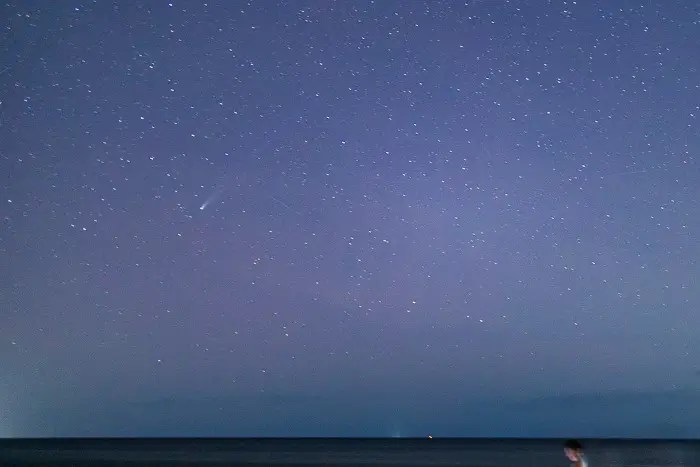
October 2025
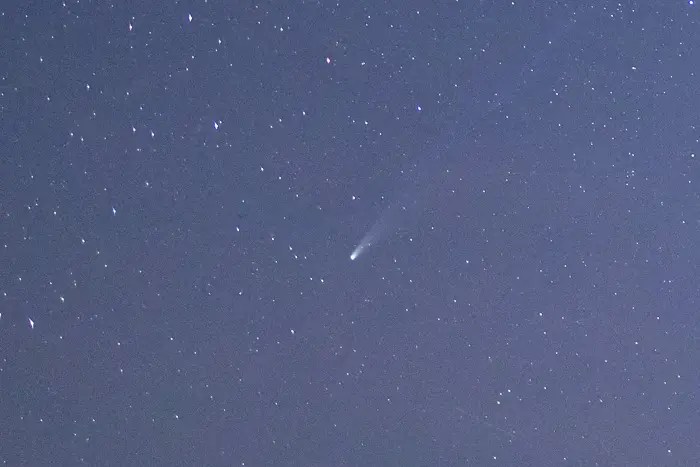
October 2025
Sources and Notes
Sketch and Seestar S50 photo by Wayne McGraw
Atkinson, S. (2025, October 13). How to see comet C/2025 A6 (Lemmon) right now. BBC Sky at Night Magazine. Retrieved from https://www.skyatnightmagazine.com/news/comet-c-2025-a6-lemmon
Astronomy Magazine. (n.d.). How to see Comet Lemmon. https://www.astronomy.com/observing/how-to-see-comet-lemmon/


 The Garden Astronomer
2 thoughts on “Viewing Comet C/2025 A6 Lemmon in Autumn Skies”