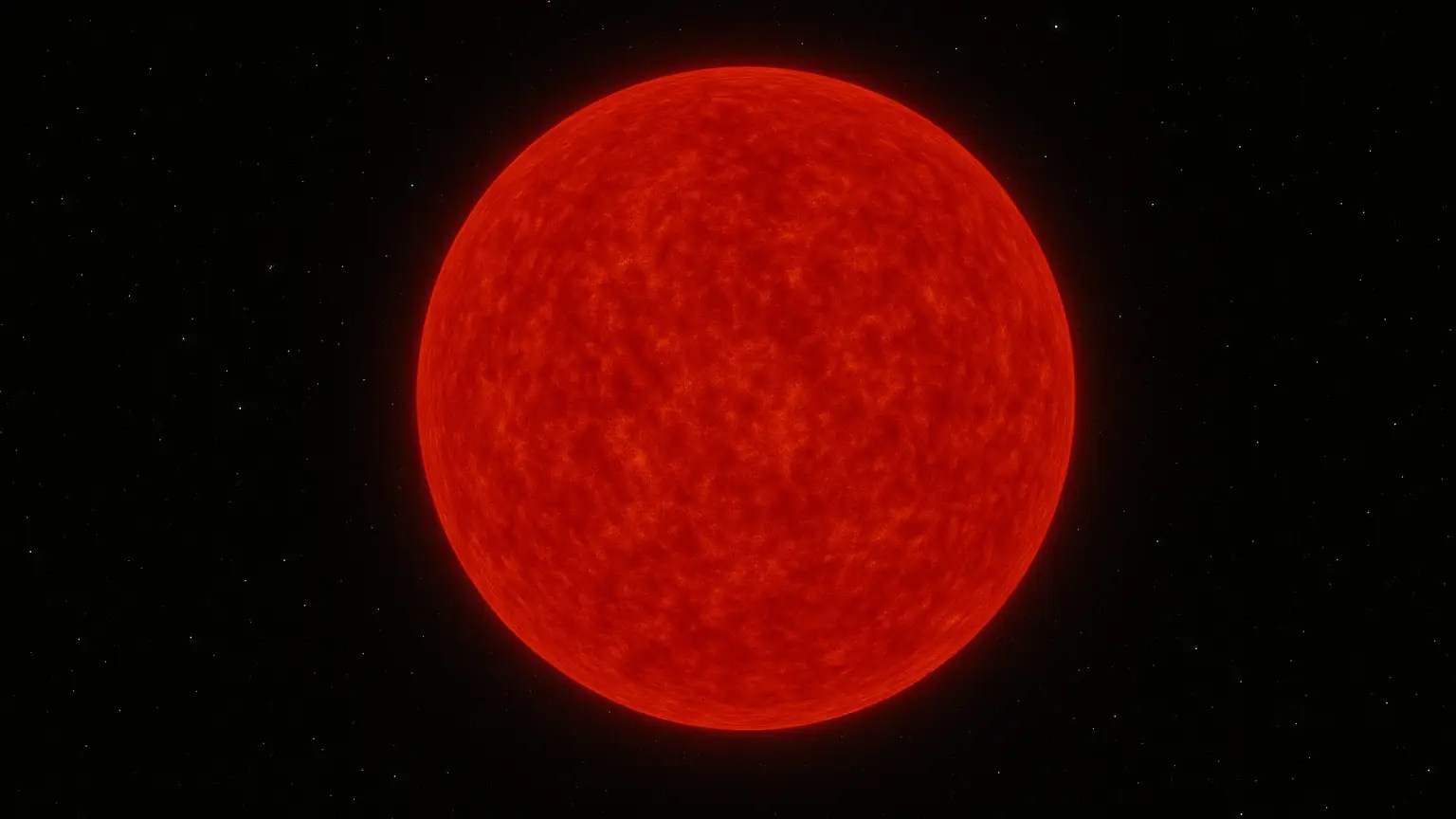
In the autumn constellation of Cepheus lie two true cosmic titans that challenge the limits of what a star can be. One is Mu Cephei, and the other is the remarkable VV Cephei, a colossal red supergiant that dwarfs our Sun and pushes the boundaries of stellar imagination.
A Star So Large It Defies Comparison
Though its exact size is uncertain, astronomers estimate VV Cephei’s radius to be between 660 and 1,050 times that of the Sun. If it were placed at the center of our solar system, its outer layers would stretch well beyond Jupiter’s orbit! The scale is almost unimaginable.
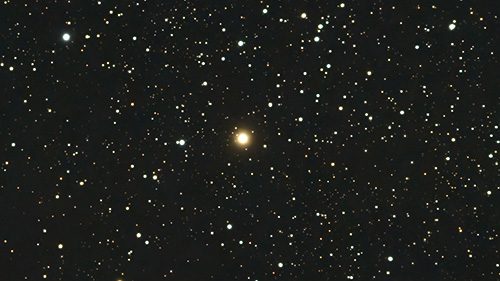
Also, this red supergiant is among the largest stars visible to the naked eye, though its brightness fluctuates between magnitude 4.9 and 5.4, just faint enough to require a dark sky to see. Its exact distance remains uncertain, but astronomers estimate it lies about 5,000 light-years from Earth.
A Binary System with Drama
VV Cephei isn’t alone. It belongs to a binary system, paired with a much smaller—but far hotter—blue-white companion star. The two orbit each other once every 20.3 years, in an intricate celestial dance. As they pass in front of one another, the system’s brightness dips dramatically, creating what astronomers call an eclipsing binary. The British Astronomical Association published a good article on how low-resolution spectra captured by amateur astronomers provided valuable insights into this rare and mysterious star.
When you next trace the outline of Cepheus on a clear night, take a moment to imagine that immense red spheres of Mu and VV Cephei up there. VV Cephei is more than a star; it’s a glimpse into the grandeur and impermanence of creation.
My Observations
| Date | October 21, 2025 |
| Time | 11:05 p.m. |
| Location | Tampa, FL |
| Binoculars | 25×70 |
| Magnification | 25x |
| Seeing | Average |
| Transparency | Average |
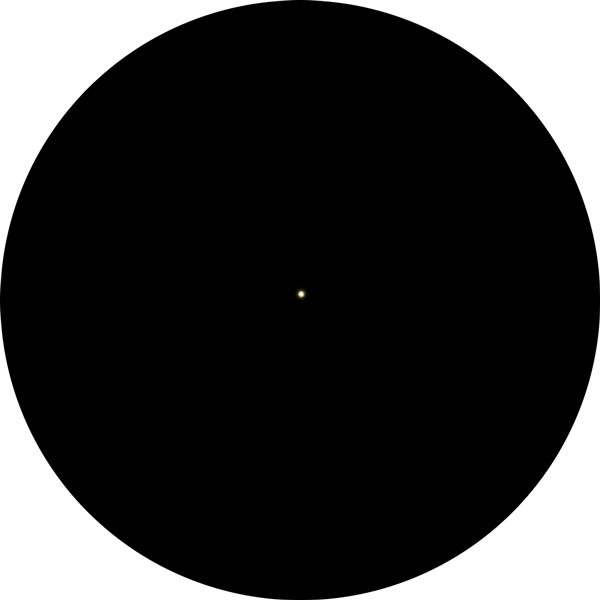
Peering through my binoculars from the glow of suburban skies, the light pollution dims much of the Milky Way, and the soft orange glow of VV Cephei seems almost fragile. Yet, as I focus on that tiny point of light, its size challenges comprehension. On this quiet night, the contrast between the muted sky and the enormity of VV Cephei makes the experience strangely humbling and awe-inspiring.
Key Stats
| Constellation | Cepheus |
| Best Viewing | Autumn |
| Visual Magnitude | +4.9 to +5.4 (variable) |
| Absolute Visual Magnitude | –6.0 (approx.) |
| Distance from Earth | ~5,000 light-years |
| Milky Way Location | Orion–Cygnus Arm |
| My Viewing Grade | A |
| Designations | VV Cep, HR 8383, HIP 108317, HD 208816, BD+62°2007 |
Sources and Notes
Sketch and photo by Wayne McGraw
Allen, H. (2021, July 31). Observing the 2017–’19 primary eclipse of VV Cephei with a low-resolution spectroscope. British Astronomical Association.
 The Garden Astronomer