Badonviller, France — February 1744
Badonviller sits cradled in a valley where rolling farmland begins its climb toward the Vosges Mountains. To the east, forested slopes of pine and beech rise in gentle waves. In February, the mountains catch the worst of the Atlantic weather sweeping in from the west. Rain, snow, and cold find every gap in a coat.
Perhaps thirteen-year-old Charles Messier heard talk in the town square. Maybe Hyacinthe, his eldest brother and head of the household after their father’s death, mentioned the rumors.

Whatever drew him outside, Charles stepped along a frost-slicked path to where the buildings thinned and the land opened westward. His breath hung in small clouds, the crunch of his boots the only sound.
Then he saw it.
A point of light in the deepening twilight.
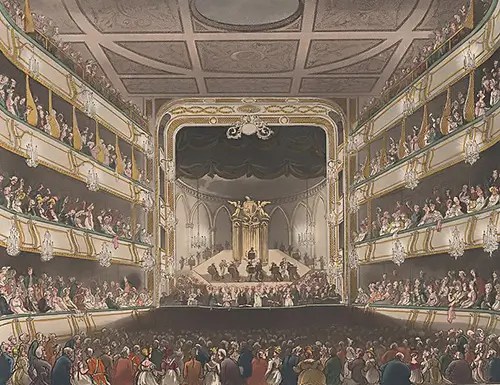
Four hundred miles northwest, the final notes of Handel’s new oratorio faded into applause. Semele had premiered in London on February 10. The theater had been warm, full of flickering candlelight and music. When the curtain fell, people stepped out of Covent Garden, hurrying home, probably without a passing glance at the sky.
The Elisha Whittelsey Collection | Public Domain
But here in Badonviller, there was no orchestra. No applause.
Only a single faint flame that didn’t belong in the starry sphere.
What Messier didn’t know was that this celestial visitor would change the course of his life. Through February, he would watch it brighten. Then, as it swung around the sun in early March, it would vanish from the evening sky and return in the morning.
A Race Toward the Sun
The comet had actually been spotted weeks earlier, though news traveled slowly in 1743.
On November 29, in Middelburg, Netherlands, Jan de Munck noticed it first in the constellation Triangulum. Ten days later, on December 9, Dirk Klinkenberg spotted it independently under the skies of Haarlem.
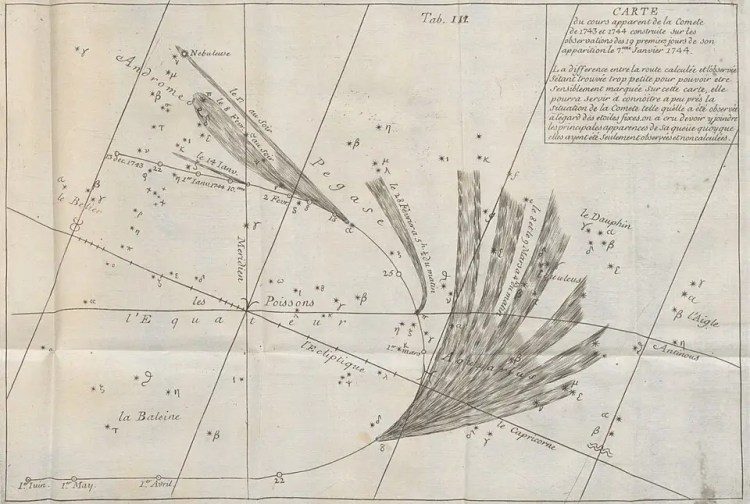
On December 13, Swiss astronomer Jean-Philippe de Chéseaux watched it from his observatory in Lausanne after several days of overcast skies. He later described the sighting:
“Having gone out to see if there was anything new in the sky, I perceived between the constellations of Triangulum and Pisces a star that seemed extraordinary to me: it was larger than the fixed stars of the fourth magnitude, and smaller than those of the third. When one looked at it very carefully, its diameter appeared larger than that of any other star, but its paler light reduced its brilliance to that of the fixed stars, which I have just mentioned.”
Three skywatchers, three separate discoveries, none aware of the others.
This was the way of astronomy in the mid-18th century. No telegraphs. No instant communication. Just observers, brass telescopes, and handwritten correspondence that would take weeks to reach distant colleagues.
The comet brightened steadily through December and January, drifting westward through Triangulum into Pegasus, that great winged horse flying across the night sky.
And as it gathered speed toward its appointment with the sun, another traveler moved across the frozen earth below. A young German princess named Sophia journeyed toward Russia for an arranged marriage. Her four carriages crossed the winter landscape, their destination as fixed as the comet’s.
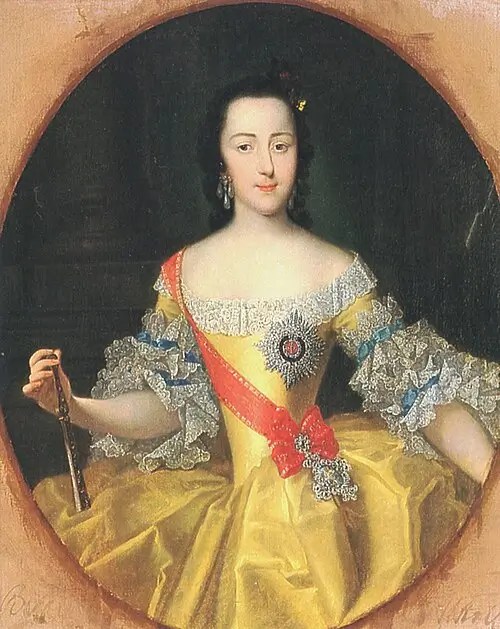
Above her, night after night, the brilliant visitor hung in the evening sky. Both princess and comet, bound for transformations they couldn’t yet imagine.
The Brightening
February brought fire.
In the first two weeks, the comet leapt from magnitude 1—the brightness of familiar stars like Spica or Deneb—to rival Sirius, the brightest star in our night sky.
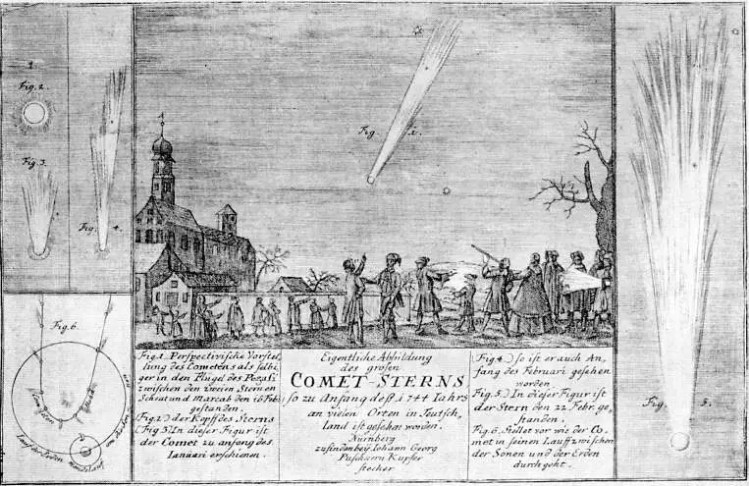
On February 16, engraver and astronomer Johann Georg Puschner etched the comet’s likeness into copper as it hung over Nuremberg.
Public Domain in the United States
But the comet didn’t stop there.
Ten days later, two Italian observers, Gian Paolo Guglienzi and Jean-François Séguier, spotted it through a telescope in broad daylight. Within forty-eight hours, they saw it with the naked eye at midday—a faint dab of pearl-colored paint on a blue canvas.
The comet raced toward its turning point. Around the first of March, it reached perihelion, the point at which it is closest to the sun. Just 20 million miles (32 million kilometers) separated them, close enough that our star’s fires truly began their work.
And as the comet swung around the sun and began its journey back into the universe, something happened that these astronomers had never witnessed before, and would rarely see again.
March and the Fan of Light
De Chéseaux stood at his telescope watching the dawn sky. He had been tracking the comet for months now, diligently recording its trek across the firmament.
Courtesy of The Linda Hall Library of Science, Engineering & Technology
This early March morning was different.
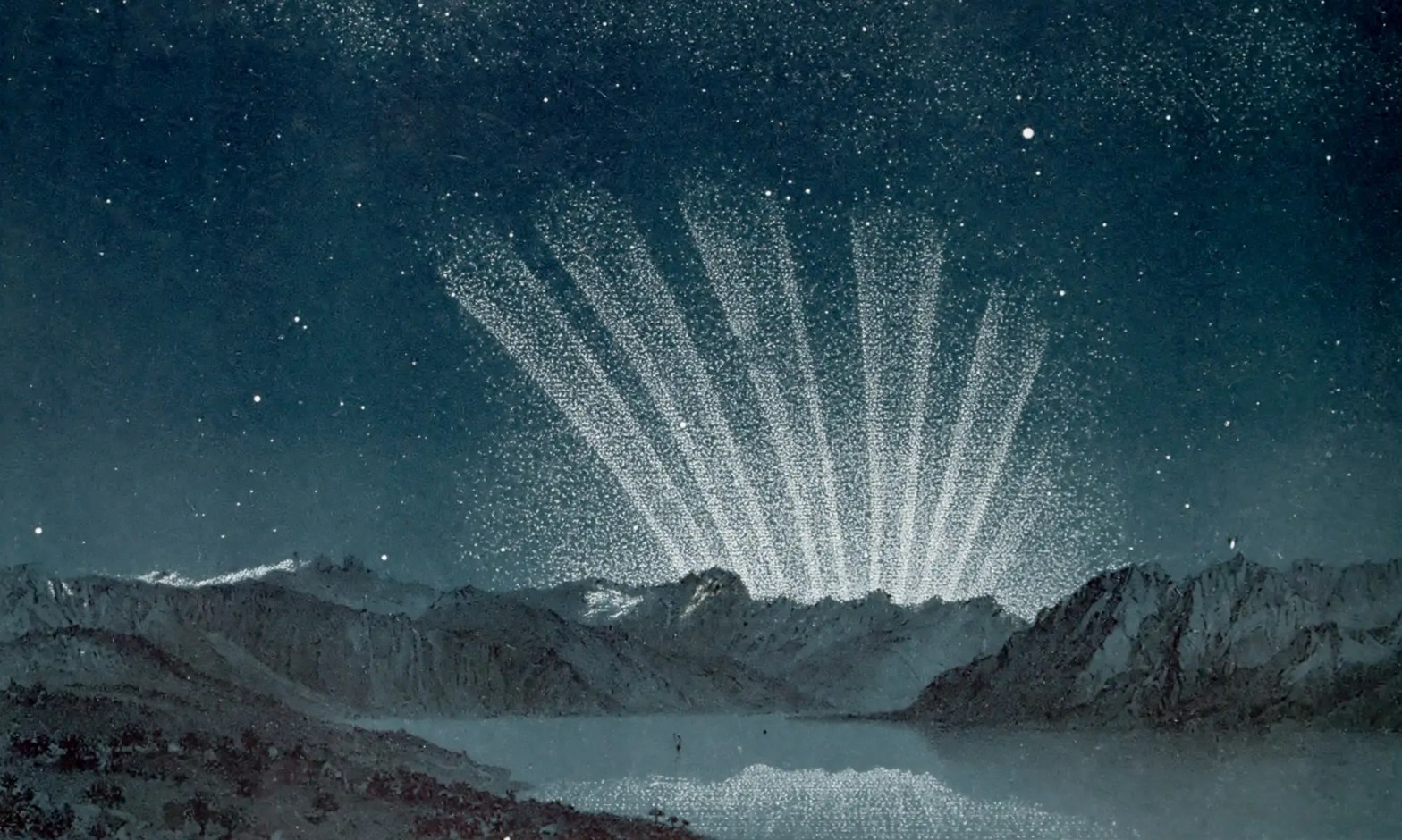
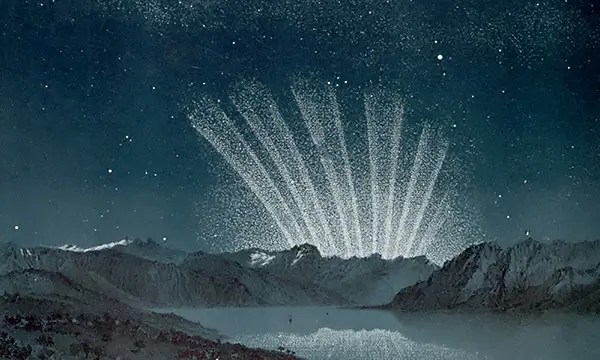
Rising above the horizon came an enormous fan of light.
The World of Comets (London, 1877) | U.S. Public Domain
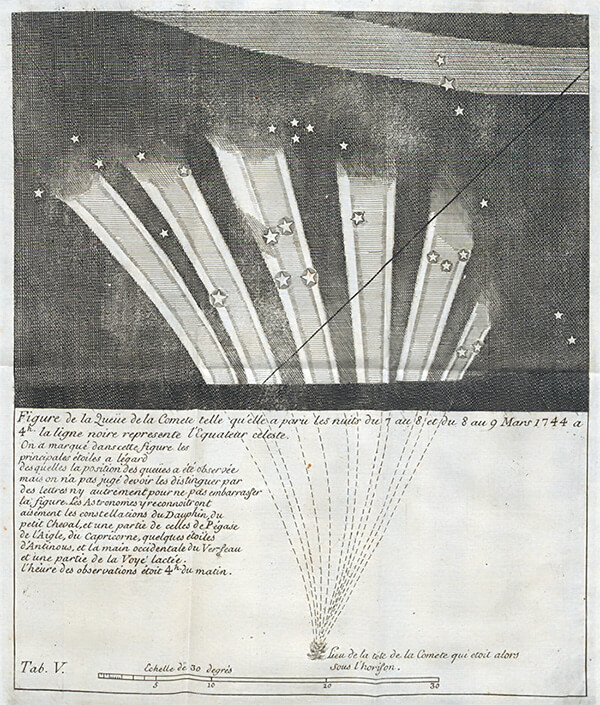
Six separate tails arced across the sky like luminous feathers. They spread outward from where the comet’s nucleus must have been, each tail curved and distinct, together forming a fan that spanned roughly sixty degrees. To picture this: hold your fist at arm’s length against the sky—that’s about ten degrees. Now move your fist across the horizon six times.
Courtesy of The Linda Hall Library of Science, Engineering & Technology
Other comets had occasionally shown double tails. One made of gas, pointing straight away from the sun. Another made of dust, following a gentle curve. But six plumes fanning out like some heavenly peacock?
This was new.
What the World Saw—and Heard
Observers across Europe and beyond reported the stunning display. Some in the Southern Hemisphere reported tail lengths of approximately ninety degrees on March 18, nearly the distance from horizon to directly overhead!
In China, observers reported hearing sounds as the “broom star” swept by. While this may seem impossible—sound cannot travel through the vacuum of space—some researchers have suggested an explanation. If true, these sounds may have resulted from interactions between particles and Earth’s magnetosphere, similar to the phenomenon sometimes described as the aurora borealis.
The Mystery of the Six
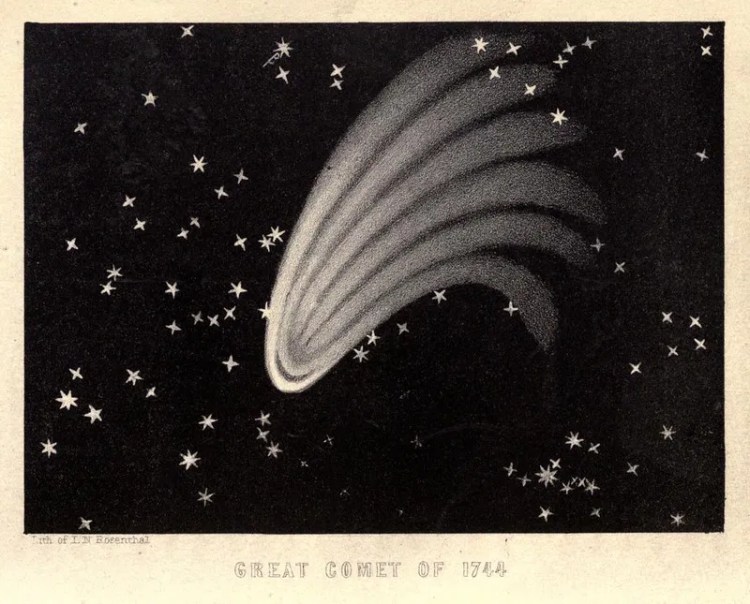
The six-tailed structure puzzled astronomers for generations.
How could a single comet produce such a display?
University of California Libraries | Public Domain
Modern researchers have suggested that the tails were generated by as many as three active sources on the cometary nucleus, exposed to solar radiation as the nucleus rotated.
Essentially, this dirty snowball spun slowly as it orbited the sun. As different regions rotated into sunlight, they heated up and released jets of gas and dust at different times. These jets, ejected from the same sources but at different times in the rotation, would form separate streams that spread outward.
From Earth, we saw these streams as six distinct tails in that remarkable fan pattern.
The Last Glimpse
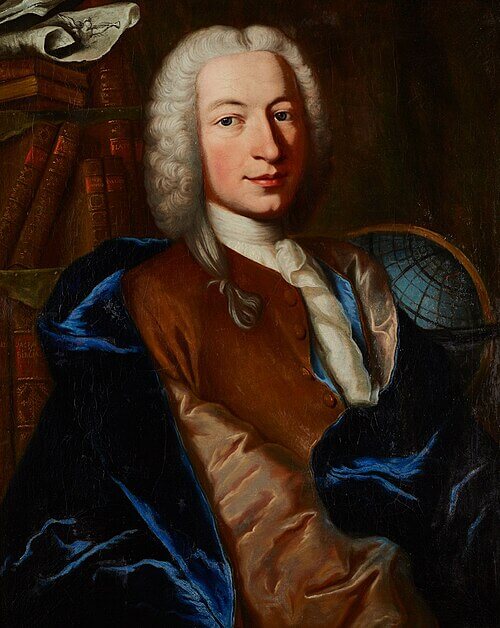
De Chéseaux saw the comet for the last time in the Northern Hemisphere on March 9, 1744.
Public Domain
The comet remained visible to observers in the Southern Hemisphere through April 22, 1744, but for those in Europe and the northern lands, it had already made its exit.
What We Know Now
For many years, astronomers assumed the comet’s orbit was parabolic, meaning it would never return. But modern calculations tell a different story.
Work by Maik Meyer and Gary Kronk suggests a long-period orbit, possibly on the order of a few centuries. They researched further, integrating the orbit backward through time, searching for earlier appearances.
They found candidate comets in 1402, 1032, 676, and 336 AD.
If these calculations are correct, the Great Comet of 1744 could return around the year 2097, though that remains uncertain.
A Legacy Written in Light
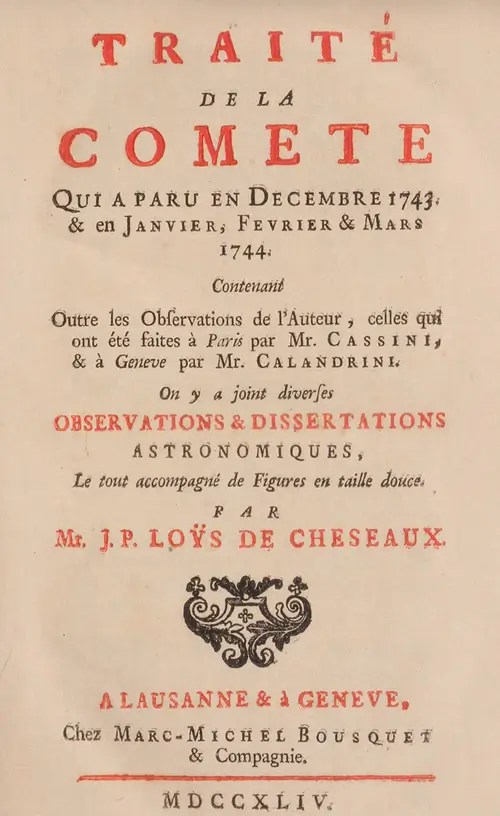
De Chéseaux published his observations in a treatise later that year. The book included detailed engravings of the comet’s path and that famous six-tailed display. For decades, astronomy books reproduced his illustrations. Sadly, he passed away only eight years later at age 33.
Courtesy of The Linda Hall Library of Science, Engineering & Technology
Charles Messier moved to Paris seven years later. He became a naval astronomer’s assistant, learning to track and measure celestial positions with precision. He would go on to discover many new comets of his own—so many that King Louis XV nicknamed him “the Ferret of Comets.
And when he encountered fuzzy objects in his telescope that weren’t comets at all—nebulae, star clusters, galaxies—he wrote them down so he wouldn’t mistake them for his true quarry. That list, the Messier Catalog, remains one of the most beloved guides for amateur astronomers today.
The Long Arc Home
Perhaps every comet Messier chased was, in a way, a journey home—back to that February evening in Badonviller when the sky first showed him something that didn’t belong.
Perhaps Catherine the Great, too, carried it with her. Through palace intrigues and wars, through the decades of ruling an empire, did she ever look up on a clear night and remember?
And Handel’s music? That same February when the comet blazed, Semele faded after just four performances. Yet the brightest light had already dawned three summers earlier, when Handel composed Messiah in just twenty-four days. The towering oratorio of hope and redemption was destined to outlast empires and outlive comets.
We spend our lives traveling outward from where we began. But the deepest journeys are circles, not lines. To know where we’re going, we must return to where we started.
How many stargazers began their journey the way Messier did? How many have stepped outside under a sky stitched with diamond light—tilted just enough that the night leaned in close—and felt the dark give way, just enough to let wonder walk in and stay?
And how many of us, years later, find ourselves returning? Not to a place, but to a hush years deep in the soul. Each night under the stars becomes another voyage home to a place we’ve never been, but somehow already know.
The comet will return.
And so will we.
Sources and Notes
(1991). On the rotation of the nucleus of the Great Comet of 1744. Icarus 89(1), pp. 65-72. https://doi.org/10.1016/0019-1035(91)90087-A
(June 4, 2019). The Obsessive Comet Hunter. Astronomy.com. https://www.astronomy.com/science/the-obsessive-comet-hunter/
(2024). Great Comet of 1744. Wikipedia. https://en.wikipedia.org/wiki/Great_Comet_of_1744
Chéseaux, J. L. (1744). Traité de la Comète qui a paru en Décembre 1743, & en Janvier, Février & Mars 1744. Lausanne and Geneva: Marc-Michel Bousquet. https://www.jonathanahill.com/pages/books/6925/jean-philippe-loys-de-cheseaux/traite-de-la-comete-qui-a-paru-en-decembre-1743-en-janvier-fevrier-mars-1744-contenant-outre-les
Editors, B. (n.d.). Messier catalog. Britannica. https://www.britannica.com/topic/Messier-catalog
Meyer, M., & Kronk, G. W. (2025). The Great Comet C/1743 X1: Possible identification in historic records of 1402, 1032, 676, and 336. Journal of Astronomical History and Heritage, 28(1), 29–49. https://doi.org/10.3724/SP.J.140-2807.2025.01.02
Watson, J. C. (1861). A popular treatise on comets. J. Challen & Son.
 The Garden Astronomer
_maison_Charles_Messier.jpg)

.jpg)

