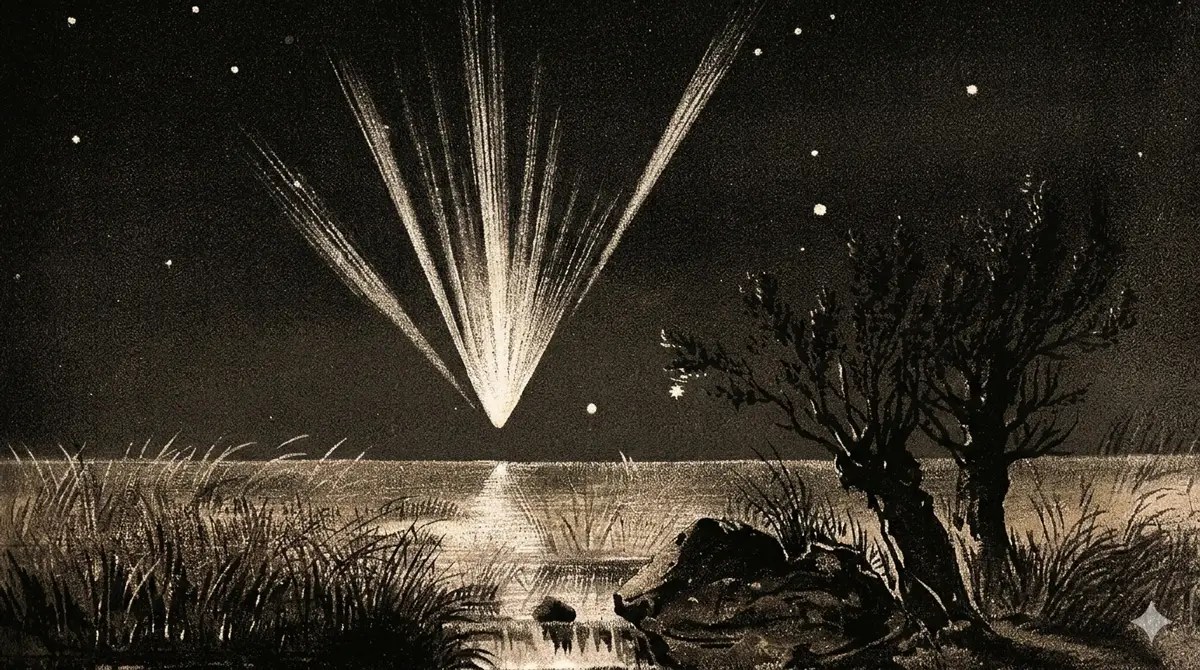
Windsor, New South Wales, Australia
May 13, 1861
Windsor sits sixty miles northwest of Sydney. The Hawkesbury River runs through it, slow and broad, its surface broken by the ripple of fish and dipping heads of river birds. Rich alluvial flats along its edge have fed the colony for generations. Wheat, maize, and sheep country as far as the eye can see.
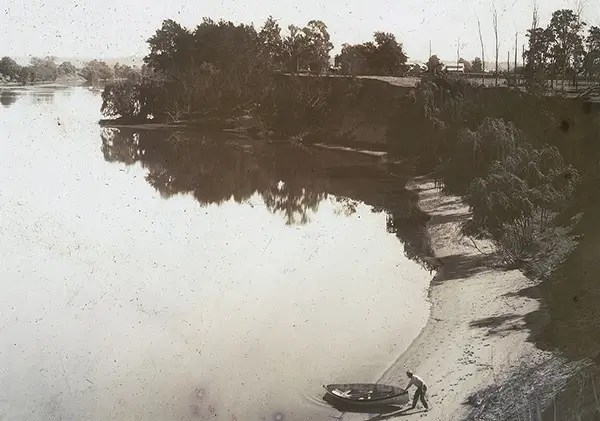
But the Hawkesbury has a long memory for mischief, often slipping its banks and spreading across the lowlands. Fences disappear. Roads dissolve. The people of Windsor understand that the river gives generously and takes without asking.
So they built on the higher ground. On a modest rise above the river stands Peninsula House, home of the Tebbutt family. It was here that John Tebbutt first turned his gaze to the sky.
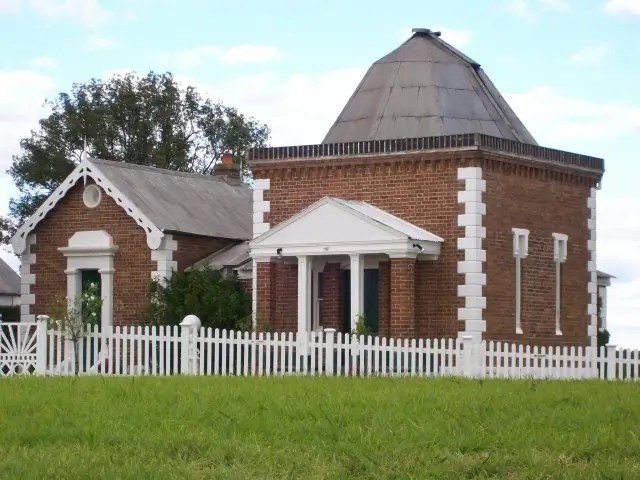
Creative Commons
Tebbutt’s tools were simple — a sextant for measuring angles between stars, and a small marine refractor, a gift from his father. No computer-driven mount, no assistant. Just a farmer standing in the dark with brass and glass, measuring a sky that had no bottom. You can view this special telescope, only 1⅝ inches across, on the Hawkesbury Regional Museum website under Tebbutt Collections.
Tracing the stars would only get him so far. He wanted to know the mechanics of it all. He taught himself algebra first, then moved on to orbits and celestial mechanics. Season after season, the farmer honed his understanding of the universe’s mathematical DNA.
The Nebulous Star
On the evening of May 13, Tebbutt swept his way through the constellation Eridanus. There, a fuzzy smudge caught his eye. He checked his copy of Nicolas Louis de Lacaille’s catalogue of southern stars and nebulae. Nothing. No nebula. No listing of any kind.
Over the following nights, haze and cloud conspired against him. He stole what glimpses he could, but the object refused to give itself away. Then on the night of May 22, he looked again.
It had moved half a degree.
A Letter Published on His Birthday
Tebbutt announced his discovery in a letter to the Sydney Morning Herald. It was published on May 25, 1861, the morning of his 27th birthday.
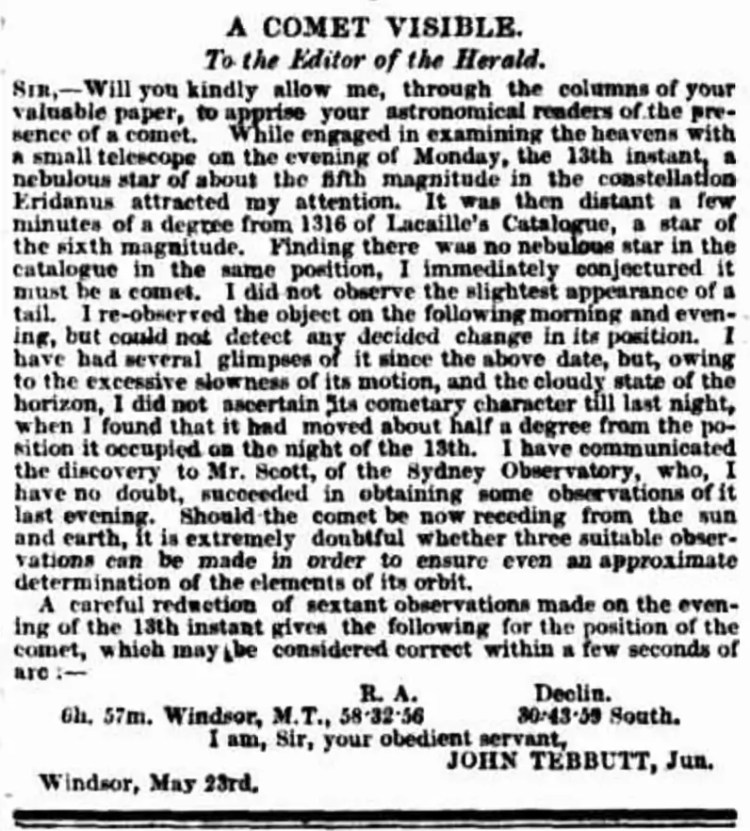
The Sydney Morning Herald | Public Domain | Source
The letter, titled “A Comet Visible,” begins humbly: “Sir, will you kindly allow me, through the columns of your valuable paper, to apprise your astronomical readers of the presence of a comet. While engaged in examining the heavens on Monday, the 13th instant, a nebulous star of about the fifth magnitude in the constellation of Eridanus attracted my attention.”
At the same time, the Reverend William Scott, the Government Astronomer at Sydney Observatory, received a note from Tebbutt about his findings. Scott confirmed the comet on the nights of May 27th and 30th, remarking the object was “just visible after sunset to the naked eye.”
By early June, the comet closed in. On June 8, Tebbutt described it as “a beautiful object, its tail having assumed considerable dimensions, and being plainly visible to the naked eye.”
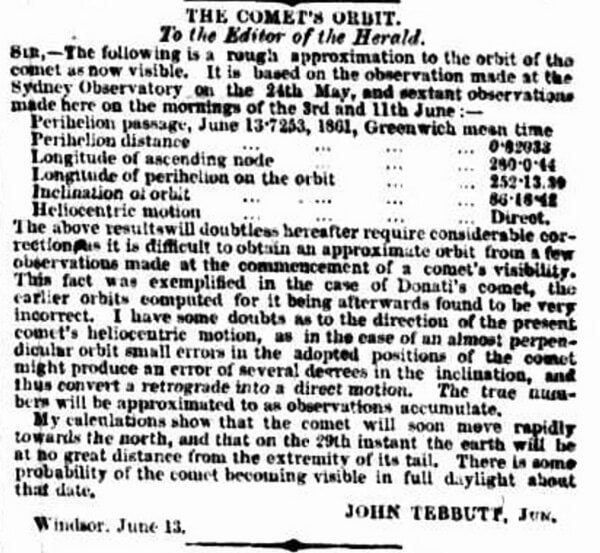
Tebbutt computed the orbital elements using his self-taught mathematics. And he noticed something in the numbers. The Earth would pass through the outer edge of the comet’s tail on or around June 29, with the hope of the comet “becoming visible in full daylight about that date.”
He published his prediction in the June 15th Sydney Morning Herald:
The Sydney Morning Herald | Public Domain | Source
Grazing the Outer Tenuous Tail
Tebbutt’s prediction proved remarkably accurate. On June 29, the comet passed within roughly 20 million kilometers (12.4 million miles) of Earth. As it did, something happened that no one had quite prepared for.
The Earth grazed the comet’s outer tenuous tail, and the sky changed.
J. R. Hind, a respected London astronomer, wrote to The Times: “A singular yellow phosphorescent glare, very like diffused Aurora Borealis, yet being daylight such Aurora would scarcely be noticeable… the sun, though shining, gave but feeble light.”
And in Athens, the astronomer J. F. Julius Schmidt watched it cast faint shadows on the walls of the observatory! Let that sink in for a moment.
A Light Arrives in the North
In Europe and North America, no one yet knew a comet was responsible for the strange glow in the sky.
Author Kaushik Patowary speculates that the first person in England to see the comet itself may have been William C. Burder of Clifton, Bristol. Burder wrote to the editor of The Times in London on Sunday, June 30th:
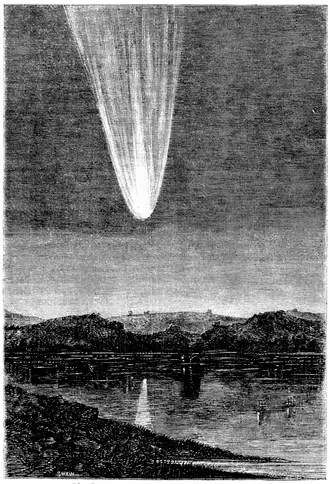
“Sir — At 2.40 a.m. today I detected a brilliant comet near the north-west horizon. It was visible till 3.20 a.m. … it appeared as bright as Capella … surrounded by a nebulous haze, but I saw no tail … The daylight put out both the comet and Capella nearly at the same time; your readers will therefore consider this a proof that it is a brilliant object.“
The War Comet
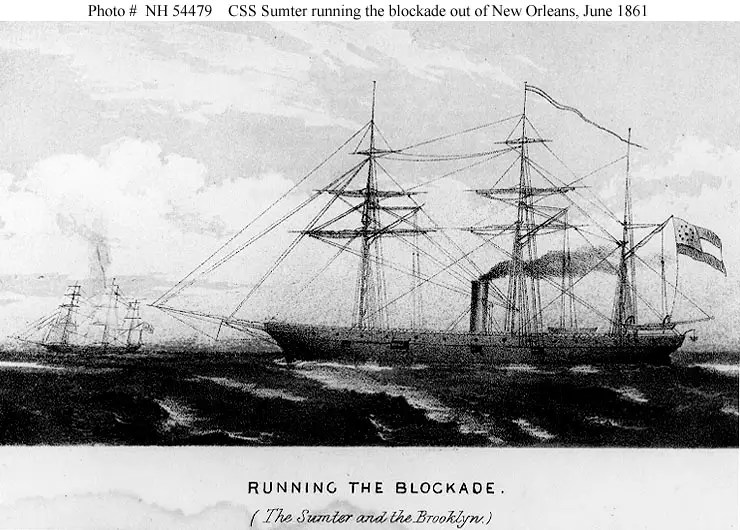
On that same Sunday evening, June 30th, the CSS Sumter was running for open water. The American Civil War had begun only months earlier, and the comet would soon be known as the War Comet.
Confederate Navy officer Raphael Semmes had been bottled up in New Orleans for weeks, the Union Navy blockading the mouth of the Mississippi to keep Confederate ships from reaching the sea.
US Navy | Public Domain
Then, his chance came.
The CSS Sumter ran hard down the river and broke through the blockade at Pass à l’Outre into the Gulf of Mexico — a nation already tearing itself apart behind her, with the USS Brooklyn closing fast, though she would never catch her.
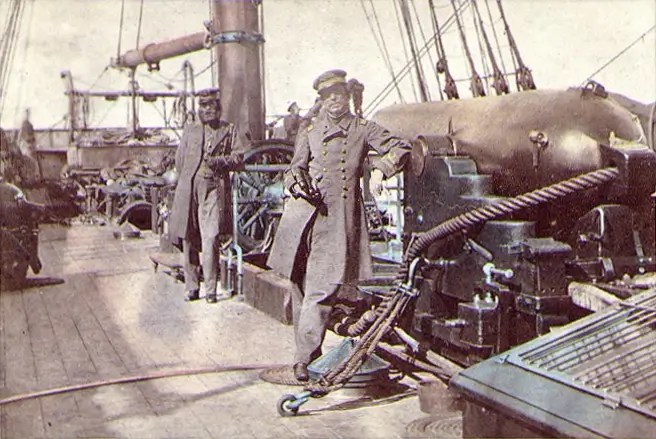
Taking respite in the calm of the evening, Semmes watched the skies from the Sumter:
“The sun had gone down behind a screen of purple, and gold, and to add to the beauty of the scene, as night set in, a blazing comet, whose tail spanned nearly a quarter of the heavens, mirrored itself within a hundred feet of our little bark, as she ploughed her noiseless way through the waters.“
Public Domain
The Spectacular Comet in July
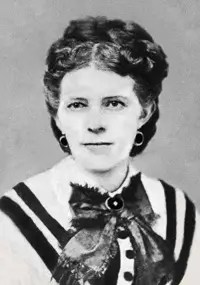
On the night of July 1, a diarist named Kate Stone wrote about its appearance from her home in Louisiana:
Public Domain
“There is a comet visible tonight. We were surprised to see it, as we did not know it was expected. Have seen nothing of it in the papers. It is not very bright but has the appearance of a large star, Venus at her brightest, with a long train of light seen dimly as through a mist.”
In his book Atlas of Great Comets, Ronald Stoyan says the comet shone at magnitude -2 and that its tail spread at least 70 degrees on July 1. So if you stared at the horizon and stacked seven fists upward, that would show roughly how tall a 70-degree comet tail would appear!
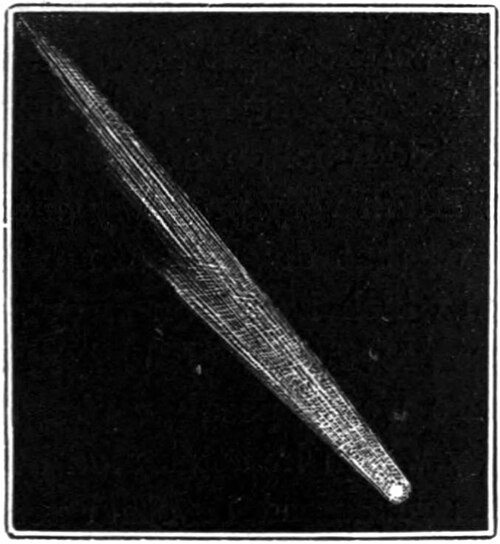
James Robinson, on a schooner in a Mexican harbor, captured the breathtaking sight:
“I awoke in the night at 1 o’clock, when I had a glorious sight of the largest comet I ever beheld. The head, or nucleus, was as large as Venus, and very bright and blazing, and about 20 degrees above the horizon, pointed to the north, while the bright, long tail reached full halfway across the heavens. It was a most wonderful sight.”
Johnson’s Midsummer Reflection
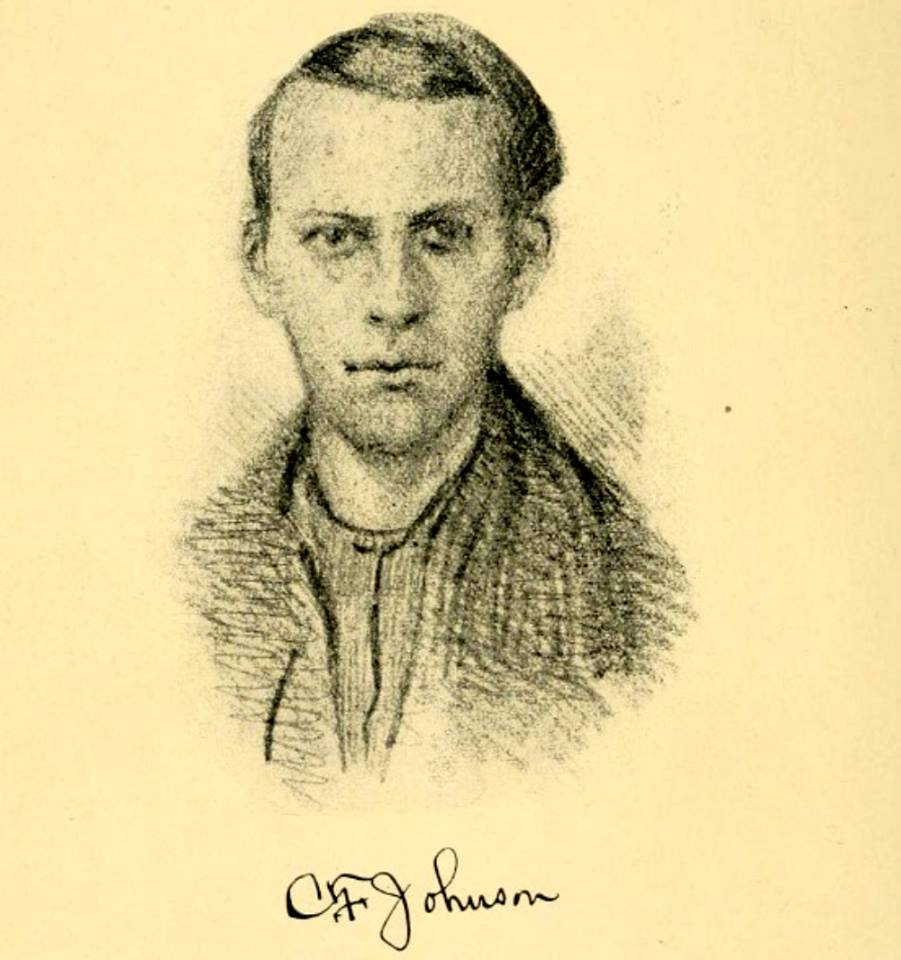
According to author Jake Wynn, Private Charles F. Johnson of the 9th New York Volunteer Infantry journaled his U.S. Civil War experiences. The young man was insightful, almost poetic, in this writing.
Public Domain
On the night of July 18th, he sat under the sky with cannon fire in the distance to see the beautiful comet:
“Last night was a most beautiful night. The moon shone so brightly as to almost blot out the stars; a gentle breeze from the James fanned one’s features with just enough motion to produce a feeling akin to inspiration, and I made my bed outside, as the thought of a crowded tent on a night like this seemed unbearable. And there I lay dreaming day-dreams far into the night.
I watched the comet, wondering if that mysterious little visitor was not perhaps at the same time watched by eyes that would beam gladly into mine; and I composed quite a number of beginnings of addresses to the curious thing, whatever it may be. But the comet is now tired of his visit to these regions of space, or disgusted it may be with the appearance of things on this side of our planet, for he is now leaving in seemingly greater haste than he came, with his tail between his legs, for the unknown regions out yonder.
Well, good-by and fare thee well, Stranger. And I fervently hope that thou mayst see the face of the Earth beaming with smiles where now her frowns are lowering, on thy next visit, if that should be while this little world is still in existence.
And to sleep at last, to dream again not more strangely than if awake, and only disturbed by a little cannonading up the river.“
Across the Sky
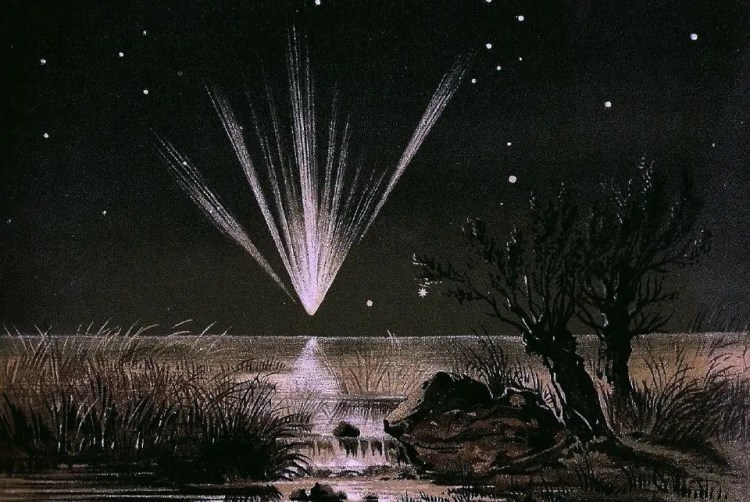
Through those brilliant summer weeks, the comet carved a memorable path across the northern sky. It arrived in late June in the constellation Auriga, near the bright star Capella, its enormous fan-shaped tail already reaching toward Polaris.
Through early July, it swept northward and into Ursa Major, its tail grazing the familiar stars of the Great Bear before pushing deep into Draco — the dragon that winds around the northern pole.
By August, the naked eye had lost it entirely. Telescopes continued to follow its retreat into the outer solar system through May 1862.
The Long Pause
Confederate Navy officer Semmes watched it from the Gulf, his ship running hard into the dark. Union Private Johnson watched it from his blanket on the Virginia ground, cannon fire muttering up the river. Tebbutt watched it from his rise above the Hawkesbury, measuring its path. Three men, three shores, three very different nights — and the same light falling on all of them.
Public Domain
What strikes me, all these years later, is not the science and awe of it, remarkable as that is. It is in the long pause, the evanescence of time itself. In the middle of war, in the middle of grief, in the middle of ordinary life, the world stopped for a moment. So many people looked up. And for one fleeting moment, they were on the same side of something, standing together beneath a sky that belonged to no one and everyone all at once.
And while the comet faded from the world’s attention, one man was still watching.
Tebbutt’s Legacy
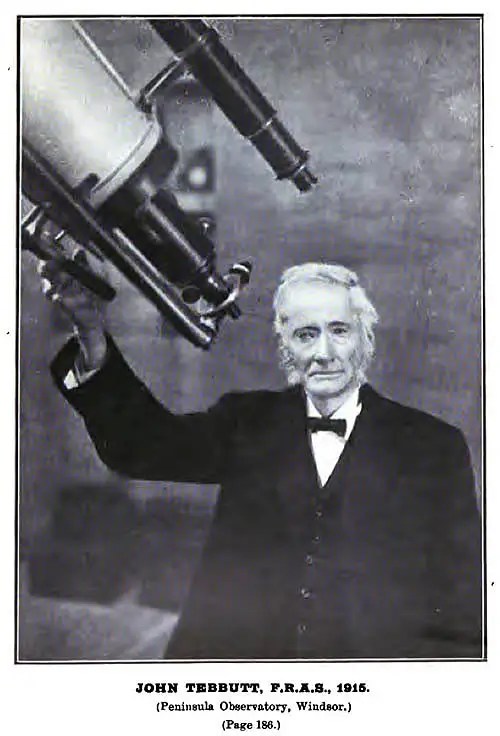
Tebbutt would spend the next four months tracking the comet through his marine telescope. When he finally lost it to faintness in early September 1861, he wrote in his diary that he thought he would not be able to find it anymore. He was correct about that, too.
Public Domain in the United States
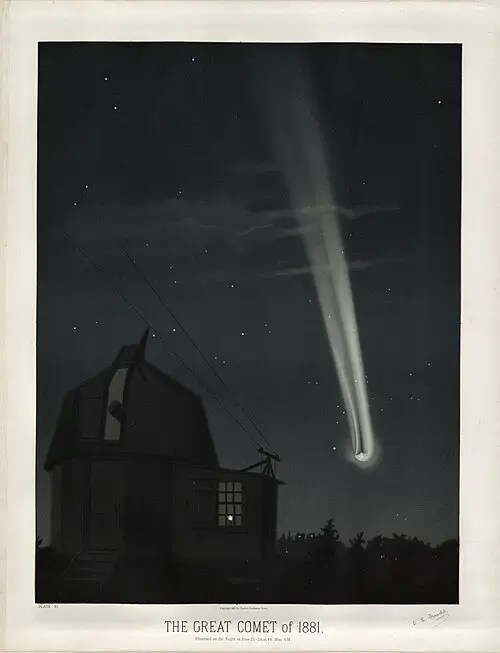
The discovery launched him. Three years later, he built a small observatory on his property and equipped it with proper instruments. Over the following four decades, he published meticulous observations of comets, variable stars, minor planets, eclipses, and transits. In 1881, he discovered another comet.
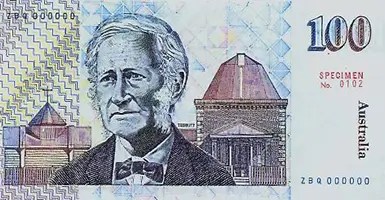
When he died in 1916, his face was not yet on any banknote. That honor came later, in 1984, when the Australian hundred-dollar note was redesigned to feature John Tebbutt’s portrait alongside an engraving of his observatory at Windsor.
Public Domain
A sheep farmer and amateur astronomer was now on the country’s largest denomination.
Sources and Further Reading
A COMET VISIBLE. (1861, May 25). The Sydney Morning Herald (NSW : 1842 – 1954), p. 5. Retrieved March 9, 2026, from http://nla.gov.au/nla.news-article13059423
Chatfield, C. (2010). The comet of 1861. Phenomena. https://www.phenomena.org.uk/comets/comets/comet1861.html
Johnson, C. F. (1911). The long roll: Being a journal of the Civil War, as set down during the years 1861–1863. Neale Publishing Company. Internet Archive.
Kronk, G. W. (n.d.). C/1861 J1 (Great Comet of 1861). Cometography. https://cometography.com/lcomets/1861j1.html
Lowe, Edward Joseph. “The Comet.” The Times (London), July 9, 1861, p. 9, col. 6.
Patowary, K. (2022, May 19). The great comet of 1861. Amusing Planet. https://www.amusingplanet.com/2022/05/the-great-comet-of-1861.html
Semmes, R. (1869). Memoirs of service afloat, during the War Between the States. Baltimore, MD: Kelly, Piet & Co.
Stoyan, R. (2015). Atlas of great comets. Cambridge University Press.
Tebbutt, J. (1861, June 15). The comet’s orbit. The Sydney Morning Herald. Trove. https://trove.nla.gov.au/newspaper/article/13059840
THE COMET’S ORBIT. (1861, June 15). The Sydney Morning Herald (NSW : 1842 – 1954), p. 5. Retrieved March 9, 2026, from http://nla.gov.au/nla.news-article13055767
The Gallery of Natural Phenomena. (n.d.). The comet of 1861. https://www.phenomena.org.uk/comets/comets/comet1861.html
Wikipedia contributors. (n.d.). C/1861 J1 (Tebbutt). Wikipedia. Retrieved March 10, 2026, from https://en.wikipedia.org/wiki/C/1861_J1_(Tebbutt)
Wynn, J. (2017, October 25). A Civil War soldier reflects on the comet of 1861. Emerging Civil War. https://emergingcivilwar.com/2017/10/25/a-civil-war-soldier-reflects-on-the-comet-of-1861/
 The Garden Astronomer