Richmond, Virginia — April 20, 1803
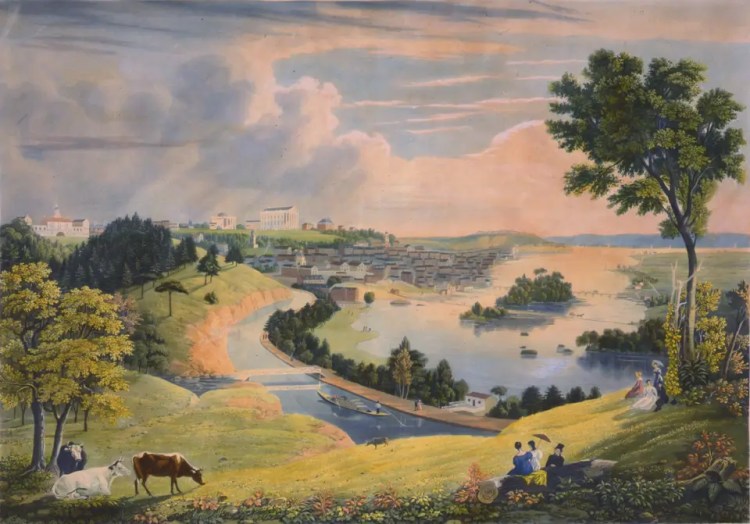
Engraved by W.J. Bennett from a painting by G. Cooke | Public Domain
In the small hours of morning, the armory bell rang from the town’s western edge. A fire had reportedly started in one of its rooms. In those days, even a small alarm could wake the whole city.
Doors opened. Boots scraped across thresholds as men pulled coats over their nightclothes. Women wrapped shawls against the chill. They expected smoke and the glow of orange flames on the horizon.
Instead, white streaks fell from every direction of the heavens.
One witness said it resembled “a shower of sky rockets.” Another, hearing the story secondhand, laughed it off. Surely, he guessed, “some funny fellows at the Armory” had staged a prank for amusement.
But no hand had lit these.
Some meteors burned brighter than others. Some appeared “as large as barrels,” trailing long ribbons of hanging light. A few witnesses reported hearing a faint hiss as the fireballs fell. Others even mentioned hearing a sharp, pistol-like pop before the meteors vanished behind the rooftops.
Up in Portsmouth, New Hampshire, a man stepped outside around one in the morning to find the “heavens all seem’d to be on fire.” He counted 167 meteors in ten or fifteen minutes, then gave up as they fell too quickly to follow. At times, the sky was bright enough to see a pin on the ground.
More than 200 miles west of Portsmouth, three men rode home on horseback from Ballston, New York, toward Milton. They reported the sky as “full of this phenomenon that no person could have turned his eyes in any direction without observing a number of them.”
To understand what fell through the skies that night, we have to follow the trail far beyond Richmond. Long before these startled crowds, something was already moving silently through our solar system.
April 5, 1861: New York City
Nearly 58 years later, amateur astronomer Alfred E. Thatcher scanned the northern constellation Draco with his 4.5-inch refractor. He spotted an unfamiliar hazy patch of “tailless nebulosity” at magnitude 7.5. At this faint brightness, it was invisible to the naked eye.
As the days passed into late April, the smudge brightened to magnitude 2.5, becoming visible to those who knew where to look. Its identity as a comet began to emerge. Observers followed it until it slipped from view in early June 1861. In late July, watchers beneath southern skies picked it up again, and it drifted on for several more weeks before fading once more into the depths of space.
But the full story behind it would unfold gradually.
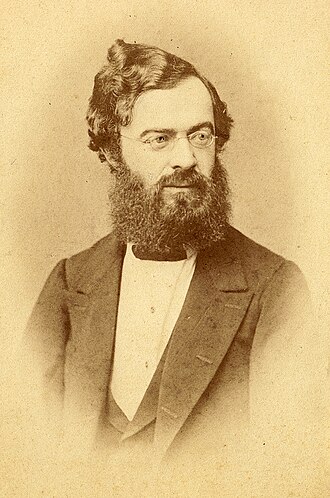
The pieces began to fall into place in 1867. Professor Edmond Weiss noticed something. Comet Thatcher’s path passed within a hair’s breadth of Earth’s orbit right around April 20.
Public Domain
U.S. Public Domain
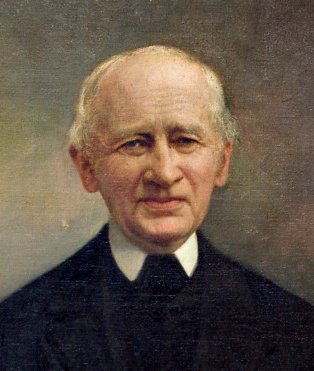
Later that same year, Johann Gottfried Galle carried the idea further. Through calculation, he showed that this was no coincidence. The comet and the Lyrid meteors were traveling the same road.
By reaching back through centuries of recorded sightings, Galle helped close the loop. The same man who first observed Neptune now traced the source of a mystery scattered across generations.
The April streaks of light were forever tied to Comet Thatcher’s journey around the Sun.
Ancient Falling Lights
Long before that link was made, people had already been watching these same springtime lights for thousands of years. In the spring of 687 BC, observers in China saw the heavens open. “In the middle of the night, stars fell like rain,” they wrote in the Zuo Zhuan, a chronicle of courts, wars, and celestial omens spanning nearly three centuries of the Spring and Autumn Period.
Centuries passed. The lights of April always returned—a mention here, a line there. In 15 BC, Chinese records again told of stars falling like rain. Then in 1136, Korean witnesses looked up in awe as “many stars flew from the northeast,” streaking across the sky in such numbers that the chroniclers could scarcely describe the sight. The phenomenon was later traced to the same dusty trail we now call the Lyrids.
In the West, the Middle Ages carried the same wonder. In April 1095, during the First Crusade, witnesses saw stars falling “that no man could count.” They could not know they were watching the very same comet dust that had startled Chinese scribes more than two thousand years earlier.
Herschel and the Moon Volcano
Even the famous astronomer William Herschel brushed up against the story of the Lyrids.
On the nights of April 19 and 20, 1787, he trained his telescope on the thin, dark edge of a two-day-old moon. He saw something that unsettled his careful eye. The same eye that discovered Uranus six years earlier.
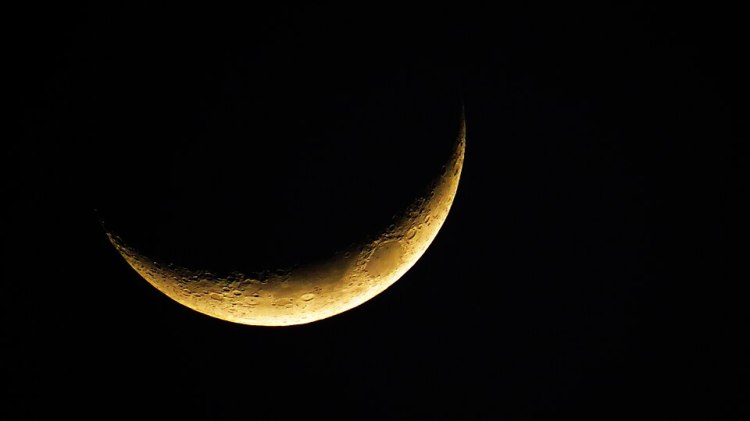
Along the lunar surface, he believed he was watching three volcanoes.
On April 19, he wrote:
“I perceive three volcanoes in different places of the dark part of the new moon. Two of them are either already nearly extinct, or otherwise in a state of going to break out; which perhaps may be decided next lunation. The third shows an actual eruption of fire, or luminous matter.”
Then the following night, his description grew more vivid.
“The volcano burns with greater violence than last night… the appearance of what I have called the actual fire of eruption of a volcano, exactly resembled a small piece of burning charcoal, when it is covered by a very thin coat of white ashes.”
Herschel followed the event for several nights, measuring it, studying it, and even estimating it spanned more than three miles across.
And the timing is uncanny. His observation fell right in the heart of the Lyrid meteor shower.
One possibility is that Herschel witnessed the aftermath of a meteor impact, perhaps even a larger fragment from Comet Thatcher.
A brief collision. A lingering glow.
Light and Sound
Comet Thatcher visits rarely. The comet returns every 415 years from beyond Neptune. On its last visit in 1861, it came within about 31 million miles of Earth before circling the Sun and leaving again.
Each April, Earth crosses that trail. Grains of dust no larger than sand strike the upper atmosphere at 47 kilometers per second (around 105,000 MPH!) and burn away.
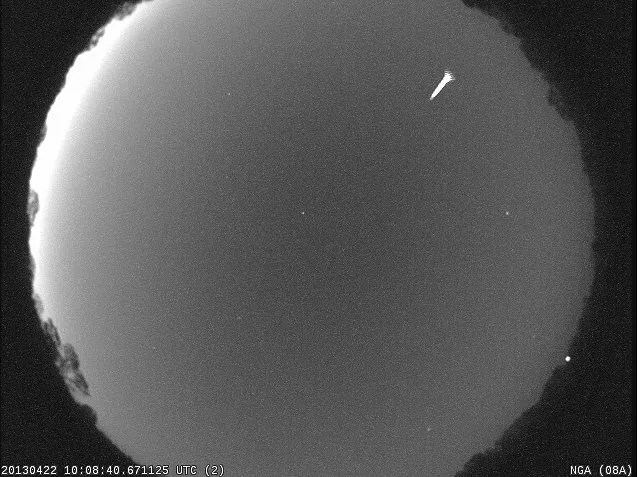
The largest ones do something stranger.
Some speculate that as they tear through the air, they generate very low-frequency electromagnetic waves that reach the ground. Nearby objects—a blade of grass, a leaf, the frames of your glasses—vibrate ever so slightly. Our ears catch that vibration as a faint, fleeting hiss. It is the closest the sky ever comes to whispering.
Rhythms of Light
Most years, the ancient Lyrids resemble a gentle spring rain. One may see ten to twenty meteors an hour. But the stream is not always this way.
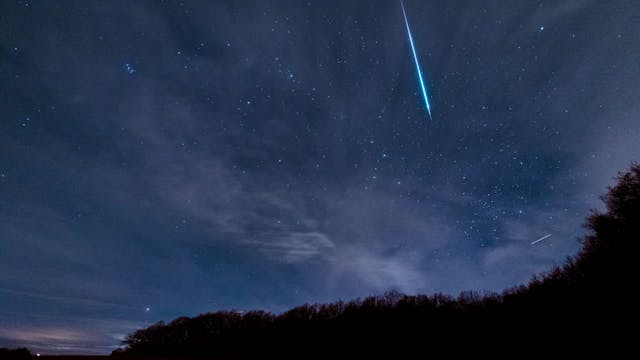
Every dozen years or so, Jupiter gives the trail a nudge, tightening some sections while spreading others. Then, about every sixty years, a denser filament, shed during one of Comet Thatcher’s earlier passes, lines up just right with Earth’s orbit.
When that happens, the mild shower turns into a memorable event.
It happened in 1803, when the people of Richmond stumbled into the streets at the sound of the fire bell. Clear outbursts followed in 1922, when an observer in Greece counted around 96 meteors in a single hour, and again in 1982, when watchers across the United States saw 90 to 100 per hour at the peak. The next strong display is expected around 2042.
Watching the Lyrids
Today, the Lyrids continue to return each year in late April. They usually peak around the 21st or 22nd. The most active hours are after midnight, as Earth turns into the stream and the constellation Lyra rises higher in the eastern sky. The website EarthSky provides a great overview.
Lie back on the grass or sit on the porch with a blanket. Look up toward Lyra and let your eyes adjust to the dark. Most years, you can see ten or twenty meteors per hour if you’re patient.
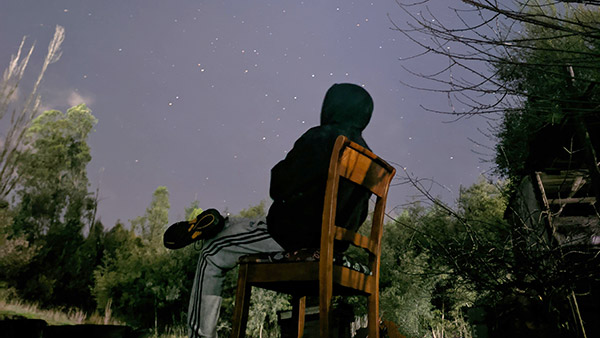
When that bright Lyrid flashes overhead, you are not just watching any old meteor. In these moments of skywatching, you stand in the same wonder that moved ancient Chinese scribes, Korean court astronomers, and the sleepless citizens of Richmond so long ago. And who knows? Perhaps on a lucky night, you’ll see a large meteor hit the Moon.
The sky asks nothing of us but our attention.
All we have to do is look up.
Sources and Further Reading
Banner photo by Deepak Ramesha: https://www.pexels.com/photo/photo-of-the-moon-10563802/
Ahn, S. (2003). Meteors and showers a millennium ago. Monthly Notices of the Royal Astronomical Society 343(4). https://doi.org/10.1046/j.1365-8711.2003.06752.x
Avalon Project. (n.d.). The Anglo-Saxon Chronicle: Eleventh century. Yale Law School, Lillian Goldman Law Library. https://avalon.law.yale.edu/medieval/ang11.asp
Beech, M., & Nikolova, S. (1999). Large meteoroids in the Lyrid stream. Monthly Notices of the Royal Astronomical Society, 305(2), 253–258. https://doi.org/10.1046/j.1365-8711.1999.02335.x
Byrd, D., & McClure, B. (2024, April 11). 2024 Lyrid meteor shower: All you need to know. EarthSky. https://earthsky.org/astronomy-essentials/everything-you-need-to-know-lyrid-meteor-shower/
Fisher, W. (1931). The meteor shower of April 20, 1803. Popular Astronomy, 39, 256. Retrieved from http://adsabs.harvard.edu/abs/1931PA…..39..256F
Ranyard, A. C. (1872). The Great Comet of 1861. Nature 5. https://doi.org/10.1038/005304b0
Stark, K. (2014, September 30). Meteor sightings reported across New Hampshire. WMUR-TV. https://www.wmur.com/article/meteor-sightings-reported-across-new-hampshire/5269405
 The Garden Astronomer

