October 14, 1882: Nashville
The house was still dark when he slipped outside.
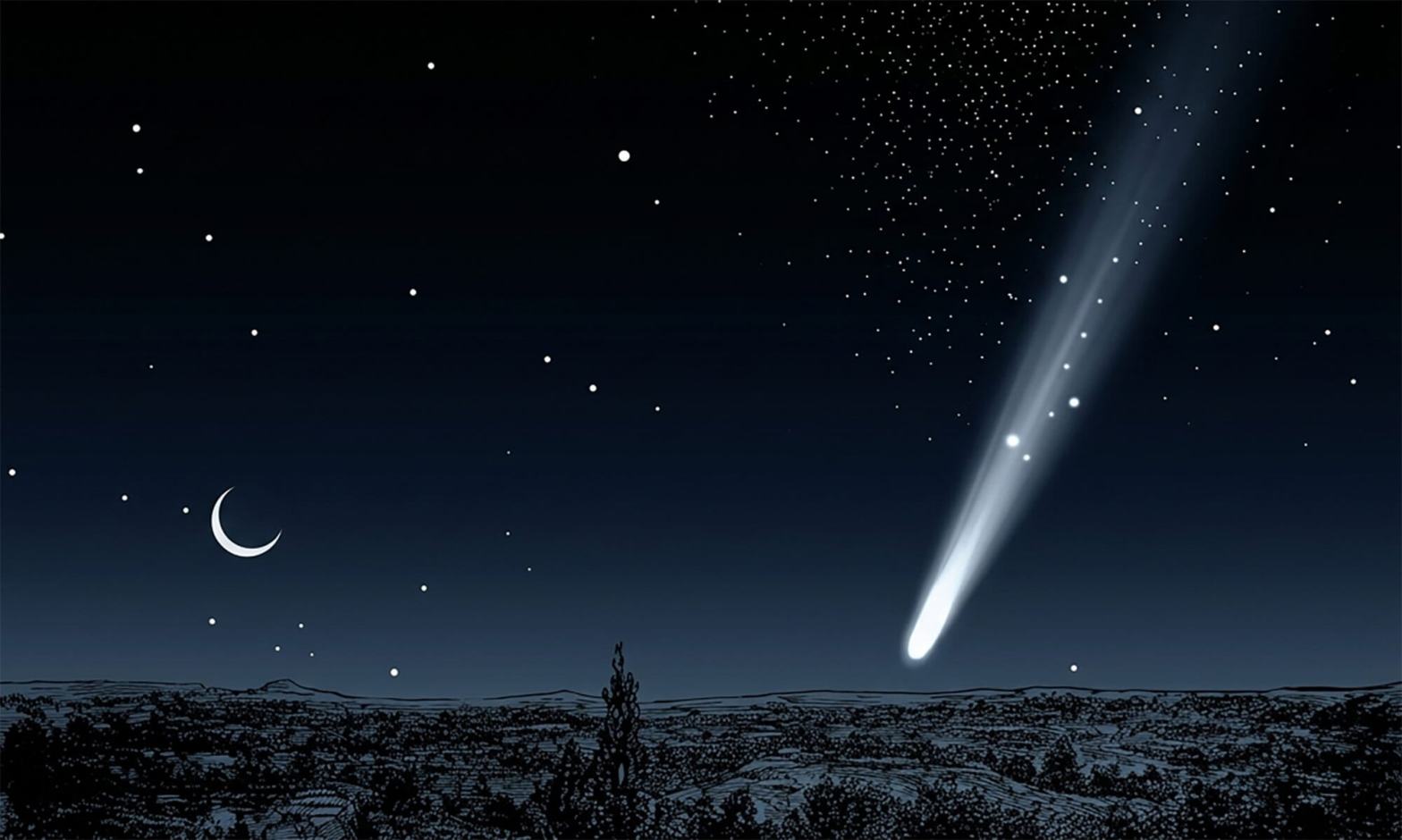
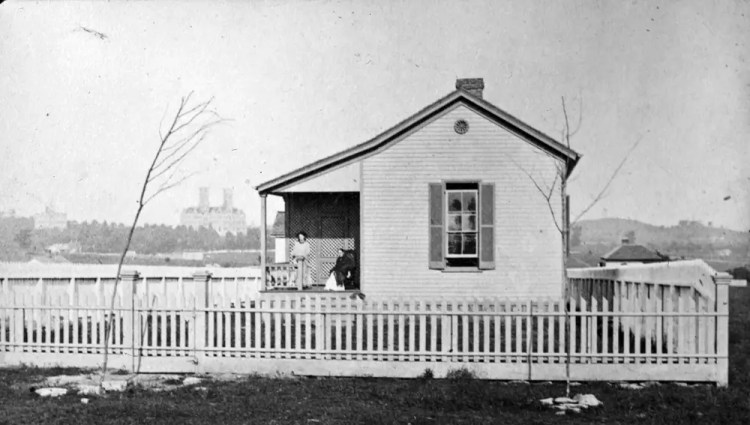
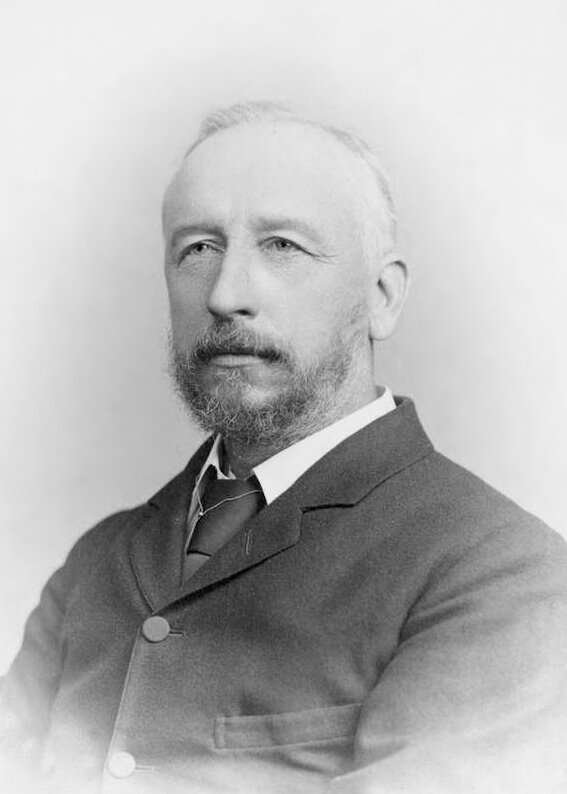
Edward Emerson Barnard moved through the backyard and settled in behind the brass tube of his five-inch refractor. He saved $400, some two-thirds of a year’s wages, to buy it several years earlier. Aiming the telescope toward the faint stars near Hydra’s long coil, he narrowed in on the comet riding low in the southeastern sky.
Hovering like distant lanterns, diffuse shapes drifted south of the main nucleus. Each one carried a slightly brighter center. Six… seven… eight distinct centers, possibly more, strung out like shattered beads from a broken necklace.
He stepped back from the eyepiece and went inside.
He found Rhoda still asleep and tapped her shoulder.
“Come outside,” he said. “There’s something you need to see.”
She asked no questions. In less than two years of marriage, she knew what the tone meant. His voice dropped when the sky came calling, and he didn’t want to answer alone. She rose, wrapped herself against the cold, and followed him outside.
Rhoda bent to the eyepiece.
“Those shapes,” she said. “What are they?”
“I’m not quite sure yet,” Edward replied.
The comet had been known to astronomers for more than a month. It burned visibly in broad daylight and crossed the face of the sun. But the world was still catching up with a comet splintering, and here was the evidence drifting above Tennessee.
September 1, 1882: The Cape of Good Hope
Six weeks before that night in Nashville, a comet appeared against the pale iron predawn sky. The dockworkers and fishermen had no reason to look up. No announcement had been made. No astronomer had sent word. Yet, they noticed the smear of light in the morning.
They were not the only ones. Railroad workers along the South American lines saw it too. When astronomer Benjamin Gould at the Córdoba Observatory in Argentina began piecing together the earliest sightings, it was their reports that kept appearing.
“It had been seen for several days,” he wrote, “by employees of the railroad and other persons whose duties required them to rise before daylight.”
September 8, 1882: Royal Observatory, Cape of Good Hope
About three miles from the docks, William Finlay spent the night tracking an occultation—the moon swallowing a small star—and now the sky held a thin brightening wash of blue. There was nothing left to observe. His notes were made. He turned up his collar and headed home.
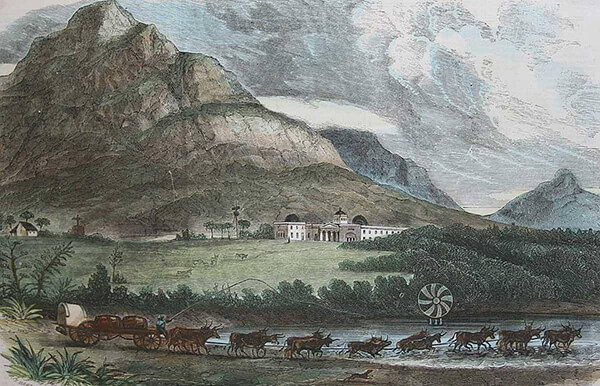
The air carried the scent of salt, tar, and wet rope. Finlay’s Royal Observatory site had been chosen deliberately within sight of the harbor so the time ball could signal the hour to waiting ships.
Finlay paused on the path home to let his eyes settle into the distance. And there it was: low in the northeast, a bright head with a straight tail slicing the sky.
He turned back toward the dome. Home would wait.
Inside, he swung the 6-inch equatorial scope toward the comet and began comparisons with nearby stars.
William Finlay was not alone. Thousands of miles away, in New Zealand, a nightwatchman named James Brown on the Queen’s Wharf in Wellington Harbor spotted the comet. He wrote of his observation, which was published by the Evening Post the next day:
“This morning, about 4:15, I observed a very large and brilliant comet, between northeast and east, between Somes Island and the point. I got the glasses to see it. It has a very large head, pointing towards the earth. As I am the first to notice it I think I am entitled to have it named after me.”
It was a bold request, but one destined to end in disappointment. Alongside Brown’s enthusiastic report, the Evening Post published a correction. The comet had already been claimed. Days later, the newspaper couldn’t resist acknowledging Brown in a poem:
James Brown would give his own name to the comet;
But found, instead, he’s got another from it.
The stranger’s still unnamed; throughout the town
The honest watchman’s known as “Comet Brown.”
Brown’s name wouldn’t be etched into the star charts of history. But at least for one morning, the comet had been entirely his.
September 13, 1882: Grahamstown, South Africa
More than 400 miles east of the Cape, Lindsay Atkins Eddie watched the comet rise at 4:50 a.m.
He said the comet rose “above the horizon and appeared in the strong twilight as a brilliant but narrow band of ruddy light, terminating in a very bright nucleus, equalling Jupiter in brilliance and apparent size. The tail was slightly inclined to the north… [and] could be traced to about 12 degrees from the nucleus.”
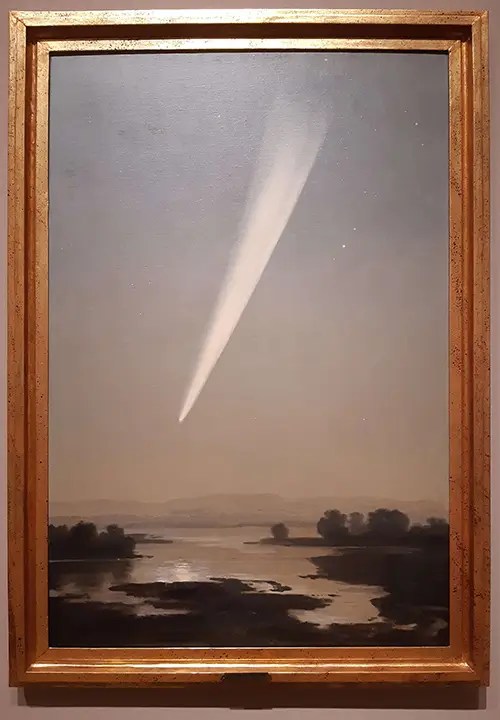
To gauge the length of the tail yourself, make two fists, press them together, and hold them out at arm’s length. The two fists cover the same stretch of sky that Eddie saw shimmering in the South African twilight.
September 17, 1882: A Kiss with Sunlight
Eddie rose before dawn to find the comet again. It appeared at 5:44 a.m., just fourteen minutes ahead of the sun. In his notes, he marveled that he didn’t even have to search for it. No telescope. No dark sky. Just open eyes and an ordinary Tuesday morning.
By noon, the comet was shining in full daylight! To Eddie, it was a wonder to be shared. To prove the heavens were open to everyone, he called his four-year-old daughter out to see.
“I may here mention that my little girl, of only four years, was able to see it without difficulty up to about 1 o’clock, after her attention had been once directed to it.”
On that same day, the Great Comet passed around 300,000 miles from the solar surface. It screamed through the innermost reaches of our solar system, roughly the distance from the Earth to the moon.
Back at the Cape, William Finlay used a dark-tinted filter to watch the comet creep toward the sun’s edge. He noted how the sun’s limb seemed to “boil” as the gap closed. Finally, the glare became too much. The comet slipped into the brilliance of the solar disc and vanished.
For more than an hour, it transited the face of the sun. Temperatures should have turned its icy heart to vapor, but it emerged on the other side, still blazing, though fractured.
October Skies
As September faded into October, L.A. Eddie kept watch from Grahamstown. On the morning of October 3, he wrote:
“The comet rose at 3:35… and could then be seen, through the dense fog that prevailed, like a great flame proceeding from a bonfire on the hills.”
What a scene that must have been! The comet rose through the fog as though the earth itself had caught fire.
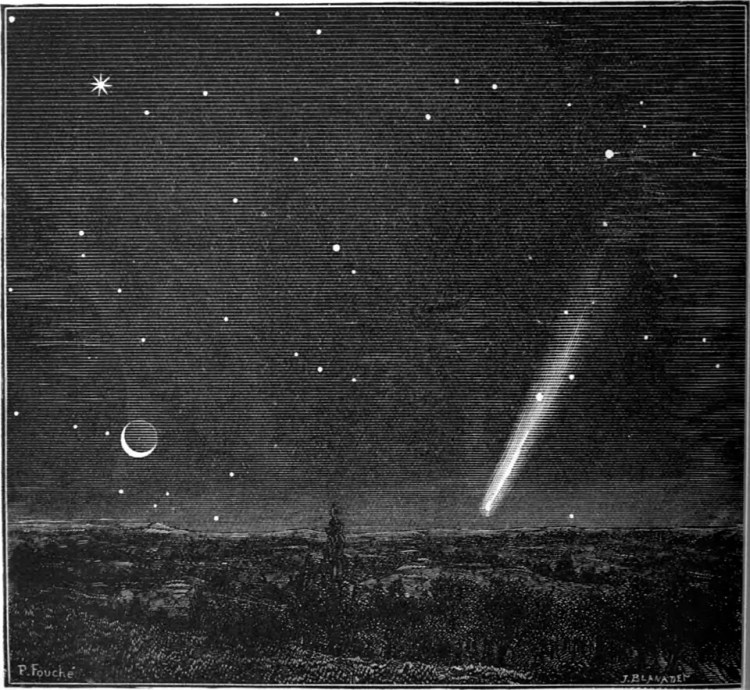
Days later, the damage became unmistakable. The Sun’s brutal swipe had done its work. The nucleus was stretching, elongating, beginning to come undone.
A Shattered Vase
By mid-October, the nucleus had divided more. Eddie, watching with his 9.5-inch reflector, said it resembled a string of five luminous beads. Those were the same lanterns of light Edward and Rhoda Barnard watched from their backyard.
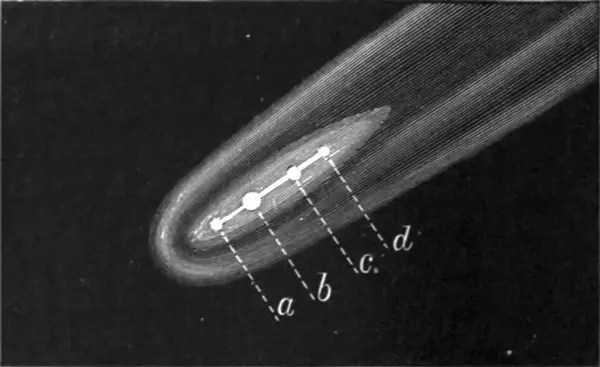
What they were observing was the signature of an ancient catastrophe. A scarred survivor from a shattered dynasty.
German astronomer Heinrich Kreutz noticed something striking. Two earlier great comets in 1880 and 1843 followed nearly the same path as the comet of 1882. They had to be related. In 1888, he proved it mathematically. The Great Comet of 1882 was not alone.
The parent body likely passed close to the Sun in 1106. There, it tore itself apart. That comet became the source of a remarkable line. Ikeya Seki in 1965. Lovejoy in 2011. And countless smaller sungrazers that flare and fade like sparks from the same ancient forge.
The November Photograph
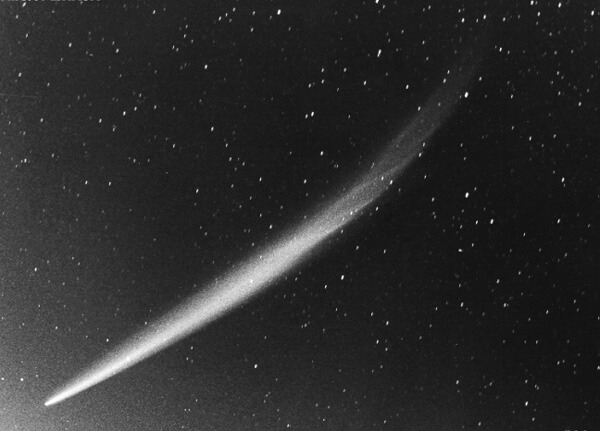
On November 7, David Gill, the director of the Royal Observatory at the Cape of Good Hope, turned his camera to the sky. He rigged a portrait lens to the telescope’s mounting. The scope’s clock drive tracked the stars while the comet drifted slowly through the frame for 100 minutes.
When the photographic plate came out, the comet was there with its curved tail rendered in gradations of gray. Gill would write: “The splendour of the comet was far beyond anything I had previously seen.”
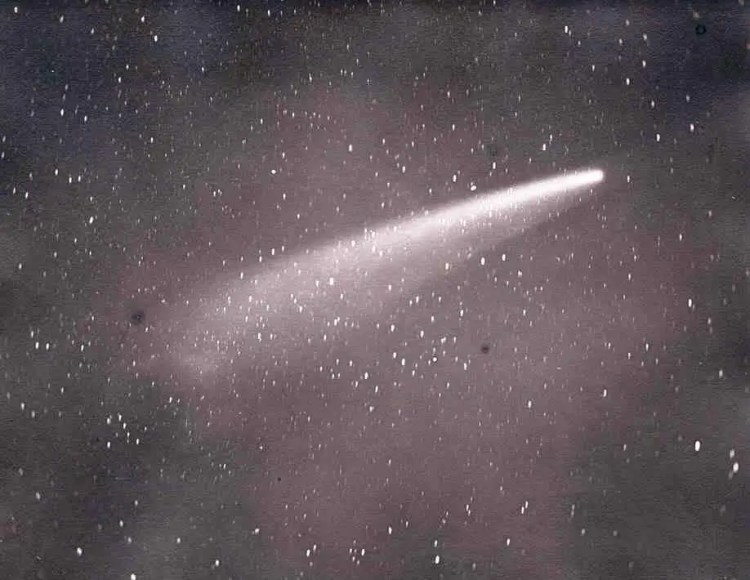
But the stars also caught his attention. Hundreds of them, scattered across the plate down to the tenth magnitude. And with that, he stumbled into the future of astronomy.
Gill’s plates persuaded astronomers in Paris to organize the first international astronomical congress. The Carte du Ciel project was born, and for the next 80 years, observatories around the world would make star plates and gain a greater understanding of the universe.
The Long Goodbye
By November, the comet had already begun to turn, descending from the heights of its dramatic arrival. Its tail still stretched four to six degrees across the predawn sky well into February.
Night by night it sank lower in the west after sunset, slipping farther down with each passing week until it finally slipped from view.
On June 1, 1883, nine months after the Great Comet’s first sighting, astronomer J. M. Thome at Córdoba swept his telescope across the place where it had been. He found only the barest trace: “an excessively faint whiteness.”
And then, it was gone.
The Young Man in Nashville
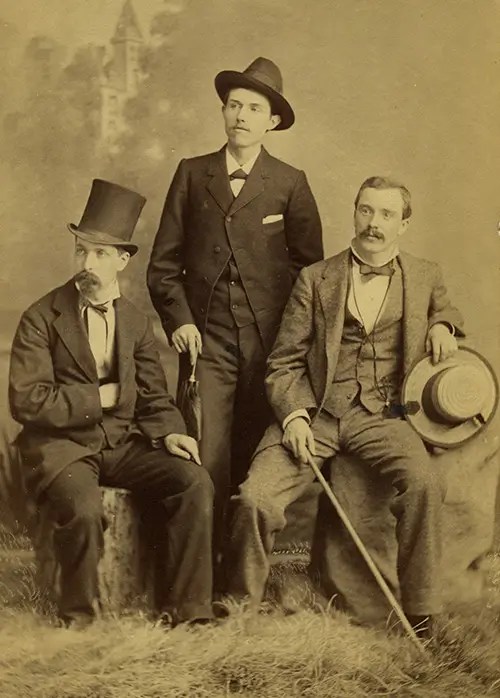
Edward and Rhoda wouldn’t stay in Nashville long. Edward left the Nashville “Comet House” for the great observatories—Lick, then Yerkes—and Rhoda went with him, as she always had.
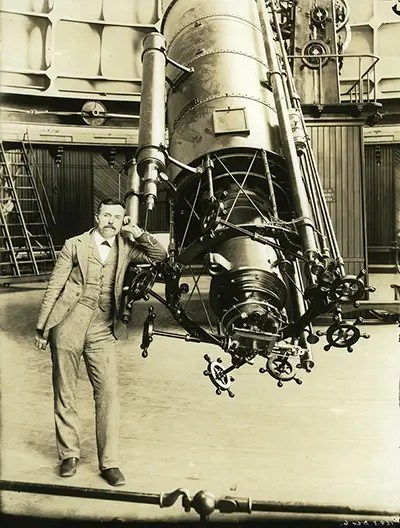
In the decades that followed, Edward discovered the fifth moon of Jupiter, cataloged the dark nebulae of the Milky Way, and identified the star with the fastest known proper motion in the sky. It still carries his name as Barnard’s Star.
Beggars on a Beach of Gold
I think of Edward tapping Rhoda’s shoulder, of dockworkers and railroad men glancing up before dawn, and of L.A. Eddie calling his four-year-old daughter outside to share a comet blazing in full daylight.
As observers, we are like beggars on a beach of gold. The shore is our sky, and we reach for stars, faint smudges, and fleeting streaks of light. Kings and shepherds, astronomers and children. We all have a place on the heavenly coast.
The night sky offers gifts too large to hold alone. So we lift our eyes from the eyepiece. We step back. We go find someone.
“Come outside,” we say. “There’s something you need to see.”
Sources and Further Reading
Backhouse, T. W. (1883). The Great Comet of 1882. Nature, 27, 338. https://doi.org/10.1038/027338c0
Barnard Leaning against Telescope at Lick Observatory, Mt. Hamilton, CA, Gallery, accessed April 11, 2026, https://gallery.library.vanderbilt.edu/items/show/790.
Chambers, G. F. (1909). The story of the comets: Simply told for general readers. Clarendon Press.
Eddie, L. A. (1883). Observations of the Great Comet (b) 1882, made at Grahamstown, Cape of Good Hope. Monthly Notices of the Royal Astronomical Society, 43(5), 289–297. https://doi.org/10.1093/mnras/43.5.289
Edward Emerson Barnard with J.W. Braid and P.R.Calvert, Gallery, accessed April 11, 2026, https://gallery.library.vanderbilt.edu/items/show/792.
Gill, D. (1882). On photographs of the Great Comet (b) 1882. Monthly Notices of the Royal Astronomical Society, 43(2), 53–54. https://doi.org/10.1093/mnras/43.2.53
Scientific American. (1882, October 14). Scientific American, 47(16), 245.
Hale, A. (2020). Ice & Stone 2020: Week 40: Sept. 27–Oct. 3 [PDF]. The Earthrise Institute & RocketSTEM. https://www.rocketstem.org/wp-content/uploads/2020/09/Ice-And-Stone-2020-Week-40.pdf
Kapoor, R. C. (2020). Comet tales from India: The Great September Comet of 1882 (C/1882 R1). Journal of Astronomical History and Heritage, 23, 353–374. https://www.researchgate.net/publication/344270169_COMET_TALES_FROM_INDIA_THE_GREAT_SEPTEMBER_COMET_OF_1882_C1882_R1
Kronk, G. W. (n.d.). C/1882 R1 (Great September Comet). Cometography. Retrieved March 15, 2026, from https://cometography.com/lcomets/1882r1.html
“Observations of the Great Comet (b) 1882.” (1883). Monthly Notices of the Royal Astronomical Society, 43(3), 84A–84B.
Orchiston, W., Drummond, J., & Kronk, G. (2020). Observations of the Great September Comet of 1882 (C/1882 R1) from New Zealand. Journal of Astronomical History and Heritage, 23(1), 628–658. https://doi.org/10.3724/SP.J.1440‑2807.2020.03.10
Pring, C. (1883). Observations upon the great comet of 1882. London: Taylor & Francis. https://archive.org/details/observationsupo01pringoog
Sekanina, Z. (2021). Estimating dimensions of the nucleus of Great September Comet of 1882 from motions of its fragments (arXiv:2110.10889) [Preprint]. arXiv. https://doi.org/10.48550/arXiv.2110.10889
Young, C. A. (1883). The great comet of 1882. In Popular Science Monthly, 22(January 1883). Wikisource. https://en.wikisource.org/wiki/Popular_Science_Monthly/Volume_22/January_1883/The_Great_Comet_of_1882
 The Garden Astronomer
