
Discover how two sisters blend astronomy and perfumery to capture the cosmos in a bottle, tracing a lifetime of starlit memories and inspiration.
Author Archives: Wayne McGraw
IC 348: A Stellar Nursery and Fireworks Show in Perseus
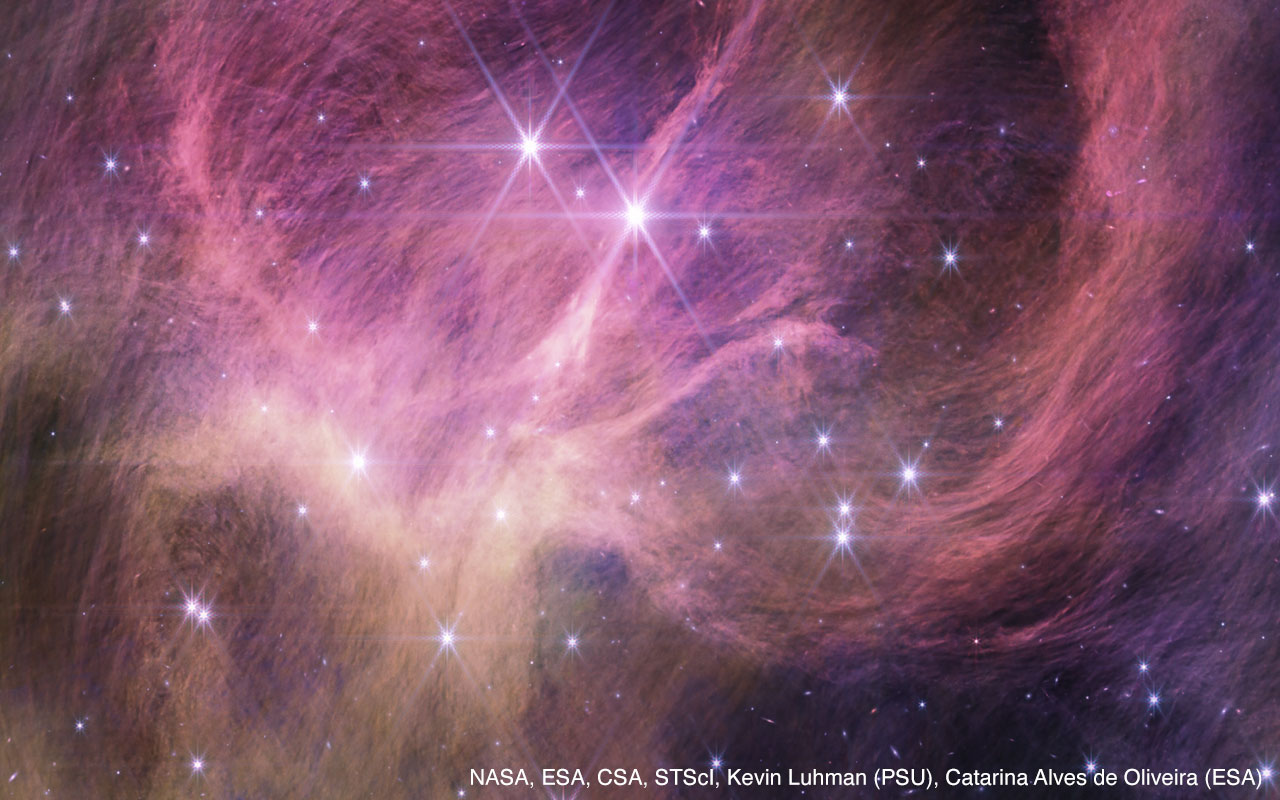
IC 348 is a beautiful star cluster wrapped in a veil of milky nebulosity. On autumn and winter nights, turn your attention to the Perseus constellation and this cosmic cradle where stars are born. It’s also known as C 0341+321, Collinder 41.
Epsilon Persei (Struve 471): An Aquamarine Celestial Jewel in Perseus
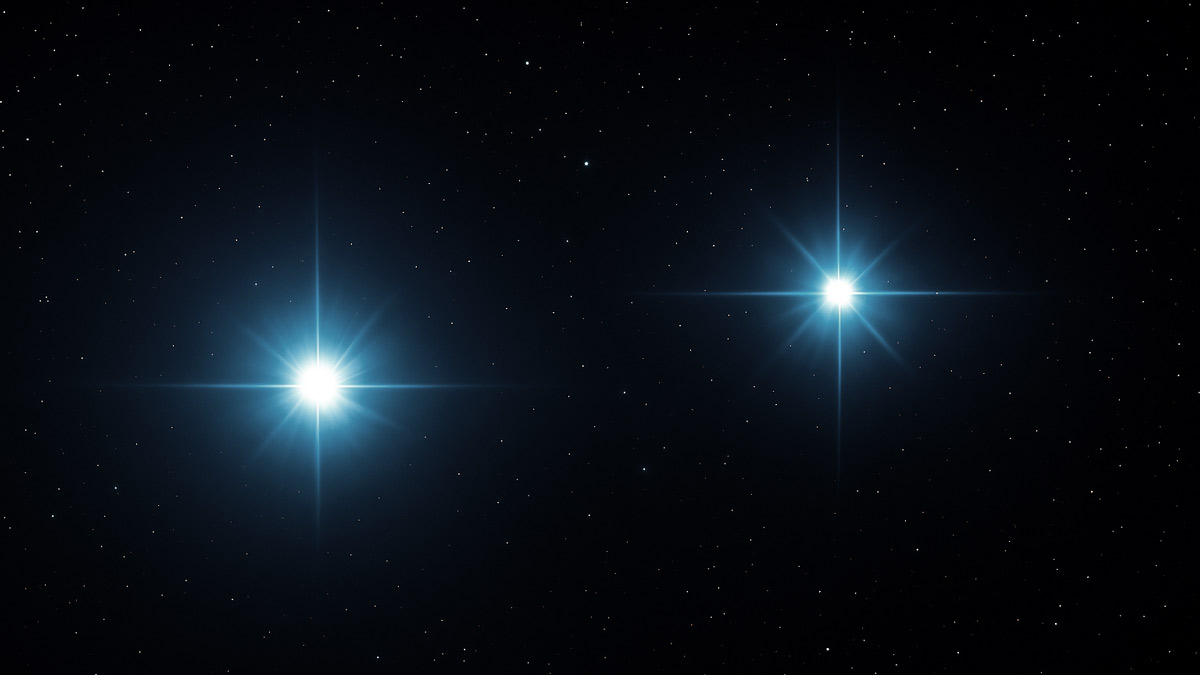
In the autumn constellation of Perseus, Epsilon Persei shines with a beautiful blue-white hue. Backyard astronomers will appreciate the star’s pretty aquamarine color and the challenge of seeing the dim companion star nearby. This multiple star system, also viewed as double star, is a bright target to view in fall. It also known as Struve 471, STF 471, HD 24760, SAO 56840, HR 1220, Eps Per, HIP 18532, Adid Australis
Struve 274: A White Binary Star in Cetus the Sea Monster
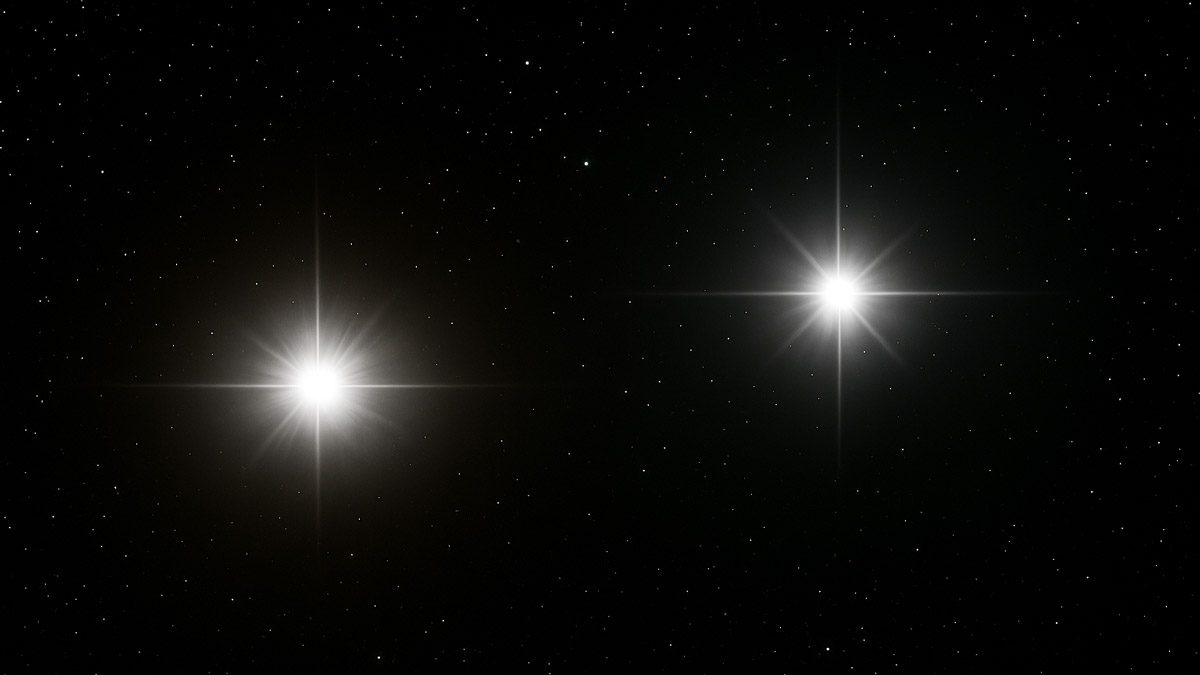
Among Cetus’ notable stars lies the binary star Struve 274, a quaint pair of white stars that are fairly easy to view in any modest backyard scope.
Struve 274’s stars are close in magnitude and color. The primary star shines at magnitude +7.5, while the nearby secondary is slightly dimmer at magnitude +7.6. The stars lie a healthy 13.7 arcseconds apart, making them an easy binary target for amateur astronomers. Also known as STF 274, HD 15695, SAO 110591, HIP 11737.
Nu Ceti (Struve 281): A Delicate Yellow and White Binary Star in Cetus the Sea Monster
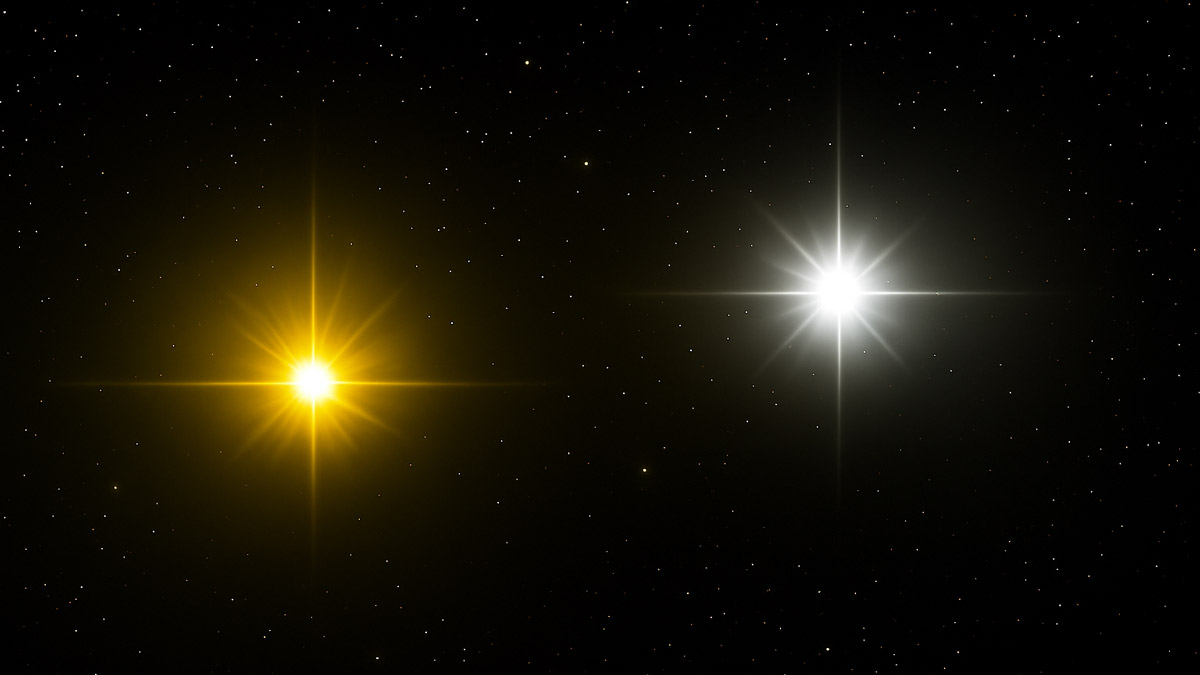
Among Cetus’ notable stars lies the binary star system of Nu Ceti also known as v Ceti and Struve 281. Nu Ceti is a magnitude 4.9 yellow star with a close dim companion star only 8 arcseconds away. Backyard astronomers will enjoy the challenge of splitting this tight pair that lies in the late autumn constellation of Cetus. The double star is also known as STF 281, Nu Cet, SAO 110635, HIP 12093, HD 16161, HR 754, v Cet.
VX Andromedae: A Burgundy Carbon Star in Andromeda
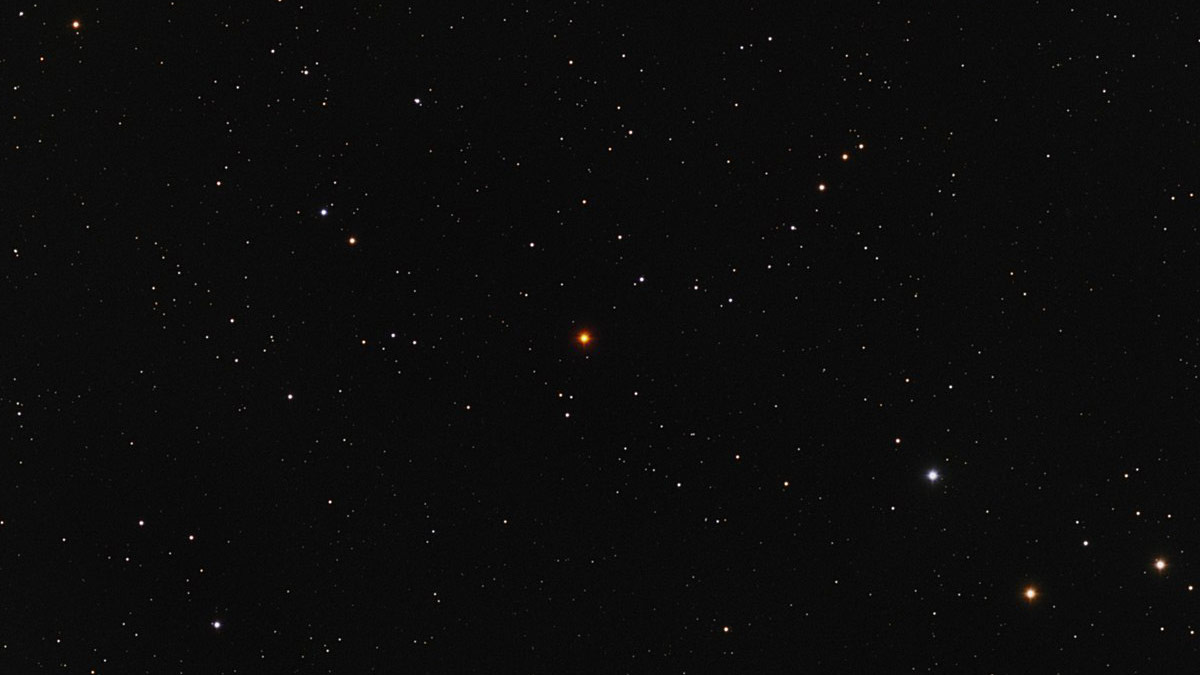
VX Andromedae is a carbon star with a middle red hue. One can view it best on autumn nights as it lies in the constellation Andromeda. It’s also known as HD 1456.
Rho Orionis (Struve 654): An Orange-Yellow Double in Orion

The double star Rho Orionis, also known as SAO 112528, features a orange-colored primary in the winter constellation of Orion. The pair of stars lies closely to each other, only separated by 6.5 arcseconds in distance.
Struve 649: A White-Blue Primary with a Dim Blue Companion in Eridanus
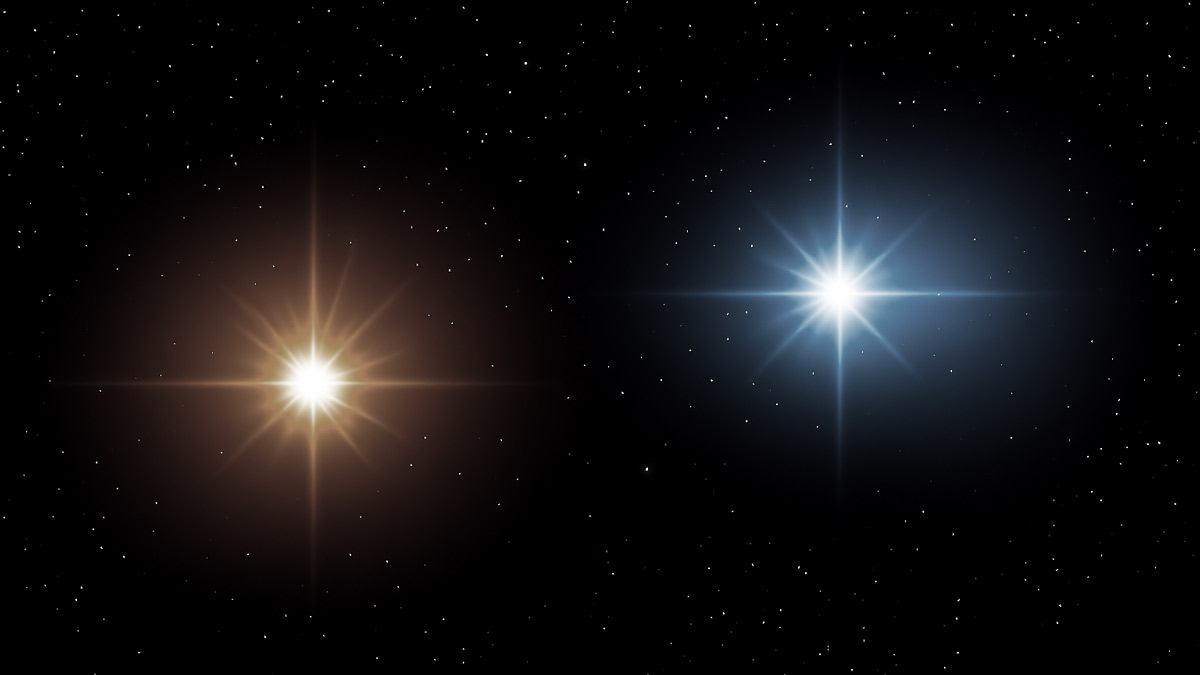
Struve 649 is a double star featuring a fairly bright primary white-blue colored variable star with a dimmer blue companion nearby. This quaint pair lie in the constellation Eridanus, the river, best viewed in winter.
The primary star in Struve 649 is a variable star lingering around the 5th magnitude. This blue-white star has a stellar classification of B8V. At a friendly distance of 21.3 arcseconds away, the secondary star is more blue in color and is much dimmer at a magnitude of +9. This pair is also known as STF 649, SAO 131806, HD 33224, HR 1671.
 The Garden Astronomer