
54 Leonis is a double star with an exceptionally pretty secondary star, which is aquamarine in color. Some observers describe it as icy blue. Either way, it’s an awesome double to see in Leo.
Author Archives: Wayne McGraw
Zeta Coronae Borealis: A Double Once Referred to as Smalt Blue
In August 1831, astronomer Admiral Smyth described the color of this double star as “smalt blue” — an intriguing description for pale blue stars. Regardless of various accounts of their color, the pair make for a pretty pair of late spring in Corona Borealis.
Messier 53 (NGC 5024): An Old, Bold Globular Cluster on the Outskirts of the Milky Way

Messier 53 is a globular cluster on the outskirts of our galaxy at nearly 60,000 light years above us. M53 is also unique as it has a more blue straggler stars than other globulars.
NGC 2129: Gemini’s Youthful Star Cluster

Not much is written about NGC 2129 in Gemini as this is a small cluster, but it houses two bright stars that are likely a binary. And, it’s a very young cluster in our galaxy.
NGC 2506: A Star Cluster in a Black Ocean
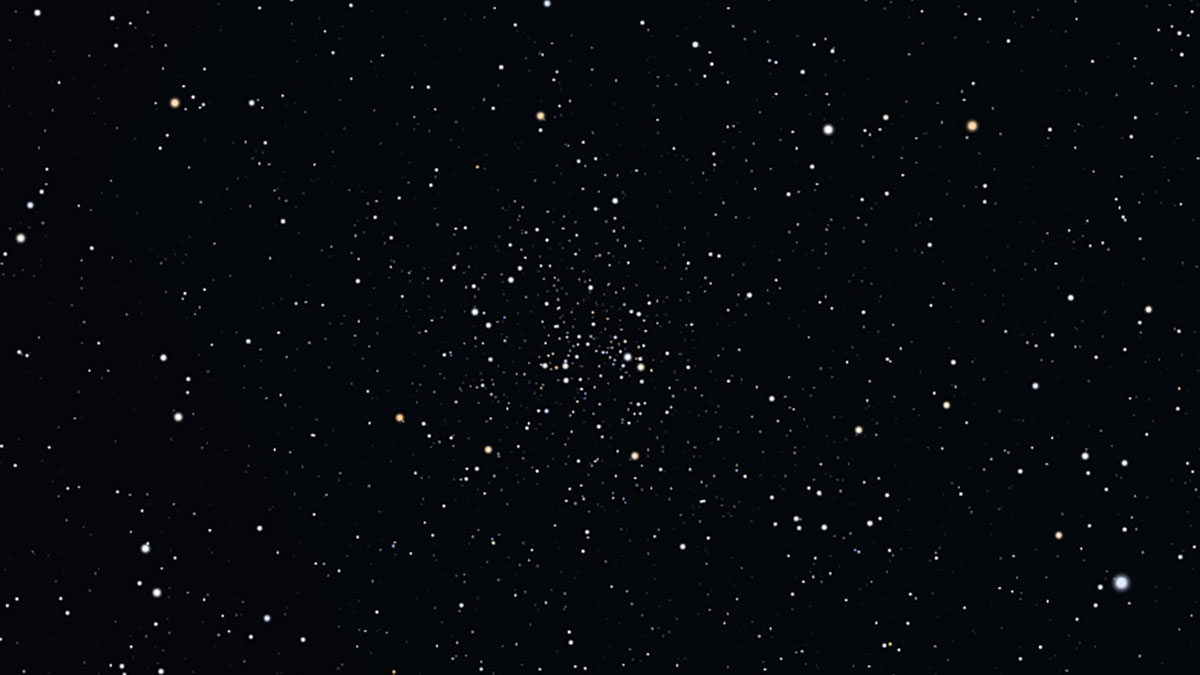
NGC 2506 is fainter open cluster in the constellation of Monoceros in winter. Around 150 stars make up the cluster, and it looks best through a telescope. Amateur astronomers also know the cluster by the names Caldwell 54, Melotte 80, and Collinder 170.
Messier 46 (NGC 2437): Rich Cluster in Puppis Featuring a Bonus Nebula

Messier 46 is a rich cluster of more than 500 stars. It makes its home in the southern constellation of Puppis.
1 Camelopardalis: A White and Sapphire Blue Double Dances Around the Celestial Pole

1 Camelopardalis, also known as DL Cam, is a double and variable star in the constellation Camelopardalis and is viewable much of the year as it circles close to the North Star. The blue-white pair are fairly tight together at 10 arcseconds apart. They are also known as Struve 550 (STF 550), SAO 24670, HIP 21148
Messier 47 (NGC 2422): A Bright, Young Cluster in Southern Skies
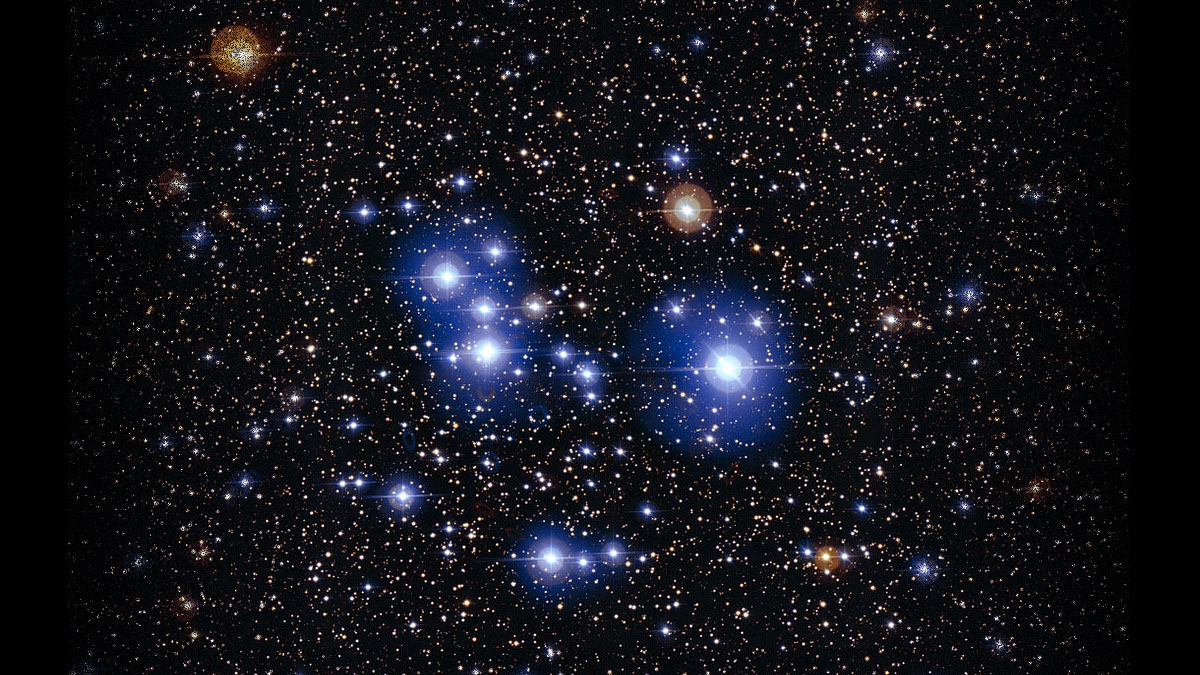
Messier 47 graces the southern skies in the constellation Puppis. While only 50 or so stars make up this cluster, they are bright, blue, and ready to be enjoyed with binoculars or telescopes.
 The Garden Astronomer