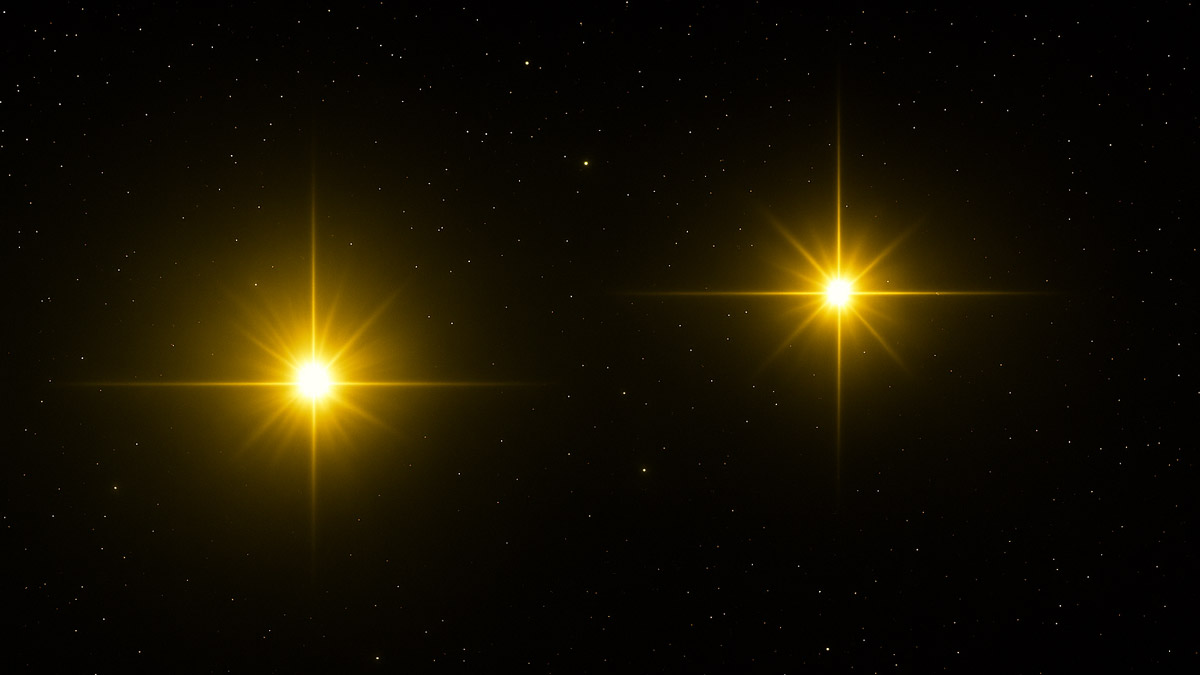
Beta Draconis, or Rastaban, is a prominent star in the constellation Draco, with an apparent magnitude of 2.8. This golden giant, situated 380 light-years away, is part of a binary system. Despite its brilliance, its companion is a dimmer star, visible only under optimal conditions. Also known as Bet Dra, Rastaben, Alwaid, Asuia, SAO 30429, HD 159181, 23 Dra, β Dra, 23 Draconis, HIP 85670, HR 6536, BU 1090
Mu Scorpii: A Pleasant Blue Visual Pair of Stars in Scorpius

Mu Scorpii, located in the tail of the Scorpion constellation, comprises two stars, Mu1 and Mu2, which appear close but are at different distances. Mu1 is a binary star system, while Mu2 is less luminous. Observations reveal the beauty of this pair, easily visible with binoculars, reminding us of the wonders of stargazing.
NGC 7006: The Ancient Lantern at the Rim of the Galaxy

NGC 7006, an elusive globular cluster located 135,000 light-years away in the constellation Delphinus, offers a unique challenge for amateur astronomers. Its faint visual magnitude of 10.6 makes it hard to detect, revealing a compact cluster over time through powerful telescopes. Observing it connects viewers with distant cosmic history. Also known as Caldwell 42.
Zeta Sagittae (Struve 2585): A Subtle Triple Star System in the Arrow Sagitta
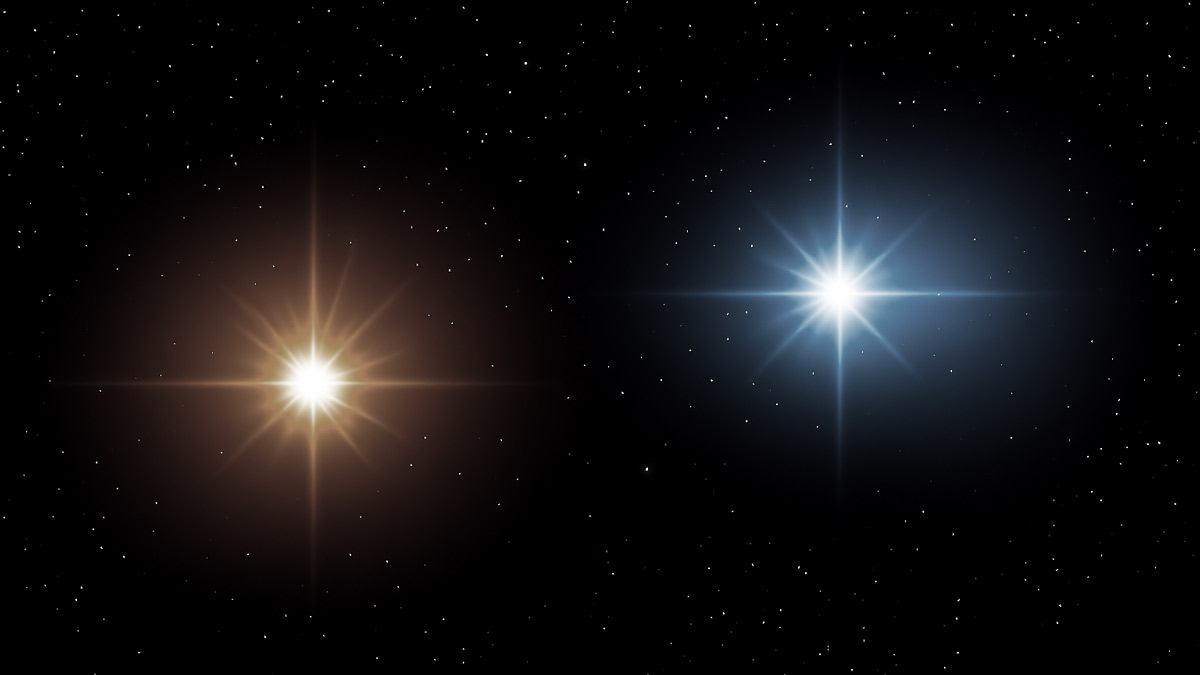
Sagitta, a small constellation between Aquila and Vulpecula, features Zeta Sagittae, a fascinating triple star system. The brighter component, Zeta Sagittae A, shines at magnitude 5, while its companion, Zeta Sagittae B, is fainter at magnitude 9. Located near Altair, this hidden treasure is worth observing with a telescope. Also known as STF 2585, SAO 105298, 8 Sagittae, HR 7546, HIP 97496, HD 187362
Struve 2155: A Subtle Colorful Binary in Draco
The constellation Draco features the double star Struve 2155, a notable yet subtle binary system situated about 600 light-years away. Comprising a bright yellow giant and a dimmer blue companion, this pairing offers a unique visual experience. Observers can appreciate the contrast and beauty of this hidden gem during summer evenings. Also known as: SAO 17410, HIP 84465, HD 156890, 4198-01479-1, BD+60 1742
RY Draconis: One of Draco’s Crimson Carbon Stars

RY Draconis (RY Dra) is a carbon star in the Draco constellation, noted for its rich red hue and unique atmospheric processes. This variable star’s brightness fluctuates between magnitudes 6.0 and 8.0. It is best observed near Kappa Draconis, visible year-round from northern latitudes, making it a popular target for astronomers.
Struve 1677: A Close Pair of Stars Near Porrima in Virgo
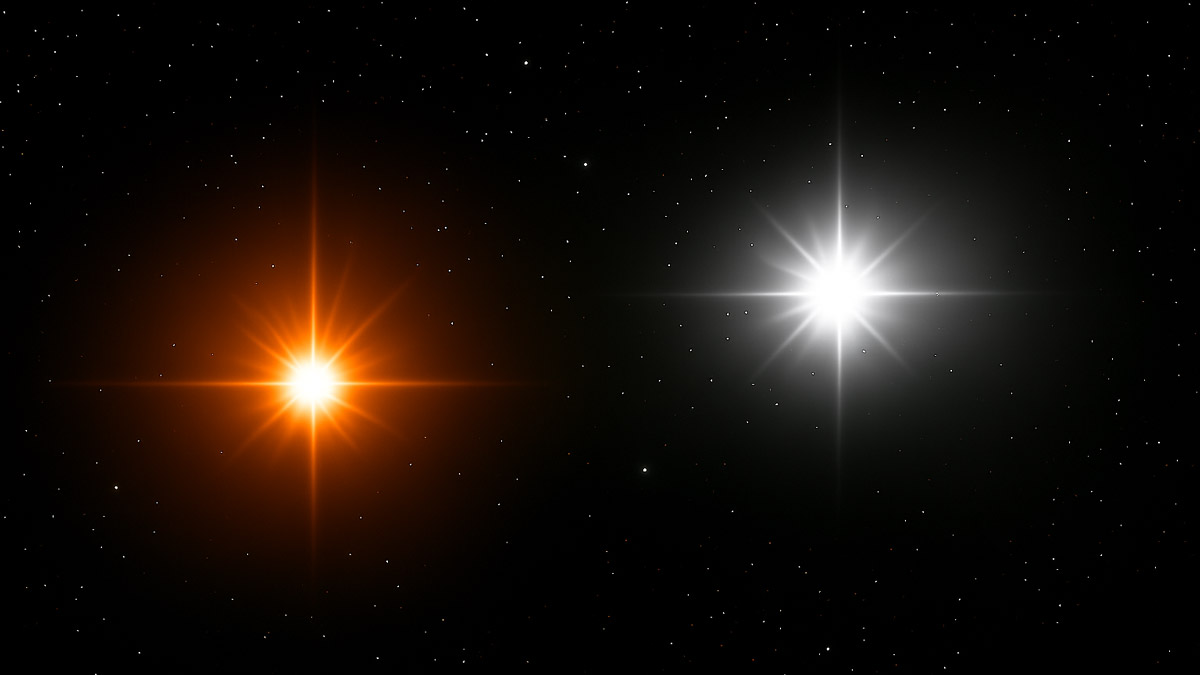
Struve 1677 (STF 1677) is a double star in the spring constellation of Virgo. The binary stars are fairly close together but can be split with a telescope at 16 arc seconds apart. This double is also known as SAO 138952 or HIP 62234 and lies near Porrima.
24 Cancri (Struve 1224): A Quaint Triple Star in Cancer

24 Cancri, located in the spring constellation Cancer, is known as a triple star system, but backyard astronomers will only see a pair of nearly identical and pretty white-yellow stars, Learn more about the pair and see how they look through an 8-inch SLT scope. The pair is also known as 24 Cnc A, HD 71152, HR 3312, SAO 80184, STF 1224, Struve 1224, and upsilon.
 The Garden Astronomer