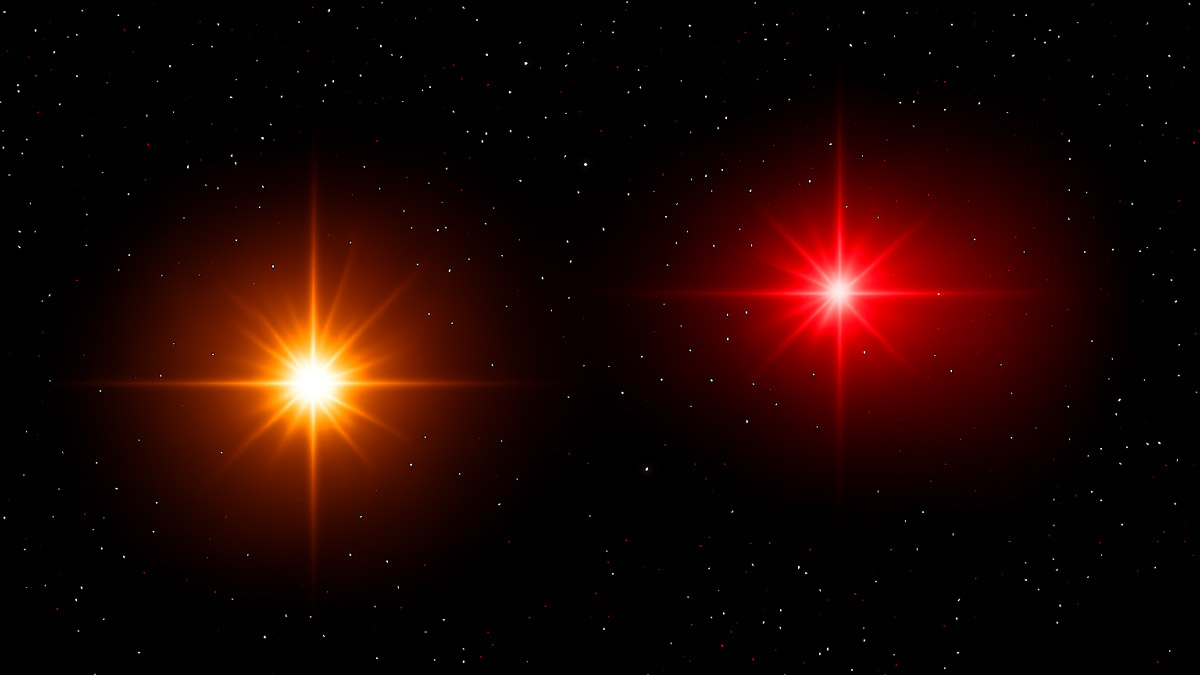
Mu Herculis, also known as μ Herculis or Struve 2220, is a star system only 27 light-years away from Earth shining down from the constellation Hercules. This summer binary features a yellow star like our sun and a red dwarf.
Category Archives: Double/Multiple Stars
Beta Lyrae (Sheliak): A Fast Star Dance in Lyra
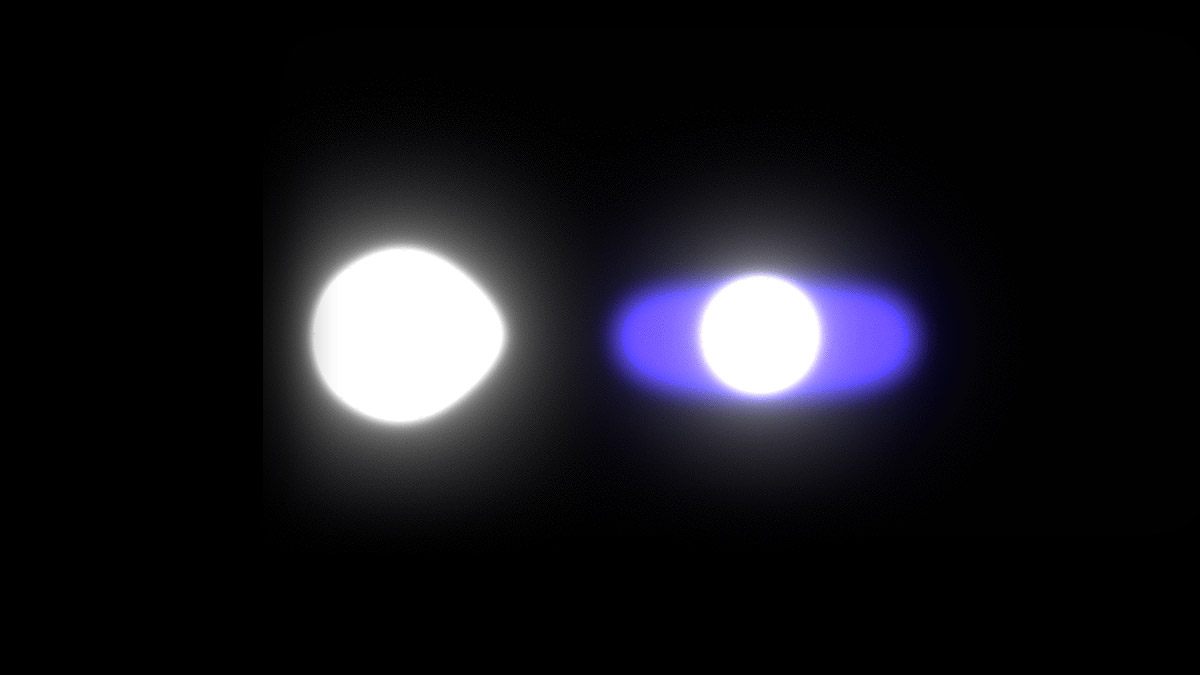
The eclipsing binary of Beta Lyrae features two stars orbiting each other every 12.9 days!
Zeta Lyrae: Often Overlooked Pair of Stars in Lyra
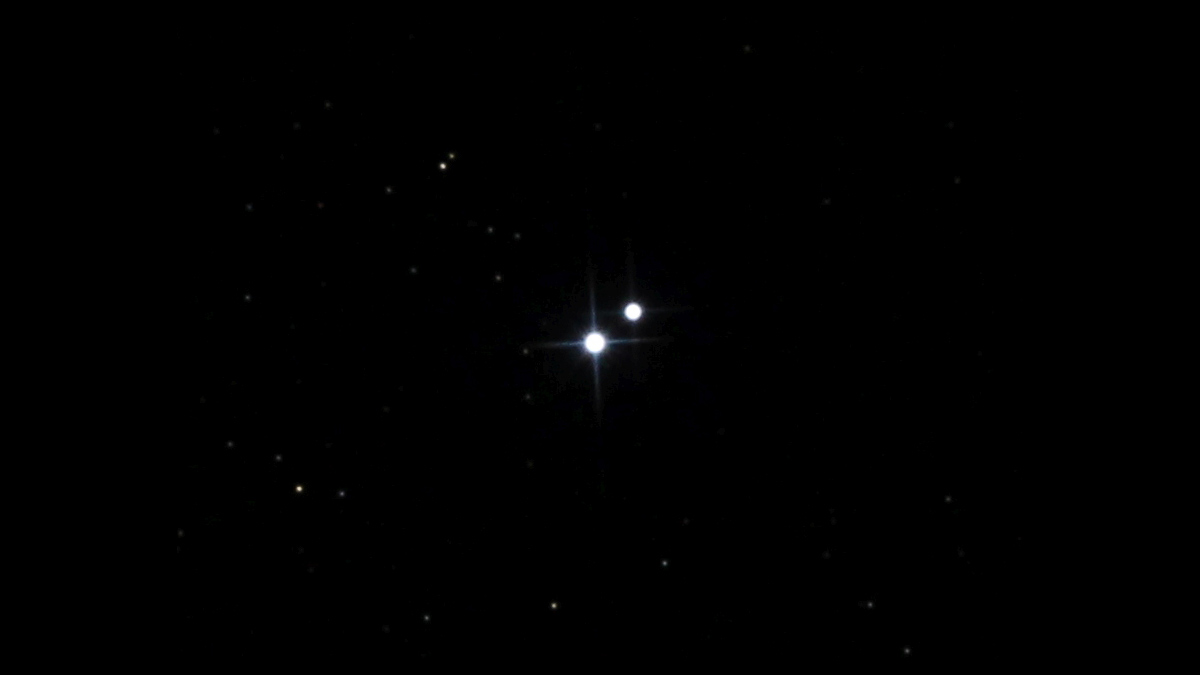
Zeta Lyrae is a multiple star system in the constellation Lyra best viewed in summer and early autumn. The double star is easily viewed with any optical aid since the stars are bright and lie 44 arcseconds apart.
Struve 1904: A Nice Double Star in Virgo
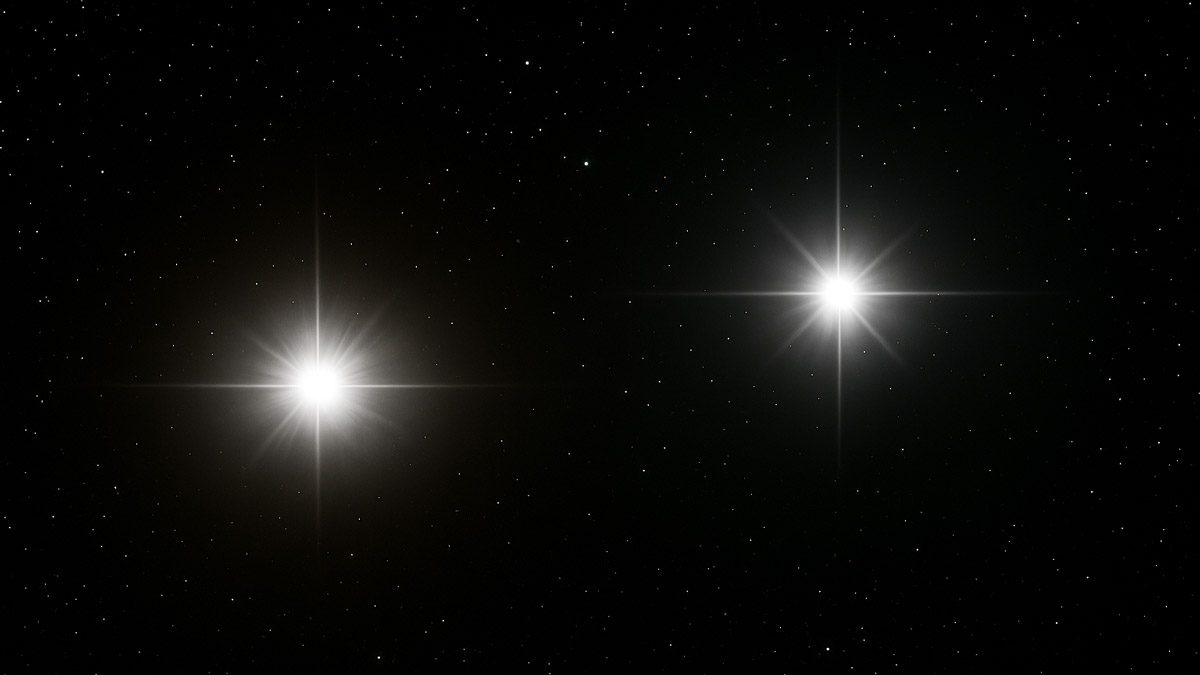
The author explores the galaxies in the Virgo constellation, focusing on the double star STF 1904, discovered by Friedrich Struve in 1823. Comprising a subgiant primary and a main-sequence secondary star, they are 247 light years from Earth. Observations made in Seattle reveal their distinct separation and brightness.
Also known as: SAO 120822, HD 133408, HR 5610, HIP 73716, STF 1904
Struve 1919: Serpens Offers an Attractive Double of Peach and Blue
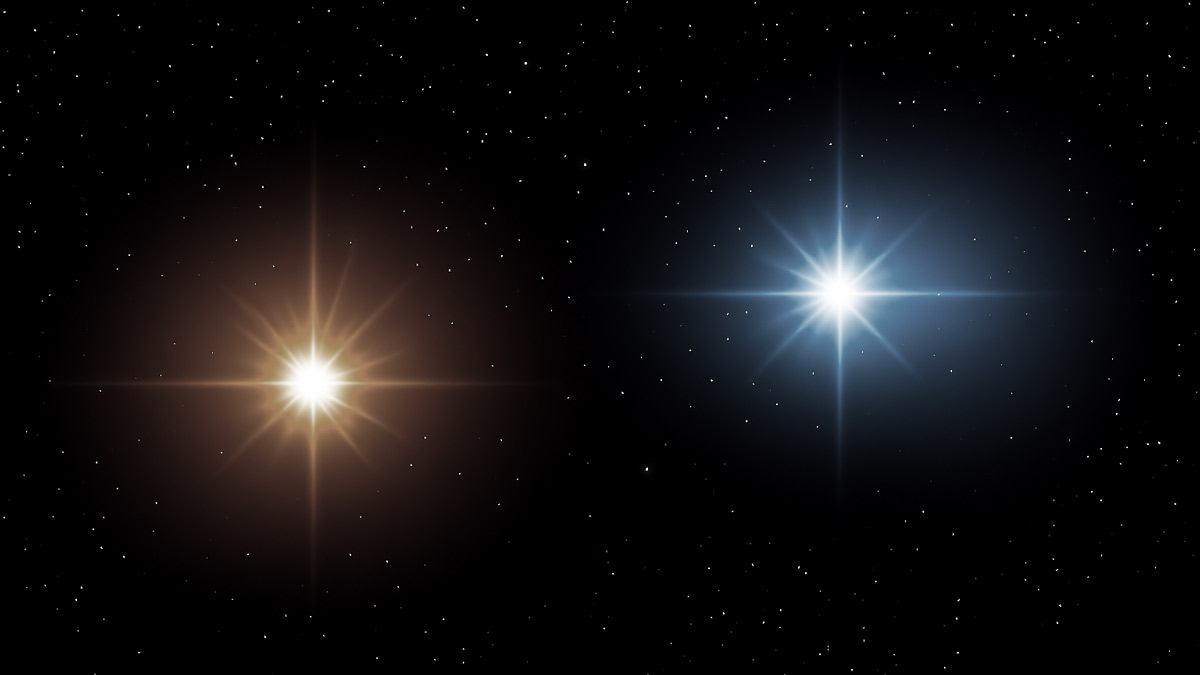
Struve 1919 is an attractive double star in the constellation of Serpens. It’s best viewed during the summer. The binary is also known as STF 1919, SAO 101438, HR5659, HD135101.
54 Virginis: A Close Pair of Stars Near the Celestial Equator
54 Virginis is a double star in the spring constellation of Virgo. The stars are fairly close together but can be split with a telescope.This double is also known as LM Vie, SAO 157799, or HIP 64520.
Struve 1835: A Double Star of Brilliant White and Deep Yellow in Boötes
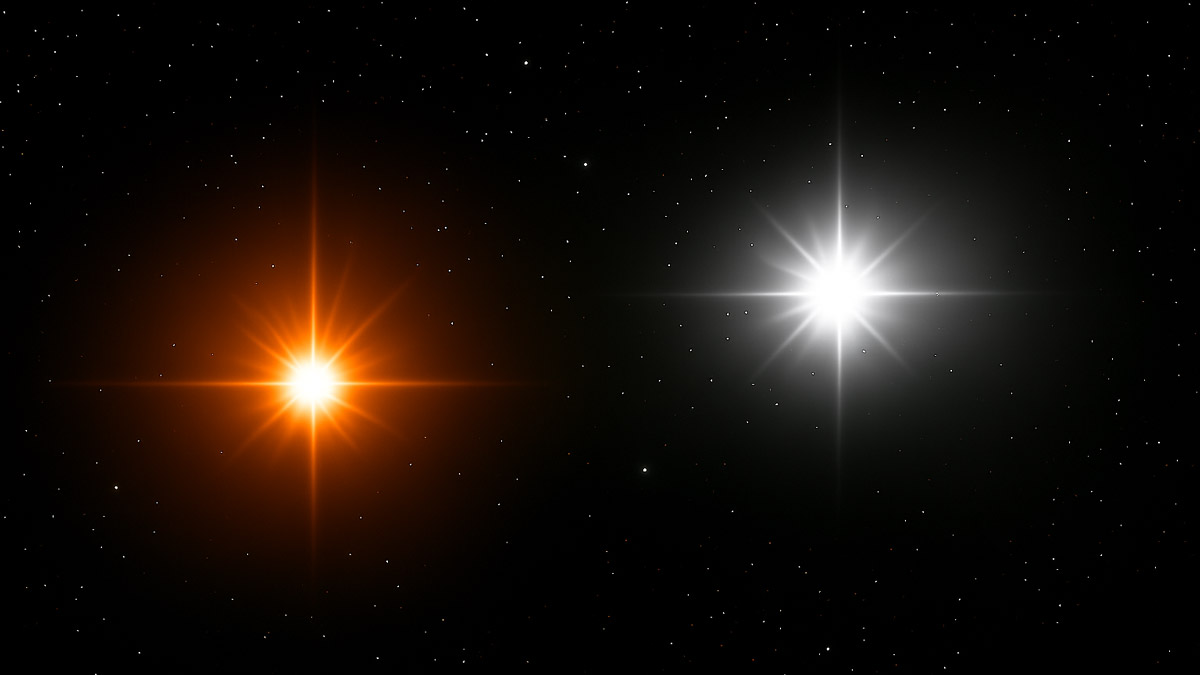
Struve 1835 is an attractive double star in the northern constellation of Boötes. It’s best viewed during the springtime. Observers can view this binary with its white and deep yellow companion using a small telescope, even from the suburbs. The binary is also known as SAO 120426, HD 126129, HR 5386.
12 Comae Berenices: A Bright Double Star Greets You in Coma Berenices

12 Comae Berenices is a pretty double star in the northern constellation of Coma Berenices. At a magnitude around +4.8, backyard astronomers can enjoy this bright binary on spring nights.
 The Garden Astronomer